 Burlington
 Why La Conner Homes Are Hard on Windows
La Conner sits right on the water, and that changes what a window has to survive here compared to a house a few miles inland. Salt-laden air off the Swinomish Channel and the surrounding tidal flats works into hardware, seals, and finishes over time. Add Skagit County's long stretch of wet, gray months — rain that comes in sideways off the water more often than it falls straight down — and you've got conditions that expose weak points in a window fast: failed seals, soft wood trim, hardware that seizes up, and moss creeping into anything with a horizontal surface or a gap to hold moisture.
None of that is unusual for this part of the Salish Sea coastline, but it does mean a window that performs fine in a drier, more sheltered part of the region can struggle here. The goal for La Conner isn't just "energy-efficient" in the abstract — it's a window built and installed to handle wind-driven rain and salt exposure without losing its efficiency within a few years.
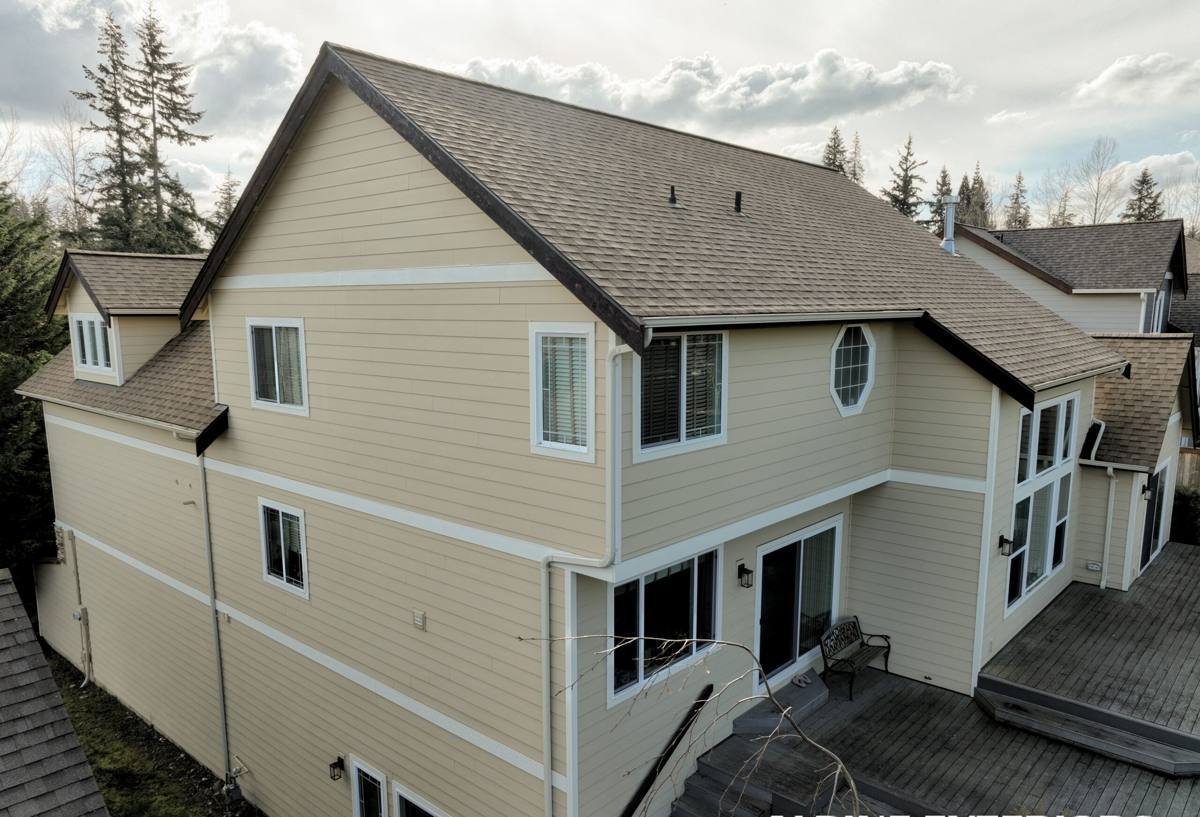
Signs Your La Conner Home Is Due for New Windows
Older or poorly installed windows don't usually fail all at once — they show it gradually, and the signs are easy to miss if you're not looking for them. Walk your exterior on a wet day and check for these:
- Fogging or a milky haze between the panes of a double-pane window — the seal has failed and the gas fill is gone
- Visible moss or dark streaking on the sill, casing, or trim below a window
- Soft or spongy wood when you press a thumb into the frame or sill
- Drafts you can feel near the window edge, even with it fully latched
- Condensation forming on the inside of the glass regularly through fall and winter
- Difficulty opening, closing, or latching a window that used to move freely
- A noticeable jump in heating costs without any other change to the house
Any one of these on its own might just need a repair. Several together, especially on the sides of the house that take the brunt of the weather off the water, usually means it's time to talk about replacement rather than patching.
What "Energy-Efficient" Actually Means Here
"Energy-efficient" gets used loosely in this industry, so it's worth being specific about what actually matters for a home in this climate.
Glass and Coatings
A low-E (low-emissivity) coating reflects heat back into the room in winter and blocks unwanted solar heat in summer, without noticeably changing how clear the glass looks. Paired with double-pane glass and an argon gas fill between the panes, this is the baseline for real efficiency gains. Triple-pane adds another layer of insulation and can be worth it on north- and west-facing walls that take the most weather, though it comes at a higher cost and added weight that some older frames weren't built to carry.
Frame Material
The frame matters as much as the glass. In a marine climate, a frame that swells, rots, or corrodes will undercut even the best glass package, because it stops sealing tightly against the sash. We'll walk through frame options below.
Air Sealing
A well-rated window that's poorly sealed against the wall performs like a cheap one. This is where installation quality — not just the product spec sheet — decides how the window actually performs once it's in the wall.
Choosing a Frame Material for Salt Air and Moisture
There's no single "best" frame material for every home — it depends on your budget, your home's style, and how exposed that particular wall is to weather. Here's how the common options hold up in a coastal, high-moisture climate like La Conner's:
| Frame Material | Moisture & Salt Resistance | Maintenance | Typical Lifespan |
|---|---|---|---|
| Vinyl | Good — won't rot or corrode, but can warp under sustained direct sun/heat cycling | Low — occasional cleaning | 20-30 years |
| Fiberglass | Excellent — very stable in wet, salt-exposed conditions, minimal expansion/contraction | Low | 30-40+ years |
| Wood-clad | Fair to good depending on cladding quality — the wood core is vulnerable if the cladding or seals ever fail | Higher — cladding seams need periodic inspection | 20-30 years, shorter if moisture gets behind the cladding |
| Aluminum | Poor in salt air without a high-quality marine-grade finish — prone to corrosion and heat transfer | Moderate | Varies widely |
For most La Conner homes we recommend vinyl or fiberglass for exposed elevations, since both shrug off the moisture and salt cycling without the ongoing maintenance a clad wood window demands. Wood-clad is still a reasonable choice on more sheltered walls, or where matching a historic look is the priority — we'll talk through the trade-off honestly rather than push one product across the board.
Keeping the Character of an Older La Conner Home
A good number of homes in and around La Conner have real architectural character — older proportions, narrow sightlines, divided-lite patterns — and homeowners are often (rightly) wary that "energy-efficient" means swapping that look for a generic modern window. It doesn't have to. Manufacturers now offer efficient double- and triple-pane units in slim frame profiles and traditional grille patterns that keep the original look from the street while updating everything that actually matters for performance behind the glass.
If your home falls within a designated historic area of town, it's worth checking with the Town of La Conner on any design guidelines before finalizing style or materials — we're glad to help you work through that as part of planning the project, rather than have it surface as a surprise mid-installation.
How Our Window Installation Process Works
Correct installation is what actually determines whether an energy-efficient window performs like one for the next 20-plus years, or starts leaking air and water within a few winters. Our process:
- On-site assessment of each window opening, including checking the existing sill, framing, and any signs of water damage or rot behind the current window
- Product selection based on the specific wall's exposure, your home's style, and your budget — not a one-size-fits-all recommendation
- Careful removal of the old window and inspection of the rough opening once it's exposed, since this is often where hidden moisture damage shows up
- Repair of any damaged framing or sheathing found during removal, before the new window goes in
- Installation of new flashing and a weather-resistant barrier around the opening, integrated correctly with the existing wall and siding assembly
- Setting and shimming the new window plumb, level, and square, then sealing per the manufacturer's specifications
- Interior and exterior trim finish, cleanup, and a final walkthrough with you
Flashing and Moisture Barriers: The Part You Don't See
Because we work primarily in siding and exterior systems, we pay particular attention to how a window ties into the surrounding wall — not just the window itself. Driving rain off the water finds any gap in flashing before it finds anything else, and a poorly flashed window is one of the most common sources of hidden rot we find in older homes here. Proper flashing directs water down and out, over the housewrap or weather barrier, so it can never get behind the siding or into the wall cavity.
This is also the step that's easiest for a crew unfamiliar with local conditions to shortcut, because it doesn't show in the finished look of the window and problems from a bad flashing job can take a year or more of wet seasons to show up as a stain or soft spot. Getting it right the first time matters more here than in drier parts of the state.
What Affects the Cost
Every home is different, so we don't quote sight-unseen, but the main factors that move the price on a window project are:
- Frame material — vinyl is typically the most affordable, fiberglass and wood-clad cost more up front
- Glass package — double-pane low-E versus triple-pane, and any specialty coatings
- Number and size of openings, and whether they're standard sizes or custom
- Condition of the existing framing — hidden rot or damage found during removal adds repair work
- Full-frame replacement versus insert (pocket) replacement — full-frame costs more but is often the right call when the existing frame or flashing is compromised
- Access and site conditions, including second-story or hard-to-reach openings
Rough budgeting for a single quality energy-efficient window installed, including labor, generally runs from a few hundred dollars per window on the low end for smaller, straightforward vinyl replacements, up into four figures per window for larger fiberglass or wood-clad units with full-frame work. We'll give you actual numbers once we've seen your home and openings in person.
Why It Matters to Hire a Crew That Already Works in La Conner
A contractor who works across Skagit County regularly knows what this climate does to a window over a five- or ten-year span, not just what a spec sheet promises on install day. That means recommending frame materials that actually hold up to salt air, flashing details that account for wind-driven rain off the water, and being upfront when a particular product isn't a good fit for a given wall's exposure — even if it's a more expensive option. It also means we're not learning the region's quirks on your project; we've already seen how moss, moisture, and salt exposure play out on homes near La Conner and can plan around it from the start.
If you're seeing drafts, fogged glass, or moisture damage around your windows — or just want a straight answer on what upgrading would actually cost for your home — we're happy to take a look. Reach out for a free, no-pressure estimate using the form below.