 Burlington
 Why Guemes Island Is a Different Job Than Mainland Burlington
Guemes Island sits in the salt water of Puget Sound, reached by a short ferry crossing from Anacortes. That water proximity changes what siding has to survive. Homes here take on a steady dose of salt-laden air, wind-driven rain off the Sound, and long stretches of shade and dampness that keep moss and algae established on north- and west-facing walls for much of the year. It's a harsher exposure than a similar house ten miles inland in Burlington or Mount Vernon, even though the two are in the same county and see the same seasonal weather pattern.
Salt air is corrosive to fasteners, trim metal, and paint film. Combined with near-constant moisture and limited direct sun on shaded elevations, it's an environment that punishes any siding material or installation detail that isn't built for sustained wet exposure. That's the lens we use for every Guemes Island siding job: not "what looks good going up," but "what still performs in year twelve."
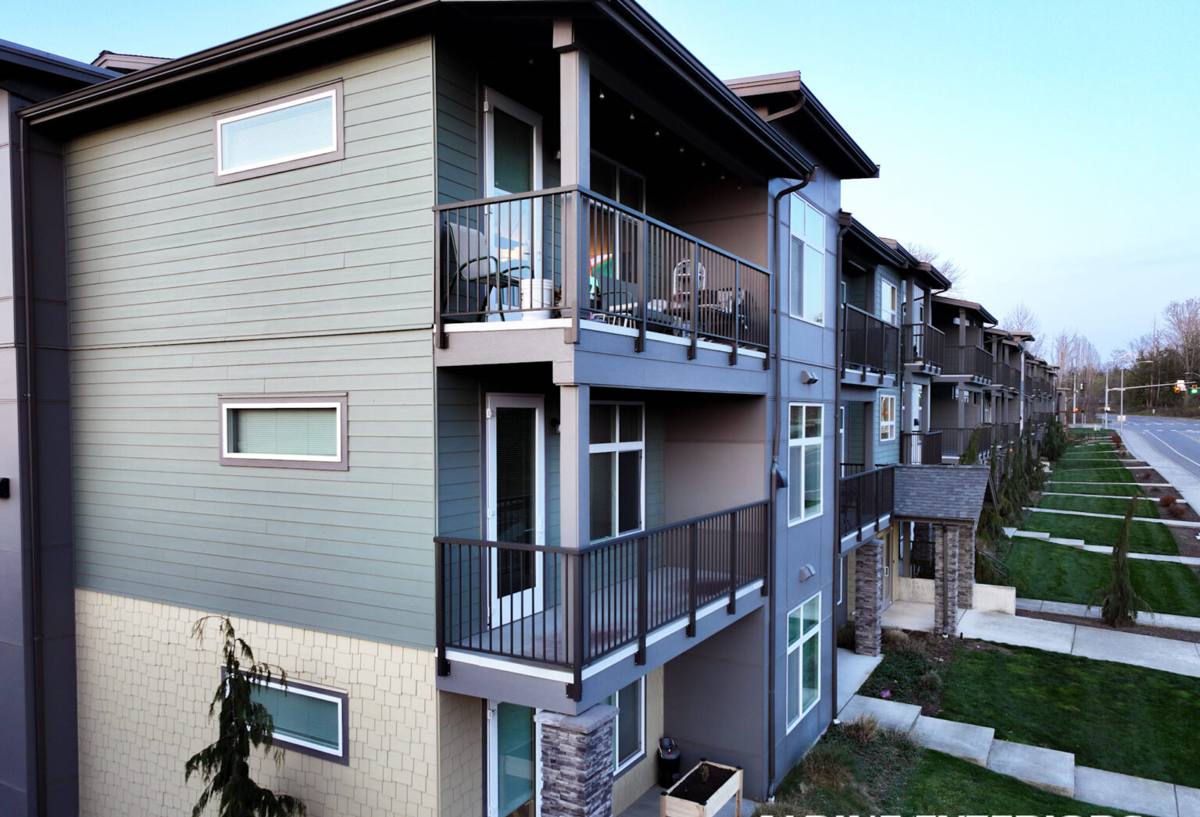
What Salt Air, Rain, and Moss Actually Do to Siding
Salt Air
Airborne salt settles on exterior surfaces and accelerates corrosion in exposed metal — nail heads, flashing edges, trim fasteners. On painted wood or engineered wood products, that corrosion often shows up first as rust streaking or bleed-through around fastener points, well before the siding itself fails.
Driving Rain
Wind off the water doesn't just wet a wall — it drives moisture sideways and upward, into laps, seams, and butt joints that would stay dry in a calmer inland location. Any gap in flashing, caulking, or lap coverage becomes a moisture entry point faster here than it would on a sheltered Burlington lot.
Moss and Algae
Shaded, damp walls on Guemes Island can stay wet for days after a storm system passes. That sustained moisture is exactly what moss and algae need to establish. Beyond the cosmetic issue, moss holds water against the siding surface, which shortens the life of anything that isn't dimensionally stable or properly finished to resist it.
Why We Install Only James Hardie Fiber Cement Here
We standardized on James Hardie siding for every job we do, and island exposures like this one are a big part of why. Fiber cement is non-combustible and dimensionally stable — it doesn't swell, rot, or delaminate the way wood-based or engineered wood siding products can when they take on repeated moisture. For a Guemes Island home, that stability matters more than it would somewhere drier.
The HZ5 Engineering
James Hardie makes climate-specific product lines, and the HZ5 formulation is engineered for wetter, harsher climate zones — which is what Skagit County's marine exposure calls for, and doubly so on an island. It's built to hold up to repeated wet-dry cycling without the material itself breaking down.
ColorPlus Factory Finish
Hardie's ColorPlus finish is baked on in a controlled factory environment rather than field-applied. That finish is formulated to resist fading and to shed moisture better than a job-site paint coat, which reduces (though doesn't eliminate) the moss and algae foothold on shaded walls. It also means touch-up needs are lower over the life of the siding, which matters on a property that isn't a five-minute drive from home for most homeowners.
Warranty Backing
James Hardie backs its ColorPlus products with a strong, transferable warranty. On a coastal property where the material is working harder than it would inland, that manufacturer backing is worth more, not less.
What a Correct Installation Involves in This Exposure
Fiber cement siding performs to spec only when the installation details are right — and in a driving-rain, salt-air environment, the margin for sloppy detailing is smaller. A correct Guemes Island installation includes:
- Proper water-resistive barrier and flashing at every window, door, and penetration, lapped correctly to shed wind-driven rain rather than trap it
- Correct fastener type and spacing — using fasteners rated for the exposure to slow salt-air corrosion, not whatever is fastest to install
- Manufacturer-specified clearances from grade, roof lines, and decks so the siding never sits in standing water or splash-back
- Tight, consistent caulking at trim and joints, using sealants rated for sustained wet exposure
- Correct nailing into framing, not just sheathing, so laps stay tight and don't gap open under wind load
- Painted or capped cut edges on every field cut, since an exposed cut edge is the fastest way moisture gets into any fiber cement product
Skip any one of these on a sheltered inland lot and a house might go years without showing it. Skip one here, with salt air and driving rain working on it daily, and the failure point shows up much sooner — usually as a stain, a soft spot, or a section that's holding moss longer than the rest of the wall.
Our Process for a Guemes Island Siding Job
1. Site and Exposure Assessment
We walk the property and note which elevations take the worst of the wind-driven rain and which stay shaded and damp longest — that dictates where we pay the closest attention to flashing and clearances.
2. Tear-Off and Substrate Check
Once the old siding is off, we check the sheathing and framing for moisture damage before anything new goes up. On an island property, catching a hidden moisture problem now is a lot cheaper than finding it after the new siding is installed.
3. Weather Barrier and Flashing
This is the step that determines how the house performs in year ten, not year one. We install and lap the water-resistive barrier and flashing to shed water outward at every opening.
4. Hardie Installation
Siding goes up to Hardie's fastening, clearance, and lap specifications, using the HZ5 product for this climate zone.
5. Trim, Caulk, and Touch-Up
Cut edges get sealed, joints get caulked with a sealant rated for the exposure, and any factory-finish touch-up is done with matched ColorPlus product.
6. Final Walkthrough
We walk the finished job with the homeowner and point out what routine maintenance will look like going forward.
Why a Crew That Already Works Guemes Island Matters
Island jobs add logistics that mainland Burlington jobs don't have — ferry scheduling for crew, materials, and equipment, and less flexibility to run back to the shop mid-day for something forgotten. A crew that's done island jobs before plans material staging and scheduling around the ferry rather than losing days to it. That's a practical, not cosmetic, difference in how smoothly a project runs and how long crews are on-site.
There's also a material-knowledge side to it. A contractor who regularly works this exposure knows which details tend to get shorted on a rushed job — the fastener corrosion resistance, the caulk rated for sustained wet exposure, the extra flashing attention on the windward elevation — because they've seen what happens on this specific stretch of Skagit County water when those details are skipped.
Cost Factors for a Guemes Island Siding Job
| Factor | Why It Affects the Job |
|---|---|
| Ferry logistics | Material delivery and crew scheduling are built around ferry sailings, which can affect timeline more than material cost |
| Exposure severity | Windward, water-facing elevations often need extra flashing and fastener attention versus sheltered sides |
| Existing substrate condition | Moisture-damaged sheathing found at tear-off adds repair scope before new siding goes up |
| Home size and complexity | Corners, trim detail, and window count all affect labor time independent of exposure |
| Access | Staging area and equipment access on the lot affect how efficiently crews can work |
We don't quote a job without walking the property — exposure and access vary enough from one Guemes Island lot to the next that a phone estimate isn't a real number.
Maintaining Hardie Siding in This Climate
- Rinse shaded, moss-prone elevations with a garden hose once or twice a year rather than letting growth establish
- Keep gutters and downspouts clear so roof runoff isn't adding extra water load to any one section of wall
- Trim back vegetation and tree cover that keeps a wall in shade and damp longer than it needs to be
- Walk the exterior after major windstorms and check caulked joints and trim for gaps
- Avoid pressure washing directly into laps or joints — a garden hose and soft brush is enough for routine cleaning
None of this is heavy maintenance — it's the kind of upkeep any coastal home needs, and it's a lot less than what wood-based or vinyl siding typically demands in this same exposure.
Get a Straight Answer for Your Property
Every Guemes Island lot handles salt air, rain, and shade a little differently, and that's exactly what changes the installation details that matter most. If you're planning a siding project on the island, we'll come out, look at your specific exposure, and give you a straightforward, no-pressure estimate for a correctly installed James Hardie system.