 Burlington
 Guemes Island sits right in the path of everything Skagit County's marine weather can throw at a house — salt-laden air off the Sound, wind-driven rain that hits walls sideways instead of straight down, and a long, damp shoulder season that keeps north- and west-facing surfaces shaded and wet for weeks at a time. Siding on the island isn't decorative trim over a wall; it's the first and most-tested layer of the building envelope. Get the product or the installation wrong out here, and the failures show up faster than they would on a sheltered lot twenty miles inland.
This page covers what siding installation actually involves for a Guemes Island home — the material we install, why we install only that material, what correct installation looks like in this exposure, and how our process works for island jobs specifically.
What Guemes Island's Climate Actually Does to Siding
Three things define siding performance on the island, and they compound each other:
Salt Air
Airborne salt is corrosive to fasteners, flashing, and any metal trim that isn't rated for coastal exposure. It also accelerates the breakdown of lower-grade coatings and finishes — paint chalks and fades faster near open water than it does a few miles inland. Siding installed here needs a factory finish and hardware system built to shrug off salt exposure for decades, not a finish that depends on a homeowner repainting every few years to keep up.
Driving Rain
Wind off the water pushes rain sideways into wall assemblies, not just down onto rooflines. That means lap joints, butt joints, window and door flashing, and inside/outside corners all take direct wind-driven moisture that a calmer inland site rarely sees. Any gap in the drainage plane behind the siding becomes a path for water intrusion, and on an island where a repair crew can't just swing by same-day, small gaps left uncorrected turn into rot before anyone notices.
Moss and Sustained Dampness
Shaded, north-facing walls under tree cover stay damp far longer than sun-exposed walls, and that's exactly the environment moss and algae need. On wood-based or fiberboard products, sustained moisture plus organic growth is a slow path to swelling, delamination, and rot at the surface. On fiber cement, moss is a cosmetic and maintenance issue, not a structural one — the substrate itself doesn't absorb and swell the way wood-based siding does.
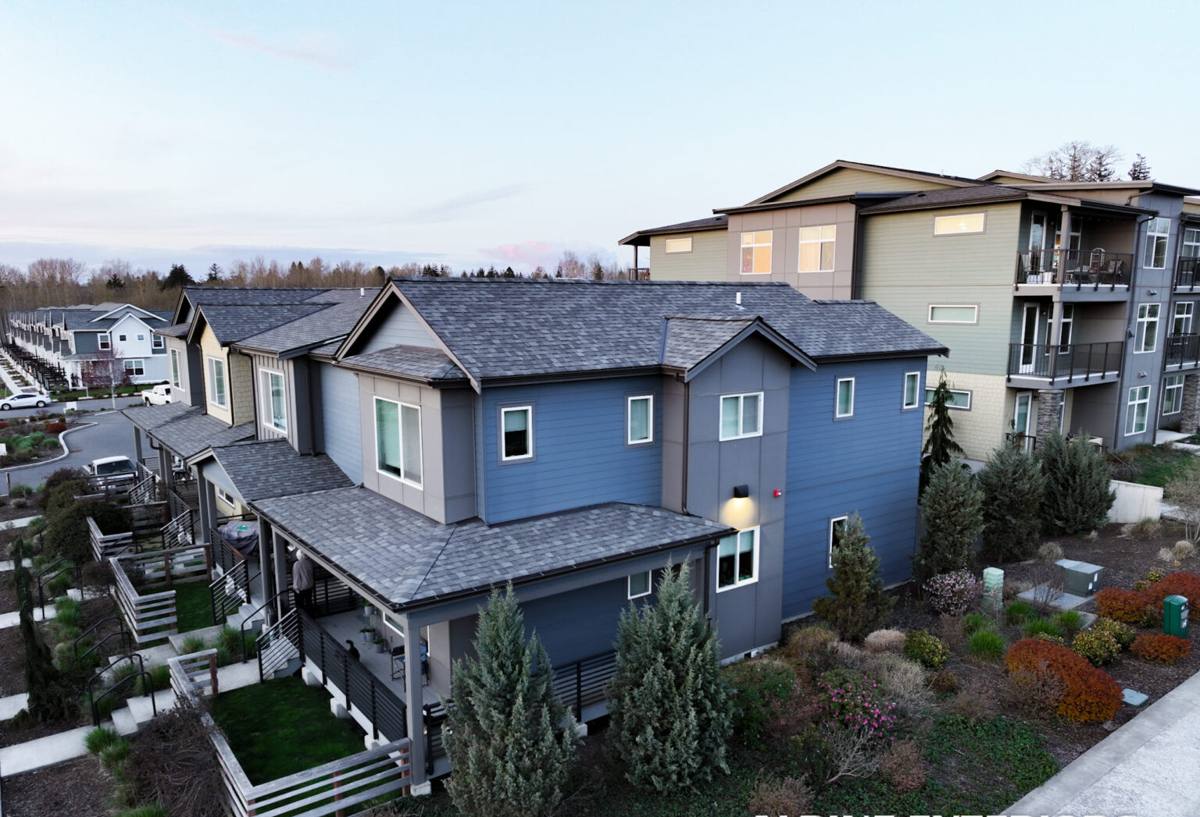
What Correct Siding Installation Involves Here
A siding job on Guemes Island has to get the water-management details right, because the exposure doesn't forgive shortcuts. Correct installation means:
- A continuous weather-resistant barrier behind the siding, lapped correctly shingle-style so water sheds outward at every seam
- A drainage gap (rain screen) between the barrier and the siding so any moisture that gets past the cladding can drain and dry instead of sitting against the wall sheathing
- Properly flashed and sealed window and door openings, since these are the highest-risk intrusion points in wind-driven rain
- Corrosion-resistant fasteners and trim hardware rated for coastal/marine exposure
- Correct fastener placement and spacing per the manufacturer's installation instructions — over-driven or under-driven nails are one of the most common causes of premature siding failure
- Proper clearance between the bottom of the siding and grade, decks, and roof lines, so splash-back and ponding water don't sit against the material
- Caulking and sealant only where the manufacturer specifies it — sealing joints that should be left to drain traps moisture instead of shedding it
None of this is exotic. It's the difference between a crew that follows the manufacturer's written installation instructions to the letter and a crew that's just gotten the panels up and moved on. In a marine exposure, the gap between those two outcomes shows up within a few winters.
Why We Install Only James Hardie Fiber Cement
We standardized on James Hardie fiber cement siding for every home we work on, including Guemes Island, and we don't install vinyl, LP SmartSide, Cemplank, Allura, primed spruce, or cedar. That's not a marketing position — it's a decision based on how those products actually hold up in this specific climate:
Vinyl expands and contracts with temperature swings and can warp or crack in sustained wind exposure; it also isn't a fire-resistant material. Engineered wood products like LP SmartSide use a wood-strand substrate that, however well-treated, is still wood at its core — moisture intrusion at a cut edge or fastener hole is a real long-term risk in a climate this wet. Primed spruce and cedar are natural wood, full stop — beautiful when new, but they demand a repainting and maintenance schedule that most homeowners underestimate, and they're the most vulnerable of any option to the rot and moss issues described above.
James Hardie fiber cement is cement, sand, and cellulose fiber — it doesn't absorb water and swell the way wood-based products do, it's non-combustible, and it holds paint and factory finish far longer than wood substrates in a coastal climate. Hardie's ColorPlus finish is a factory-applied, baked-on coating engineered specifically to resist fading and chipping in outdoor exposure — a meaningful advantage on an island where a repaint crew and materials also have to cross by ferry. Hardie also builds climate-specific HZ product lines engineered for exactly this kind of moisture and temperature exposure, and backs the product with a strong transferable warranty when it's installed to spec.
We're not going to tell you another product is garbage — each of the alternatives above has real strengths, and plenty of them are installed correctly on plenty of homes. But given what this island's exposure does to a wall over twenty or thirty years, fiber cement is the material we're willing to put our name behind here.
Our Installation Process for Guemes Island Jobs
Assessment and Material Planning
We start with a walk-around of the exterior, checking existing siding condition, trim, flashing, and any areas showing moisture damage or moss buildup — particularly on north- and west-facing walls. We measure and spec the job, including HZ product selection and ColorPlus color, and confirm quantities before ordering, since island logistics reward getting the material list right the first time.
Ferry Logistics and Scheduling
Working on Guemes Island means building the ferry schedule into the job plan — materials, crew, and equipment all move on the same limited crossings everyone else on the island depends on. We batch material deliveries and crew trips to minimize wasted crossings, which keeps the job moving efficiently instead of stalling out waiting on a delivery that missed a sailing.
Removal and Substrate Check
When we're replacing existing siding, tear-off gives us a direct look at the sheathing and framing underneath. On island homes, especially those with any history of moss or damp walls, this is where hidden rot or moisture damage gets caught and addressed before new siding goes up over it — covering a compromised substrate with new material doesn't fix the underlying problem, it just hides it for a while longer.
Weather Barrier and Rain Screen Installation
We install a continuous weather-resistant barrier and a drainage gap behind the siding, correctly lapped and detailed at every seam, window, and door opening. This is the layer that actually protects the house — the visible siding is the second line of defense, not the only one.
Siding Installation to Manufacturer Spec
Panels and lap siding go up following James Hardie's written installation instructions — correct fastener type, spacing, and placement; proper clearances at grade, roofline, and decks; flashing and sealant only where specified. This is the step where corners get cut on a rushed job, and it's the step that determines whether the siding performs for decades or starts failing in five years.
Trim, Caulking, and Final Walkthrough
Corner boards, trim, and any remaining sealant go in last, followed by a walkthrough with the homeowner to review the finished work before we leave the island.
Signs Your Current Siding Is Struggling With the Exposure
If you're not sure whether your home's siding is due for replacement, these are the signs we look for on island homes specifically:
- Soft or spongy spots when you press on the siding, especially near the bottom edge or around window trim
- Visible moss or algae buildup that keeps coming back on shaded walls no matter how often it's cleaned
- Paint that's chalking, peeling, or fading noticeably faster on the water-facing side of the house
- Warping, buckling, or gaps opening up at panel seams or corners
- Rust staining running down from fasteners or metal trim
- Visible daylight or drafts at siding seams from inside the house
- Interior signs of moisture — peeling paint, musty smell, or staining on interior walls that back up to exterior siding
Cost Factors for Siding Installation on Guemes Island
Every job is different, but these are the main variables that move the price on an island installation:
| Factor | Why It Matters |
|---|---|
| Home size and number of stories | More surface area and taller walls mean more material, labor, and equipment time |
| Removal of existing siding | Tear-off and disposal of old material adds labor and, on the island, disposal logistics |
| Substrate repair | Rot or moisture damage found during tear-off has to be repaired before new siding goes up |
| Ferry and access logistics | Material and crew crossings are scheduled into the job timeline and factored into planning |
| Trim complexity and color | Custom trim details and ColorPlus color selection affect material cost |
| Window and door count | Each opening requires flashing and detail work, which adds labor time |
Maintenance After Installation
Correctly installed James Hardie siding is low-maintenance, but "low" isn't "none" in this climate. Rinsing off salt residue and organic buildup on shaded walls periodically, keeping gutters clear so water isn't sheeting down the siding face, and doing a visual check after major storms for any displaced trim or caulking are worth the small amount of time they take. Because the ColorPlus finish is factory-applied and baked on, you're not looking at a repainting schedule the way you would with wood siding — that's one less maintenance task competing with everything else that comes with owning a home on the water.
Why a Crew That Already Works Guemes Island Matters
Island jobs have logistics that don't exist on the mainland — ferry schedules, limited crossings per day, and material deliveries that have to be planned around sailings instead of just a truck route. A crew unfamiliar with that reality can turn a straightforward installation into a drawn-out one, missing crossings or under-planning material trips. We've worked jobs on Guemes Island and know how to build the schedule around the ferry instead of getting stuck by it, which keeps the project moving at the pace we quote instead of stretching out over missed logistics.
If your Guemes Island home is due for new siding, or you're not sure whether what's on the walls now is holding up the way it should, we'll come out and take a straightforward look — no pressure, no sales script. Fill out the form below to schedule a free estimate.