 Burlington
 Guemes Island Sits in a Tougher Climate Than It Looks
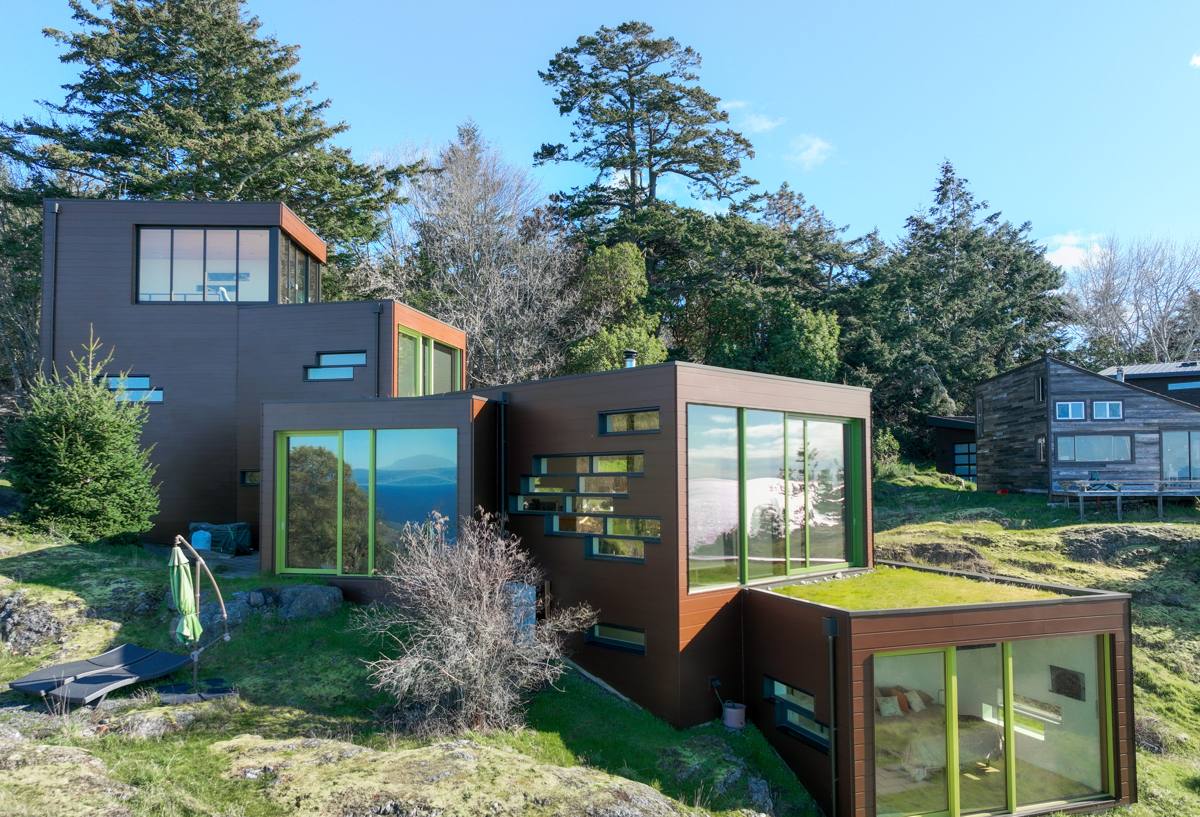
Guemes Island doesn't get the storm intensity of the outer coast, but it sits fully exposed to Rosario Strait and the marine air that moves through it every day of the year. That combination — salt-laden air, driving rain off the water, and long stretches of overcast, damp weather — is a harder environment on exterior siding than most homeowners realize until they're dealing with the results: chalky paint, soft trim, and moss creeping up from the ground line by late fall. Burlington and the rest of Skagit County deal with plenty of rain too, but island exposure adds the salt-air factor on top of it, and that changes what "correct" siding actually means out here.
This page is specifically about fiber cement siding on Guemes Island homes — what the climate demands, what a correct installation actually involves, and why a crew that already works this area matters as much as the material itself.
What Salt Air, Driving Rain, and Moss Season Actually Do to Siding
Salt Air
Airborne salt is corrosive to metal fasteners, flashing, and trim hardware, and it accelerates the breakdown of cheap paint films. On siding materials with a factory finish that isn't formulated for coastal exposure, you'll see fading, chalking, and finish failure years ahead of schedule. Salt air doesn't damage fiber cement itself — the material is inert — but it absolutely punishes weak paint, exposed fasteners, and poor detailing at joints and trim.
Driving Rain
Wind-driven rain off the strait doesn't just wet the siding face — it pushes water sideways and upward into laps, seams, and penetrations that a calm-weather installation might get away with. This is where installation quality matters more than product choice. A siding job with tight, well-flashed laps and correctly sealed penetrations sheds that water. A job with shortcuts in those same spots lets water behind the cladding, and that's where rot starts — not on the face of the siding, but in the wall assembly behind it.
Moss Season
Skagit County's damp season runs long, and Guemes Island's tree cover and humidity keep surfaces wet for extended stretches. Moss and algae take hold on any siding material that stays damp and shaded, but the real problem isn't cosmetic — it's what moss growth does to a material that isn't dimensionally stable. Wood-based products can swell, soften, and eventually rot under sustained moss and moisture contact. Fiber cement doesn't feed moss the way wood-based products can, and it won't swell or delaminate from the moisture moss traps against the surface, but it still needs to be installed with enough ground clearance and drainage detail to keep organic growth from taking hold in the first place.
Why We Only Install James Hardie Fiber Cement Here
We don't install LP SmartSide, vinyl, Cemplank, Allura, or primed wood siding, and on an island exposure like Guemes, that standard matters more than usual. Vinyl expands and contracts with temperature swings and can warp or crack in sustained wind exposure; it also isn't a material we can detail as tightly at penetrations and trim as fiber cement. Engineered wood products (LP SmartSide) rely on their outer coating and sealed edges to keep moisture out — any breach at a cut edge, fastener, or joint gives water a path into wood fiber that will swell and deteriorate. Primed cedar or spruce looks good going up, but it depends entirely on a paint film maintained on a strict cycle, and that maintenance burden is real money and real risk in a climate that punishes weak finishes.
James Hardie fiber cement is non-combustible, dimensionally stable, and manufactured in HardieZone formulations engineered for specific regional climates — the Pacific Northwest falls under HZ5 engineering, which accounts for our moisture exposure. The ColorPlus factory finish is baked on under controlled conditions and backed by its own finish warranty, which matters directly here: a factory finish formulated to resist fading and moisture doesn't rely on a field-applied paint job holding up against salt air and rain. That's the trade-off we're not willing to make on behalf of a homeowner paying for siding meant to last decades, not one paint cycle.
What a Correct Installation Involves on This Kind of Exposure
The material is only half the equation. On Guemes Island, we pay particular attention to the details that determine whether siding actually performs in wind-driven rain and salt air:
- Weather-resistive barrier and rainscreen detailing — a drainage plane behind the siding gives incidental moisture a way out instead of trapping it against the wall sheathing.
- Correct flashing at every horizontal transition — window heads, trim boards, and butt joints are where driving rain finds its way in if flashing is skipped or undersized.
- Manufacturer-specified fastening — corrosion-resistant fasteners set to Hardie's spec, not overdriven or underdriven, which affects both water-shedding and long-term hold.
- Proper clearance at grade and roof lines — enough ground clearance and kick-out flashing to keep splashback and roof runoff from holding moisture against the bottom courses, which is exactly where moss and algae take hold first.
- Caulked and sealed joints using compatible sealants — not every caulk bonds well to fiber cement or holds up to marine air; using the wrong product creates joint failure within a few seasons.
Skip any one of these and you can still have "James Hardie siding" on the wall that underperforms — which is why we treat installation discipline as inseparable from the product itself.
Working on Guemes Island: What Our Process Looks Like
Island jobs take more planning than mainland Burlington work, and we build that into how we schedule and run the project rather than treating it as an afterthought:
- Material and equipment loads are consolidated ahead of the ferry crossing so the crew isn't making repeat trips mid-job.
- We plan around ferry schedules and tide-dependent access where relevant, so crew days on-site are full production days.
- Because we've worked this island before, we already know to expect the marine exposure and moisture conditions in our estimate and material planning — it's not a surprise we're solving for on day one.
- Site protection and cleanup are handled with the same care as any other job — sawdust, cutoffs, and debris don't get left for someone else to haul on a return trip.
A crew that treats every island job like a special case ends up cutting corners to make the logistics work. A crew that's used to it just builds the extra planning into the estimate up front.
Cost Factors for Guemes Island Siding Projects
Every project is different, but these are the factors that most often move the number on an island job specifically:
| Factor | Why It Matters Here |
|---|---|
| Ferry and transport logistics | Material loads and crew scheduling take more coordination than a mainland Burlington job |
| Existing siding removal and substrate condition | Salt air and moss exposure can mean more sheathing repair is needed once old siding comes off |
| Home exposure and elevation | Homes facing open water or higher wind exposure may need additional flashing and detailing work |
| Trim and detail complexity | More corners, dormers, and transitions mean more flashing and sealant work, which is where water intrusion is prevented |
| Siding profile and ColorPlus color selection | Lap width and factory color affect material cost but not labor complexity |
We walk every site and give a written estimate based on the actual home, not a per-square-foot phone quote — island exposure and access are exactly the kind of thing that needs to be seen in person.
Maintenance: What Guemes Island Homeowners Should Actually Do
Fiber cement lowers the maintenance burden compared to wood-based siding, but "low maintenance" isn't "no maintenance," especially in this climate. A simple annual routine keeps siding performing for the long haul:
- Rinse siding annually with a garden hose to clear accumulated salt residue, pollen, and grime — a soft wash, not a pressure washer aimed directly at laps and joints.
- Check and clear gutters and downspouts before the wet season so roof runoff isn't dumping onto siding and grade.
- Trim back vegetation and tree cover that keeps siding shaded and damp — the biggest single factor in moss and algae growth.
- Inspect caulked joints and trim intersections every year or two and re-seal any that have cracked or pulled away.
- Watch for moss or algae at the lowest courses and along shaded elevations, and address it early with a gentle wash rather than letting it build up.
Fiber Cement vs. Other Siding Materials in This Climate
| Material | How It Handles Salt Air & Rain | Maintenance Burden |
|---|---|---|
| James Hardie Fiber Cement | Non-combustible, dimensionally stable, factory finish engineered for regional moisture exposure | Low — periodic rinse and joint inspection |
| Vinyl | Can warp or crack under wind and temperature swings; limited detailing options at penetrations | Low, but limited lifespan in higher-exposure sites |
| LP SmartSide / Engineered Wood | Wood-based core is vulnerable at any breach in coating or sealed edges | Moderate — coating and edge sealing need monitoring |
| Primed Cedar or Spruce | Natural wood movement and moisture uptake in sustained damp exposure | High — regular repainting on a strict cycle |
This isn't a claim that other materials are bad products broadly — it's why, specifically on homes facing this kind of marine and rain exposure, we've standardized on one material system rather than offering several and letting exposure risk fall on the homeowner after the fact.
Get a Straight Estimate for Your Guemes Island Home
If you're weighing a siding replacement on Guemes Island, we're happy to come take a look, walk the exterior with you, and give you a straightforward, no-pressure estimate based on your home's actual exposure and condition — not a generic number. Use the form below to get started.