 Burlington
 Guemes Island Puts Windows Through More Than Most Homes Ever See
Guemes Island sits out in the water on nearly every side, reached only by a short ferry crossing from Anacortes. That location is exactly why homes here need better window work than a typical inland Skagit County property. Salt-laden air moves across the island constantly, driving rain comes in sideways during winter storms, and heavy tree cover on many lots keeps north- and west-facing walls shaded and damp for months at a time. Windows installed with standard mainland assumptions — average flashing, average sealant, hardware not rated for marine exposure — tend to show their age early out here.
Custom windows done right for Guemes Island aren't just about matching an odd-sized opening in an older farmhouse or cabin. They're about choosing materials and installation details that hold up to salt, wind-driven moisture, and a long, wet moss season without turning into a maintenance headache five years down the road.
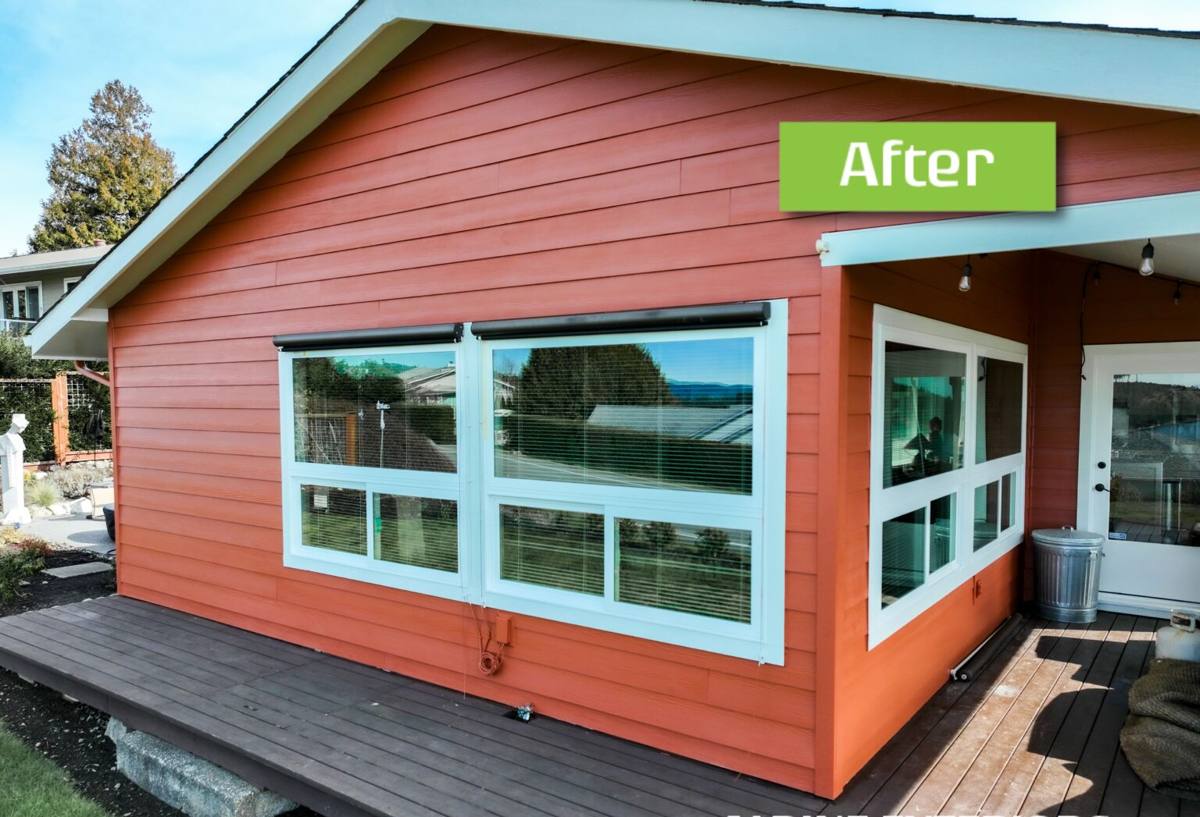
What Salt Air, Rain, and Moss Actually Do to a Window
Salt Air and Hardware
Salt in the air settles on everything, including window hardware. Cheaper latches, cranks, and hinges corrode faster near open water than they would ten miles inland. Once hardware pits or seizes, a window stops sealing evenly, and that's when air and water start finding their way in around the sash.
Driving Rain and Wind
Island exposure means more open wind than a sheltered in-town lot. Wind-driven rain doesn't just fall on a window — it gets pushed into every gap in the flashing and trim. A window that would perform fine in a calm, protected yard can leak on Guemes Island if the installation details around it aren't built for wind-loaded water.
Moss and Shade Moisture
Skagit County's long wet season already grows moss on roofs and siding; on shaded, tree-covered lots it grows on window sills, trim, and lower sashes too. Moss and algae hold moisture against wood and paint far longer than open air would, which accelerates rot at sills and corners if the window and its surrounding trim weren't properly sealed and detailed to shed water in the first place.
Signs Your Current Windows Are Losing the Battle
Homeowners often live with a slowly failing window for years before addressing it, mostly because the problems show up gradually. Watch for:
- Fogging or a hazy film between panes of a double-pane window (a broken seal, not a cleaning issue)
- Chalky, pitted, or stiff hardware that's hard to latch or crank
- Soft or spongy wood at the sill, especially on shaded or north-facing walls
- Green or black staining building up faster than you can wash it off
- Noticeable drafts even when the window is latched shut
- Paint or finish peeling specifically around the window opening rather than the whole wall
- Condensation forming on the inside of the glass during cold, damp stretches
Any one of these can be a minor fix. Several at once, especially on a wall that takes direct weather, usually means the window and its installation have reached the end of what patching can fix.
What a Correct Custom Window Install Involves Here
Frame Material Matched to the Exposure
Not every wall on a Guemes Island home faces the same conditions. A window on a sheltered, tree-covered side of the house can often use a lower-maintenance standard approach, while a window facing open water or prevailing wind deserves a frame material and hardware grade chosen specifically for that exposure. Custom work means making that call opening by opening instead of treating the whole house the same.
Flashing and Water Management
This is where most window failures near the water actually start — not in the window itself, but in what's around it. Proper flashing tucks water out and away from the wall assembly rather than trapping it behind trim. On a home taking wind-driven rain, we pay particular attention to head flashing, sill pans, and how the window integrates with the existing siding or house wrap so water has nowhere to collect.
Glass and Glazing Choices
For island exposure, glazing decisions matter as much as frame material. Low-E coatings help manage the region's low winter sun and glare off open water. Argon-filled dual-pane units are the practical standard for most homes; triple-pane makes sense on walls that take the worst of the wind and cold. Where a window sits low or faces a walking area, tempered safety glass is worth the small upcharge for peace of mind during winter storms.
Comparing Frame Materials for Salt Air and Marine Exposure
| Frame Material | Salt Air / Corrosion Resistance | Moisture Behavior | Maintenance Needs | Relative Cost Tier |
|---|---|---|---|---|
| Vinyl | Good — won't corrode, but hardware quality varies | Doesn't absorb moisture or rot | Low — occasional cleaning | Lower |
| Fiberglass | Very good — stable in swings of humidity and temperature | Doesn't absorb moisture; holds paint/finish well | Low to moderate | Mid to Higher |
| Aluminum-clad wood | Good exterior protection if cladding and seals hold up | Wood interior needs the cladding to stay intact | Moderate — watch cladding seams | Higher |
| Bare wood | Lowest — hardware and finish need frequent upkeep near salt air | Absorbs moisture without diligent maintenance | High — regular refinishing | Mid to Higher |
There's no single "correct" material for every Guemes Island home — a shaded, sheltered cabin and an open, waterfront lot can reasonably land on different answers. We walk through these trade-offs with you rather than defaulting to one product for every job.
How We Handle Ferry Logistics and Scheduling
Working on an island adds a real logistical layer that mainland jobs don't have. Materials, crew, and equipment all cross by ferry, which means scheduling has to account for sailing times rather than just drive time. We build that into the estimate and timeline up front, order custom windows with enough lead time to avoid a wasted crossing waiting on a delivery, and batch site visits and installation days efficiently so we're not making more trips back and forth than necessary. None of this should be a surprise cost or delay sprung on you mid-project — it's planned for from the first conversation.
Our Process, Start to Finish
- On-site assessment: We measure existing openings, check for rot or water damage around current windows, and note wind and sun exposure for each wall.
- Material and glazing selection: We walk through frame and glass options based on that specific opening's exposure, not a one-size answer for the whole house.
- Custom ordering: Windows are built to the actual opening dimensions rather than forced into stock sizing, which matters most on older island homes where openings are rarely perfectly standard.
- Scheduled installation: Crew and materials cross together on a planned ferry trip, minimizing the opening being exposed to weather during the swap.
- Flashing and sealing: Careful integration with existing siding and trim so water sheds away from the wall assembly, not toward it.
- Final walkthrough: We check operation, seals, and finish work with you before calling the job done.
Why a Crew That Already Works Guemes Island Matters
A contractor who hasn't worked on the island before is learning ferry logistics, exposure conditions, and older-home quirks on your dime. We've already worked through the scheduling realities of getting crew and materials across, and we know what marine exposure does to hardware, sealant, and wood over a few Skagit County winters. That experience shows up in fewer surprises, a more accurate estimate, and a window installation detailed correctly for the specific wall it's going into — not a generic mainland approach applied to an island home.
Keeping Custom Windows Performing Season After Season
Even a well-installed window benefits from basic upkeep in this climate:
- Rinse salt residue off frames and glass periodically, especially on waterfront-facing walls
- Clear moss and debris from sills and tracks before it holds moisture against the frame
- Lubricate hardware on a wood or aluminum-clad window annually to fight corrosion
- Check exterior caulking and flashing each fall before the wet season sets in
- Address any soft trim or staining early rather than waiting for it to spread
Good materials and a correct install do most of the work, but a little seasonal attention keeps a Guemes Island window performing for decades instead of one.
If your windows are showing their age or you're planning new construction on Guemes Island, we're happy to come out, take a look, and give you a straight answer about what your home actually needs — no pressure, no upsell. Use the form below to request a free estimate.