 Burlington
 Why Fir Island Roofs Wear Differently Than Roofs Inland
Fir Island sits out on the Skagit River delta, close to Skagit Bay, and that location changes what a roof deals with day to day. There's little to break the wind coming off the water, the air carries salt, and the low, flat farmland around the island holds moisture longer than the drier ground you'd find further up toward Burlington and Mount Vernon. Put those three things together — wind exposure, salt air, and standing moisture — and you get roofs that age faster than the manufacturer's brochure suggests, especially if the original installation cut any corners on flashing, fastening, or ventilation.
We've replaced enough roofs out here to know the failure patterns are consistent: fastener corrosion happening years ahead of schedule, moss working its way under shingle tabs on the shaded north- and west-facing slopes, and wind-driven rain finding its way in at valleys and eaves rather than through the open field of the roof. A roof replacement done for Fir Island needs to be specified for those conditions, not just swapped out like-for-like with whatever was there before.
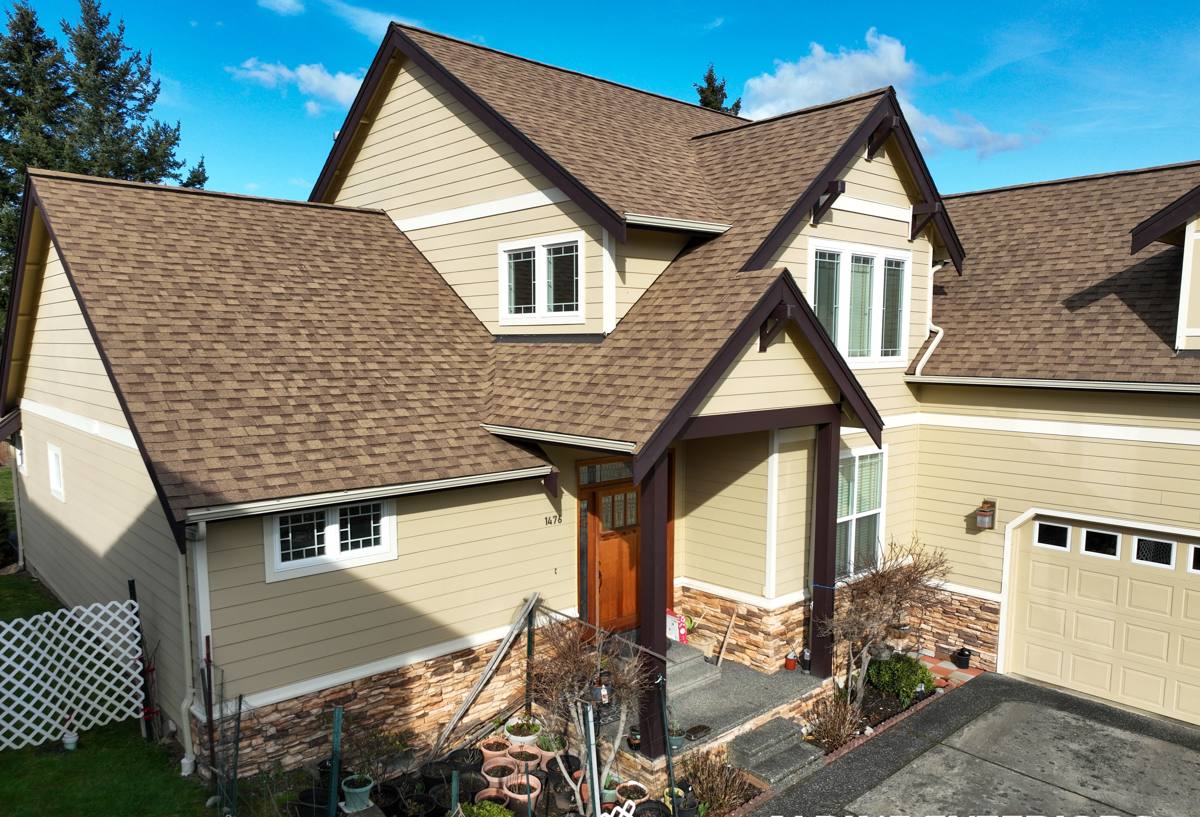
Signs a Fir Island Roof Has Reached the End of Its Life
Not every roofing problem means a full replacement — plenty of leaks are a single flashing detail that a repair can fix. But there are signs that point to the roofing system itself being spent, not just one weak spot:
- Granule loss heavy enough that you can see bare, shiny patches on asphalt shingles, especially on south- and west-facing slopes that get the most weather
- Moss and moss-stain buildup that keeps coming back within a season or two of cleaning, even after treatment
- Shingles that are cupping, curling at the edges, or cracking when you walk the roof
- Rust streaking or visible corrosion around nail heads, flashing, or metal valleys
- Soft spots in the decking you can feel underfoot, or daylight visible from the attic at eaves and ridge
- Interior staining on ceilings or in the attic that shows up during or right after a heavy rain event
- A roof that's already 18-25+ years old and has had more than one round of patch repairs
If you're seeing two or three of these at once, that's usually the point where continuing to patch costs more over a few years than a properly built replacement would.
Choosing a Roofing System That Actually Fits This Climate
There's no single "best" roofing material for every house — it depends on your roof's pitch, how exposed it is to wind off the bay, your budget, and how much maintenance you're willing to keep up with. Here's how the common options stack up for a delta-exposed property like Fir Island:
| Material | Salt air / corrosion behavior | Moss resistance | Wind performance | Typical lifespan here |
|---|---|---|---|---|
| Architectural asphalt shingle | Good with stainless or coated fasteners; standard galvanized nails corrode faster near the water | Moderate — benefits from zinc/copper strips or algae-resistant granules | Good when properly nailed and rated for the exposure | 20-25 years |
| Standing seam metal | Very good with marine-grade coatings and fasteners | Excellent — sheds moss and debris better than any shingle | Excellent; among the best for open, windy sites | 40-50+ years |
| Synthetic/composite shingle | Good; won't corrode, though fasteners still need attention | Good, varies by product | Good to very good depending on wind rating | 30-40 years |
| Basic 3-tab asphalt | Fair; more prone to wind lift and fastener issues | Poor without added protection | Fair; lower wind rating than architectural shingle | 15-18 years |
For most Fir Island homes we recommend architectural shingle rated for high wind, or standing seam metal where the budget allows — both hold up well against the combination of salt exposure and open-field wind. We steer people away from basic 3-tab in this specific location: it's not that it's a bad product everywhere, it's that its lower wind rating and thinner profile give it a shorter honest lifespan on a site this exposed, and that shows up as an earlier second roofing bill.
What a Correct Roof Replacement Actually Involves
Full tear-off, not a layover
We remove the existing roofing down to the deck rather than installing over old layers. That's the only way to actually see the condition of the decking, check for hidden moisture damage, and get a flat, sound surface for the new system — layering over an old roof just traps whatever problems are already there.
Deck inspection and repair
Once the old roofing is off, we inspect the sheathing for soft spots, delamination, or rot — common where moss has been holding moisture against the roof for years. Any compromised decking gets replaced before anything new goes down; skipping this step is one of the most common ways a "new roof" fails early.
Upgraded underlayment for wind-driven rain
Given how much of Fir Island's weather comes in sideways off the bay, we use synthetic underlayment across the field and self-adhered ice-and-water membrane at the eaves, valleys, and any roof penetrations — the spots where wind-driven rain is most likely to work its way underneath standard shingle coverage.
Corrosion-resistant fasteners and flashing
Standard galvanized fasteners can start showing rust within a few years this close to salt water. We specify corrosion-resistant fasteners and flashing metal rated for coastal exposure so the small metal parts of the roof don't become the first thing to fail.
Ventilation that matches the moisture load
A roof that can't breathe holds moisture in the attic, which speeds up moss growth on the underside of the deck and shortens the life of the roofing above it. We check intake and exhaust ventilation as part of every replacement and correct it when it's undersized or blocked — not as an upsell, but because it directly affects how long the new roof lasts.
Our Process, Start to Finish
Homeowners generally want to know two things: what's going to happen to their property, and how long it will take. Here's the general sequence:
- On-site inspection and measurement, including attic ventilation and any visible moss or moisture damage
- Written estimate with material options and a clear scope — no surprise line items added mid-job
- Scheduling around a realistic weather window, since tear-off day needs to stay dry
- Property protection: tarping landscaping, covering exterior features, and staging a debris trailer or dumpster
- Full tear-off and deck inspection, with any rot or soft sheathing repaired before moving forward
- Underlayment, flashing, and new roofing installed per manufacturer specification and local code
- Ventilation check and correction if needed
- Full site cleanup, including a magnetic nail sweep of the yard and driveway
- Final walkthrough so you can see the completed work before we consider the job done
Moss and Moisture: The Long Game After Replacement
A new roof still needs some upkeep in a climate that gives moss a near year-round growing season. A few habits go a long way toward protecting the investment:
- Keep gutters clear so water isn't sitting against the roof edge, which is where moss tends to establish first
- Trim back overhanging branches to cut down on shade and debris buildup on north-facing slopes
- Have moss treated at the first sign of growth rather than waiting for it to spread — early treatment is inexpensive; scraping established moss off shingles is not
- Schedule a roof check after major windstorms, since that's when flashing and fasteners are most likely to get stressed
None of this requires a maintenance contract — it's the kind of thing most homeowners can keep an eye on themselves once they know what to look for.
What Drives the Cost of a Fir Island Roof Replacement
Every roof is different, but the estimate you get is generally shaped by a handful of factors:
| Factor | Why it matters |
|---|---|
| Roof size and number of layers to remove | More tear-off labor and disposal, especially if there's an existing layover |
| Pitch and roof complexity | Steep or cut-up roofs with multiple valleys and penetrations take longer and use more flashing detail |
| Deck condition | Rot or soft sheathing found during tear-off adds material and labor to replace it properly |
| Material choice | Architectural shingle, synthetic, and standing seam metal carry different material and labor costs |
| Ventilation upgrades | Adding or correcting intake/exhaust vents is a smaller cost that protects the larger investment |
| Site access | Difficult access for material staging or debris removal can affect labor time |
Because of those variables, we don't quote roof replacements over the phone — we walk the roof, check the attic, and give you a real number based on your specific house, not a generic range.
Why It Matters That the Crew Already Works Fir Island
A roof replacement is only as good as the details most homeowners never see — how the valleys are flashed, what fasteners went in, whether the deck got a real inspection instead of a quick glance. A crew that already works this specific stretch of Skagit County knows what to check for before it becomes a callback: which slopes hold moss longest given the local shade and drainage patterns, where salt air tends to get to fasteners first, and how to schedule tear-off around the weather this area actually gets rather than a generic forecast. That local pattern-recognition is the difference between a roof that's built for Fir Island's conditions and one that just happens to be sitting on a Fir Island house.
If you're weighing repair versus replacement, or just want an honest read on where your current roof stands, we're happy to take a look. Fill out the form below for a free, no-pressure estimate.