 Burlington
 Composite Decking Built for Fir Island's Delta Climate
Fir Island sits low and flat in the Skagit River delta, diked farmland with open exposure to wind and moisture coming off Skagit Bay. There's very little tree cover or terrain to break up weather out here, which means decks take a steadier, harder beating than they would a few miles inland in Burlington or Mount Vernon. Salt-laden air, driving rain that comes in sideways more often than not, and a moss season that can run eight months or longer all work against a deck that isn't built with this specific environment in mind.
We install composite decking across Skagit County, and Fir Island properties get their own set of considerations. This page covers what that actually means in practice: what the climate does to decking materials and hardware, what a correctly built composite deck looks like out here, and how we approach the job from estimate to finish.
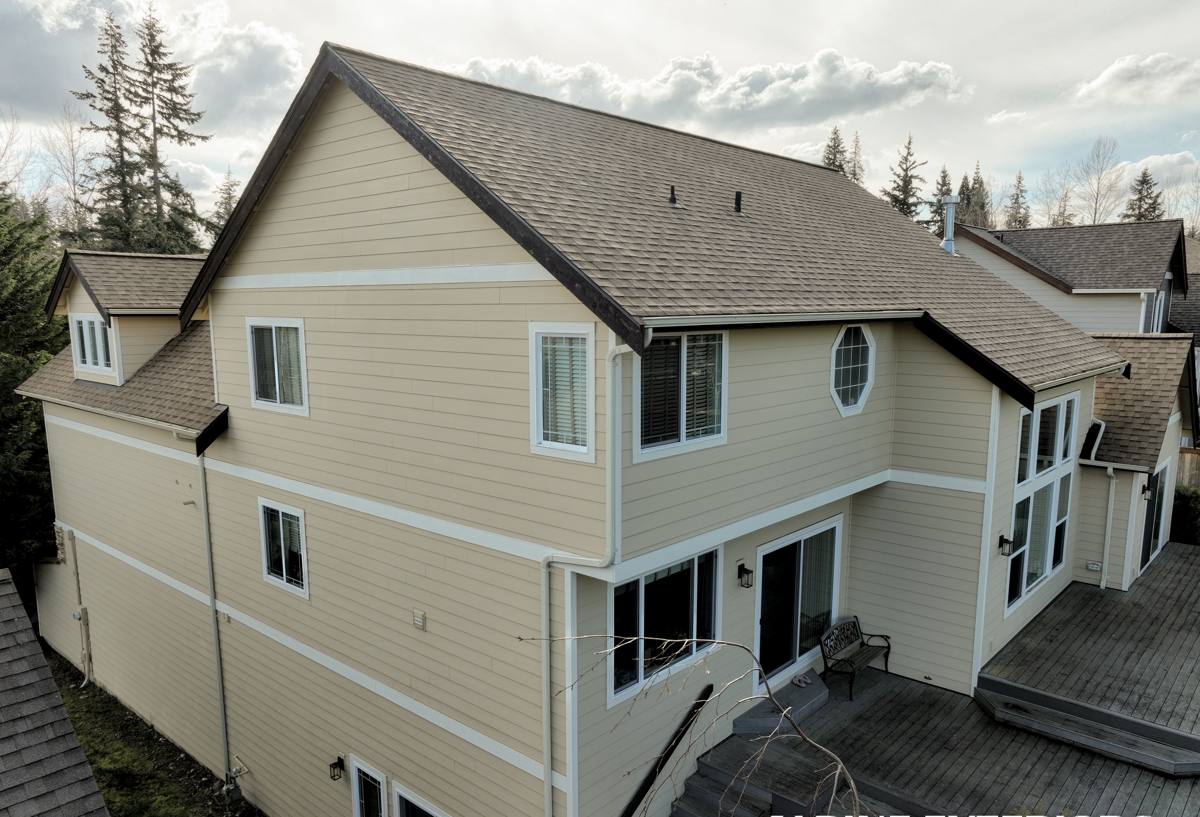
What Salt Air, Rain, and Moss Actually Do to a Deck
Salt Air and Metal Hardware
Airborne salt from the bay doesn't just affect boats and gutters — it accelerates corrosion on anything metal a deck depends on. Fasteners, joist hangers, structural screws, and railing brackets that would last decades in a drier inland climate can start showing rust and pitting years earlier out on the flats. Once a fastener corrodes, it weakens at exactly the point where it's holding structural weight, and that's not something you notice until it's already a problem.
Driving Rain and Water Intrusion
Rain that comes in at an angle finds every gap in flashing, every unsealed ledger connection, and every low spot in a deck surface. On composite decking specifically, water that sits against end cuts, fascia boards, or picture-frame corners without proper sealing can wick into the board core over time, even with capped composite products. The deck doesn't fail all at once — it fails at the joints and edges first.
Moss and Prolonged Surface Moisture
A long moss season means extended stretches where the deck surface simply doesn't dry out between rain events. Moss and algae growth on a deck isn't just cosmetic — it holds moisture against the board surface, makes the deck genuinely slippery, and on lower-quality composite can work into surface texture over years. Airflow underneath the deck and gap spacing between boards both matter more here than they would in a drier part of the state.
Composite vs. Wood for Fir Island Conditions
We get asked regularly whether wood decking still makes sense out here. It can, if a homeowner wants that look and is committed to the upkeep — but composite is generally the better fit for this specific climate, for reasons that come down to maintenance burden and moisture behavior rather than one product being universally "better."
| Factor | Wood Decking | Composite Decking |
|---|---|---|
| Moss and algae resistance | Absorbs moisture, feeds growth faster | Capped boards shed moisture, slower growth |
| Salt air effect on the board itself | Accelerates weathering, graying, splintering | Minimal effect on the board surface |
| Annual maintenance | Cleaning, sealing/staining, moss treatment | Periodic cleaning only |
| Hardware exposure | Same corrosion risk as composite | Same corrosion risk as wood |
| Upfront cost | Lower | Higher |
| Cost over 15-20 years | Often higher once maintenance is counted | More predictable |
Note that hardware corrosion risk is the same for both — that's a function of the salt air, not the decking material, which is why fastener selection matters regardless of what surface you choose.
What a Correct Composite Deck Installation Involves
Framing and Ledger Attachment
The ledger board — where the deck attaches to the house — is the single most common point of failure on any deck, composite or wood. It needs proper flashing that directs water away from the house band joist, not just caulk over lag bolts. On Fir Island, given how much rain comes in horizontally, we treat ledger flashing as non-negotiable, not an upsell.
Fasteners and Hardware Grade
Given the corrosion pressure from salt air, we use stainless steel or heavily coated structural fasteners and hangers rather than standard galvanized hardware wherever it's exposed to weather. It costs more upfront and it's the difference between hardware that's still sound at year 15 versus hardware that's rusting through at year 6.
Joist Spacing for Composite Boards
Composite decking isn't as stiff as solid wood in every direction, and manufacturers spec tighter joist spacing for composite than what's traditionally used for wood decking — often 16 inches on center, sometimes closer for angled or picture-frame layouts. Building to wood-era joist spacing under composite boards leads to bounce and, over time, board sagging between joists.
Hidden Fasteners and Board Gapping
We install with hidden fastener clip systems rather than face-screwing where the product allows it, which keeps the board surface free of holes where water and moss can take hold. Gap spacing between boards is set to allow drainage and airflow without becoming a hazard, and end-gapping is set to account for composite's expansion and contraction with temperature swings.
Drainage and Under-Deck Airflow
Especially on lower decks or decks close to grade, we pay attention to airflow underneath the structure. Trapped moisture under a deck with poor ventilation is one of the bigger contributors to moss creeping up from the underside and to accelerated hardware corrosion in that shaded, damp zone.
Choosing the Right Composite Board for This Environment
Not all composite decking is built the same, and the differences matter more in a climate like this one.
- Capped composite: Has a polymer shell wrapped around the wood-composite core, which resists moisture wicking and moss buildup far better than uncapped composite. This is what we recommend for Fir Island conditions.
- Uncapped composite: Lower cost but more exposed core material, which can absorb moisture at cut ends and fastener holes over time. We'll install it if a homeowner specifically wants it, but we're upfront that it's a tradeoff in this climate.
- Board color: Darker composite boards run hotter in direct sun but also tend to show less visible moss staining than very light colors, which stay cooler but show green and black growth more visibly.
- Surface texture: Deeper wood-grain embossing looks good but can hold more surface moisture and grip more moss spores than a smoother, low-texture finish. It's a real tradeoff between appearance and ease of cleaning.
- Warranty structure: Composite warranties vary a lot on what's actually covered — fade, staining, structural integrity, and moisture damage are often separate clauses. We go over the actual warranty language with homeowners rather than just the marketing summary.
Our Process, Start to Finish
- On-site assessment: We look at the existing structure (if replacing a deck), grade and drainage around the area, sun/shade exposure, and how exposed the site is to wind off the bay.
- Design and board selection: We walk through composite board options, color, and layout based on the house and the homeowner's priorities — appearance versus low maintenance versus budget.
- Permitting: Deck permits in Skagit County depend on size, height, and attachment method. We handle the permit process rather than leaving it to the homeowner.
- Framing and structural work: Ledger flashing, joists spaced to composite spec, and corrosion-resistant hardware throughout, built to hold up under the specific weather load out here.
- Decking installation: Hidden fastener systems where applicable, correct gapping, and clean board transitions at stairs, picture-framing, and fascia.
- Final walkthrough: We go over basic care with the homeowner before we consider the job finished, not after a callback.
Living With a Composite Deck Through Moss Season
Composite decking cuts maintenance significantly compared to wood, but "low-maintenance" doesn't mean "no maintenance," especially with an extended wet season pressing moss growth for most of the year.
| Task | How Often | Why It Matters Here |
|---|---|---|
| Sweep off debris and standing leaves | Every few weeks in fall/winter | Trapped organic debris holds moisture and feeds moss |
| Wash surface with mild soap and water | 2-3 times per year | Removes early moss and algae film before it sets in |
| Check board gaps and drainage | Once a year | Debris buildup in gaps blocks drainage and traps moisture |
| Inspect visible fasteners and hardware | Once a year | Catches early corrosion before it becomes structural |
| Check under-deck ventilation isn't blocked | Once a year | Storage or plantings under a deck can trap moisture |
A Quick Seasonal Checklist
- Keep gutters and downspouts near the deck clear so runoff isn't dumping directly onto or under it
- Trim back vegetation that's shading the deck and keeping it damp longer than it needs to be
- Don't pressure-wash composite on high settings — it can damage the cap layer and void warranties
- Address any soft, spongy, or discolored spots immediately rather than waiting for the next dry stretch
- If you notice new gaps around the ledger board or flashing, get it looked at before the next heavy rain
Cost Factors for a Fir Island Composite Deck
Composite decking projects run a wide range depending on size, board tier, and structural complexity, and we won't quote a number without seeing the site. Broadly, homeowners should expect composite to cost more upfront than a comparable wood deck, with the difference in maintenance cost narrowing that gap over the deck's lifespan. Factors that move the price the most: total square footage, deck height and whether it needs stairs or railing, substructure condition if it's a replacement, and which composite tier is selected. Ledger flashing and corrosion-resistant hardware add cost compared to a bare-minimum build, but they're the parts of the job that determine whether the deck is still solid in fifteen years.
Why Hire a Crew That Already Works Fir Island
A deck built to a generic spec sheet can still fail early out here if it's not built for this specific combination of salt exposure, rain direction, and moisture duration. Crews that regularly work Fir Island and the surrounding Skagit County flats already know to spec tighter joist spacing for composite, use corrosion-resistant hardware as standard rather than as an add-on, and detail ledger flashing for horizontal rain rather than a drier climate's assumptions. They're also familiar with the local permitting process and how it applies to decks on diked, low-lying land, which keeps the project from stalling partway through.
That local familiarity is the difference between a deck that's a maintenance headache in year five and one that's still doing its job in year twenty.
If you're planning a new composite deck or replacing an aging one on Fir Island, we're glad to walk the site with you and put together a straightforward, no-pressure estimate. Use the form below to get started.