 Burlington
 Decks in Lyman Take a Different Kind of Beating
Lyman sits in the Skagit River valley, tucked against timber and hillside where the sun doesn't reach every corner of a yard for long stretches of the day. That shade is part of what makes the area beautiful, and it's also exactly why decks here fail differently than decks out in open, sunny lots. A deck that stays damp and shaded for days after a storm never gets the chance to dry out the way one would in a more exposed spot. Add in Skagit County's long, wet fall-through-spring stretch and you've got a recipe for wood that stays saturated far longer than it was ever designed to.
We're not talking about a rare freak storm. We're talking about the everyday pattern of driving rain, morning dew, and river-valley humidity that settles in and doesn't burn off until midday, if at all. Over a few seasons, that moisture cycle works its way into fasteners, ledger connections, and end grain, and it feeds moss and algae growth on any horizontal surface that stays shaded and damp. A deck built or repaired without that reality in mind is on a shorter clock than the homeowner usually expects.
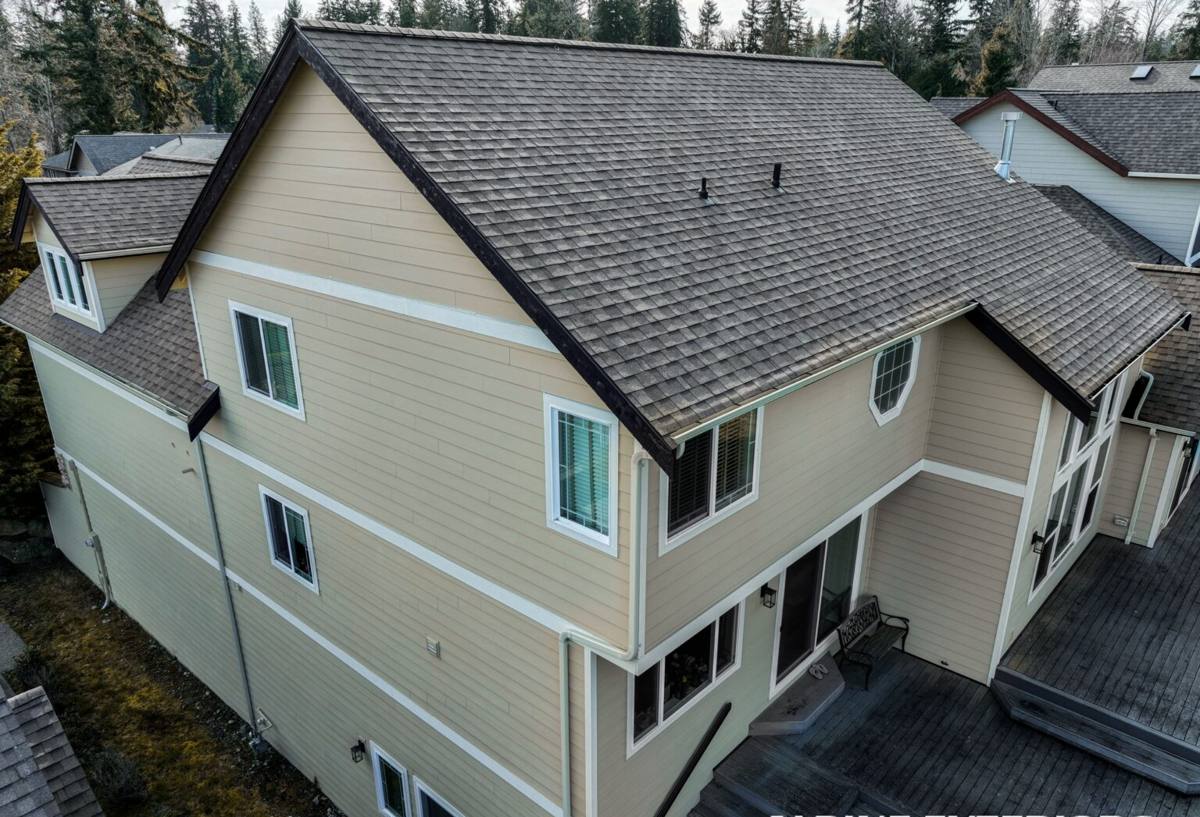
Signs Your Lyman Deck Needs Replacement, Not Another Repair
Homeowners often call us wanting a quote to replace a few boards, and sometimes that's genuinely all that's needed. But a lot of the time, the visible rot on the surface is only telling part of the story. Here's what we actually check before we recommend a full tear-off versus a repair:
- Soft or spongy spots when you press on decking, especially near the house or in shaded corners
- Rust streaking or staining around fasteners and joist hangers
- Gaps, soft wood, or dark staining where the deck ledger board meets the house siding or foundation
- Persistent green or black moss and algae film that comes back within weeks of cleaning
- Visible sag between joists, or noticeable bounce when walking across the deck
- Posts that are soft, cracked, or shifted at the base where they meet the footing
- Railings that flex or feel loose when pushed
Any one of these on its own might just mean a repair. Several of them together, especially anything involving the ledger board or the framing underneath, usually means the structure has been compromised long enough that patching individual boards won't fix the underlying problem.
What a Correct Deck Replacement Actually Involves
It Starts Underneath, Not on Top
The decking boards are the part everyone sees, but they're the least important part of the job from a durability standpoint. What matters most is what's underneath: the ledger board connection to the house, the flashing that keeps water from tracking behind that ledger, the joists, the beams, and the posts and footings carrying the load. A deck that looks brand new on top but was rebuilt over compromised framing is a deck that will show the same problems again in a few years.
Ledger Flashing Is the Single Biggest Failure Point
In our experience, more deck problems trace back to a poorly flashed ledger board than any other single cause. If water can get behind the ledger and into the house rim joist, it stays trapped there, out of sight, doing damage long before anyone notices a problem from the outside. On a full replacement, we always pull the ledger, inspect the rim joist and sheathing behind it, and install proper flashing designed to shed water away from that connection rather than trap it. This is not an optional upgrade — it's the difference between a deck that lasts and one that quietly rots from the inside.
Framing and Footings
We check joist spacing and sizing against current code for the actual span and load, not just what was there before. In river-valley soil that holds moisture longer than well-drained upland lots, footing depth and drainage around posts matter more than they might elsewhere in the county. Undersized or shallow footings are common in older decks and are one of the reasons for the sag and bounce homeowners notice over time.
Choosing Decking Material for This Climate
There's no single "best" decking material — there's a best fit for how much maintenance a homeowner actually wants to do, how much shade the deck sits in, and what budget makes sense. We lay out the honest trade-offs rather than pushing whatever has the best margin.
| Material | Moisture & Moss Resistance | Maintenance | Typical Lifespan | Relative Cost |
|---|---|---|---|---|
| Pressure-treated wood | Good if sealed regularly; end grain and fastener points still vulnerable | Annual cleaning and re-sealing recommended, especially in shaded areas | 15–20 years with upkeep | Lowest upfront |
| Cedar | Naturally moisture-resistant but still needs sealing to resist moss in shade | Regular sealing; shows weathering faster in constant shade | 15–20 years with upkeep | Mid-range |
| Composite / capped composite | Very good; won't rot, though moss and algae can still grow on the surface film in deep shade | Occasional washing; no sealing or staining | 25–30+ years | Higher upfront |
For a shaded, river-valley lot like many in Lyman, we lean toward capped composite or a well-sealed cedar for anyone who doesn't want to be on a strict annual maintenance schedule. Pressure-treated wood is still a solid, honest choice for homeowners who don't mind the upkeep and want to keep costs down — the key is being realistic about the maintenance commitment before the deck goes in, not after moss has taken hold.
A Note on Framing Material
Whatever decking material goes on top, the framing underneath should always be pressure-treated lumber rated for ground contact where posts meet footings, with corrosion-resistant fasteners and hardware throughout. In a climate where moisture sits against metal connectors longer than in drier parts of the state, standard hardware corrodes faster and weakens joist connections without any visible warning until something fails.
Railings and Code Requirements
Any deck replacement is also a chance to bring railings up to current safety standards, which matters both for safety and for resale. Washington follows the International Residential Code baseline: guardrails required on any deck surface more than 30 inches above grade, a minimum guardrail height of 36 inches for residential decks, and baluster spacing that won't allow a 4-inch sphere to pass through. Older decks in the area were often built before these standards tightened, and a full replacement is the right time to correct that rather than reinstall railings that won't pass inspection.
Our Deck Replacement Process
- On-site inspection. We check the ledger, framing, footings, and posts before quoting anything, not just the decking surface.
- Honest scope and estimate. We tell you plainly whether this is a repair or a full replacement, and why, with a written estimate before any work starts.
- Permit handling. Deck replacements involving structural framing typically require a Skagit County permit — we handle that process so you don't have to.
- Tear-off and framing evaluation. We remove the old decking and inspect the framing underneath in daylight before deciding what's reused and what's replaced.
- Ledger flashing and structural repair. This is where most of the long-term durability gets built in, and it's done before a single new board goes down.
- Decking, railings, and finish work. Installed to current code with corrosion-resistant fasteners appropriate for the material.
- Final walkthrough. We go over the finished deck with you, including what maintenance schedule fits the material you chose.
Keeping a New Deck Healthy in Lyman's Climate
- Sweep leaves and debris off the deck surface regularly, especially in fall — trapped organic matter feeds moss and holds moisture against the boards
- Wash the deck surface at least once a year to break up early moss and algae growth before it takes hold
- Check and re-seal wood decking on the schedule the manufacturer or your contractor recommends — don't wait until it looks dry and gray
- Keep gutters and downspouts near the deck clear so runoff isn't dumping extra water onto or under the structure
- Look underneath the deck once a year for standing water, soft framing, or new moss growth on joists
- Trim back overhanging branches where practical to let more light and air reach the deck surface
Why a Local Skagit County Crew Matters Here
A contractor who mostly works drier, sunnier parts of the state will often build a deck to a generic standard that holds up fine somewhere else and underperforms in a shaded Skagit River valley lot. Knowing which corners of a property hold moisture longest, how the local permit process works in Skagit County, and which material and flashing choices actually earn their keep in this climate comes from working here repeatedly, not from a general playbook. We've built and replaced decks throughout the Burlington area, and Lyman's mix of shade, moisture, and moss pressure is a pattern we plan for from the first inspection, not something we discover after the fact.
If your deck is showing soft spots, persistent moss, or just feels older than it should, we're happy to take a look and give you a straight answer about repair versus replacement. Reach out for a free, no-pressure estimate using the form below.