 Burlington
 Deck Building in Oak Harbor: Designed for a Marine Climate, Not a Catalog Photo
A deck in Oak Harbor doesn't live the same life as a deck in a dry inland climate. Between the salt-laden air coming off the water, long stretches of driving rain, and a moss season that can run most of the year in shaded yards, the structure under your feet is under constant, quiet pressure. Most deck problems we get called out to fix didn't start as one big failure — they started as a fastener that rusted, a ledger board that never dried out, or a board that sat wet against another board for six months straight. Building a deck that actually lasts here means designing for that reality from the first stake in the ground, not just picking a decking color and framing underneath it.
This page is about deck building specifically for Oak Harbor homes — what the local climate demands, what a correctly built deck involves structurally, how our process works from first call to final walkthrough, and why local experience matters more than it seems like it should.
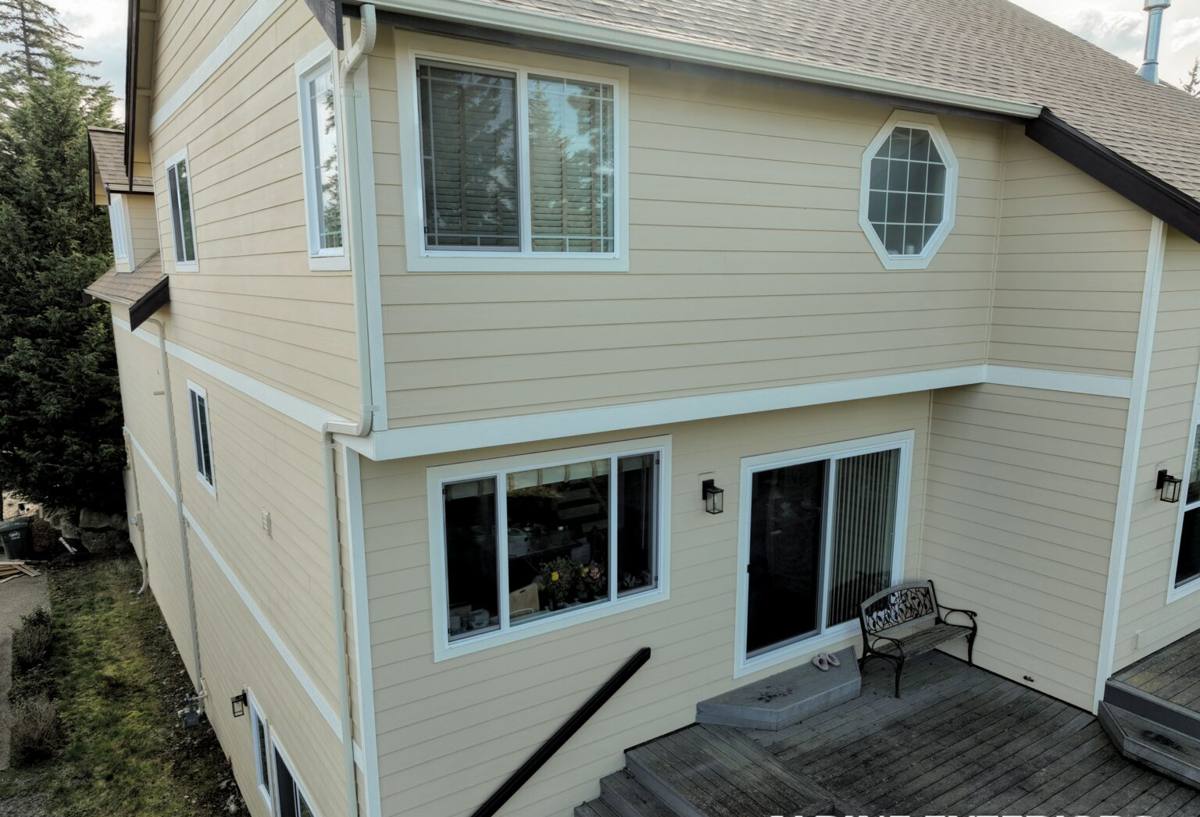
What Salt Air, Rain, and Moss Actually Do to a Deck
Three regional conditions do most of the damage to decks in this area, and they compound each other:
Salt Air
Airborne salt accelerates corrosion on anything metal — nails, screws, joist hangers, railing brackets, and structural bolts. A fastener rated for general outdoor use inland can corrode faster near the water, and once a fastener weakens, it's usually hidden under decking or behind railing posts where nobody sees it until something moves or squeaks.
Driving Rain
Rain that comes in at an angle, pushed by wind off the water, gets into places vertical rain never would — under handrail caps, behind fascia boards, into the end grain of boards that butt up against a house wall. End grain soaks up water far faster than a board's flat face, which is why so many deck failures start at butt joints and ledger connections rather than out in the open field of the deck.
Moss and Sustained Moisture
Shaded yards, tree cover, and our long wet season give moss and algae plenty of time to establish on deck boards, especially on the north side of a house or under overhangs where sun rarely reaches. Moss holds moisture against the wood or composite surface long after the rest of the deck has dried, and on wood decking it becomes slick and genuinely dangerous underfoot.
None of this means a deck can't last for decades here — it means the build has to account for these conditions instead of ignoring them.
Decking Material: What Actually Performs in This Climate
There's no single "best" decking material for every homeowner — budget, maintenance appetite, and how the deck will be used all matter. Here's how the common options actually compare under Oak Harbor conditions:
| Material | How It Handles This Climate | Maintenance | Typical Lifespan |
|---|---|---|---|
| Pressure-treated wood | Good structural performance if properly sealed and re-sealed; end grain and fastener points are the weak spots near salt air | Annual cleaning, re-sealing every 1-3 years | 15-20 years with upkeep |
| Cedar | Naturally rot-resistant, ages gracefully, but softer surface can hold moss if not cleaned | Cleaning and oiling every 1-2 years to hold color and resist moisture | 15-25 years with upkeep |
| Composite decking | Doesn't rot or absorb water into the board itself; capped composites resist staining and moss better than early composite generations | Periodic washing; no sealing or staining required | 25-30+ years |
| PVC decking | Fully synthetic, essentially immune to moisture damage and rot; performs consistently in wet, salty conditions | Occasional washing | 30+ years |
We install all of these depending on what a homeowner wants, but we're upfront about trade-offs. Wood costs less up front and looks great, but it only performs as well as the maintenance schedule behind it — skip a couple years of sealing near the water and you'll see it. Composite and PVC cost more initially but remove most of the moisture-related maintenance burden, which matters a lot in a climate that doesn't give wood much of a break.
What's Underneath Matters More Than What's On Top
Homeowners naturally focus on the decking surface, but the framing underneath is what actually determines how long a deck lasts and whether it stays safe. In this climate, we pay particular attention to:
Ledger Board Attachment
The ledger board — where the deck attaches to the house — is the single most common failure point on decks nationally, and driving rain makes it worse here. Proper flashing between the ledger and the house wall, with the flashing lapped correctly so water sheds outward instead of behind it, is not optional. This is also the connection point most responsible for catastrophic deck collapses when it's done wrong.
Joist Protection
Joist tape or a comparable flashing membrane over the top of each joist keeps screw penetrations from becoming entry points for water into the joist itself. It's a small material cost that meaningfully extends the life of the framing underneath, especially in a climate where the frame rarely gets a long dry stretch to recover.
Post Bases and Footings
Posts that sit directly on or in concrete without a proper elevated post base wick moisture up into the wood continuously. Correct post bases keep the post end grain off wet surfaces and let water drain away instead of pooling at the base.
Corrosion-Resistant Hardware
Joist hangers, structural screws, and bolts should be rated for the fastener manufacturer's coastal or high-corrosion applications, not just standard exterior-rated hardware. It costs more per piece and makes no visible difference on installation day — but it's the difference between hardware that's still sound in fifteen years and hardware that's rusting through in five.
Railings and Guards Built for Wind and Salt
Railing systems take a different kind of abuse: wind load, hand contact and oils, and constant exposure since they're rarely under any overhang. We pay attention to bracket and baluster fastener corrosion resistance specifically at railing connections, since these are structural (they're what keeps someone from going over the edge) and they're also the most touched, most exposed part of the deck. Cable rail and metal baluster systems need corrosion-resistant hardware verified before installation, not assumed.
Our Deck Building Process
Every deck we build in Oak Harbor follows the same sequence, adjusted for the specific site:
- On-site assessment — we look at sun exposure, drainage, tree cover, and how close the deck will sit to salt-influenced air, since all of that affects material and hardware recommendations.
- Design and material selection — we walk through decking, railing, and structural options honestly, including cost and maintenance trade-offs, so the choice fits your budget and how you actually want to maintain it.
- Permitting — most new decks and many replacement decks require a permit; we handle the paperwork and inspections so you don't have to chase it down.
- Demolition (if replacing) — old decking, framing, and any compromised ledger connections are removed and the framing underneath is inspected before we build back.
- Framing — ledger flashing, joist layout, post bases, and corrosion-resistant hardware go in first, since this is the part nobody sees again once decking is down.
- Decking and railing installation — surface material and railing system installed to manufacturer spec, which matters for warranty coverage on composite and PVC products.
- Final walkthrough — we go over the finished deck with you, including a basic maintenance schedule specific to the material you chose.
Permits and Local Considerations
Deck construction in this area is generally subject to local building permit requirements, and elevated decks in particular often require an engineered or code-compliant guardrail and stair design. Setback requirements from property lines can also affect where a deck can be built, especially on smaller lots. We handle the permit process as part of the build rather than leaving it to the homeowner, since getting it wrong can mean a deck that has to be partially rebuilt to pass inspection.
A Simple Maintenance Checklist for Oak Harbor Deck Owners
Whatever material you choose, a few habits go a long way in this climate:
- Sweep or rinse the deck surface regularly, especially in fall and winter when leaves and moisture sit longest
- Treat visible moss or algae promptly rather than letting it establish, particularly on shaded or north-facing sections
- Check railing connections and hardware annually for looseness or visible corrosion
- Keep gutters and downspouts clear so roof runoff isn't dumping extra water onto or near the deck
- Re-seal wood decking on the schedule recommended for the product — don't wait until it looks dry and gray
- Clear debris from between deck boards where moisture and organic material tend to collect
Why a Crew That Already Works Oak Harbor Makes a Difference
Deck building isn't exotic work, but building one that holds up in a marine climate takes a different set of defaults than building one in a dry inland town — different hardware specs, different flashing details, different judgment calls about where moisture will actually collect once the deck is in use for a few years, not just on installation day. A crew that already works this area has already seen which details matter here specifically, from salt-corroded hardware on decks that skipped the upgrade to moss buildup patterns tied to tree cover and sun exposure around Skagit County and the surrounding Puget Sound region. That local pattern recognition shows up in the small decisions — the hardware grade, the flashing detail, the drainage slope — that a generic build wouldn't necessarily get right the first time.
If you're planning a new deck or replacing one that's showing its age, we're happy to come take a look and talk through what makes sense for your yard, your budget, and how you want to use the space. Reach out for a free, no-pressure estimate using the form below.