 Burlington
 Why Anacortes Decks Take More Punishment Than an Inland Deck
A deck in Anacortes lives a harder life than the same deck built twenty miles inland. Being surrounded by saltwater means salt-laden air is a constant, not an occasional event — it settles on every exposed surface, works into fastener heads, and accelerates corrosion on anything that isn't rated to handle it. Add in driving rain that comes in sideways off the water during fall and winter storms, and a moss season that in Skagit County can realistically run from October through May, and you've got a structure that needs to shed water fast, resist corrosion constantly, and dry out between storms instead of staying damp for days at a time.
None of this means a deck in Anacortes can't last. It means the details that get skipped on an easier build — flashing, fastener grade, gap spacing, drainage slope — are exactly the details that determine whether your deck looks and performs well in year twelve or starts showing rust streaks, soft spots, and slick green boards by year four.
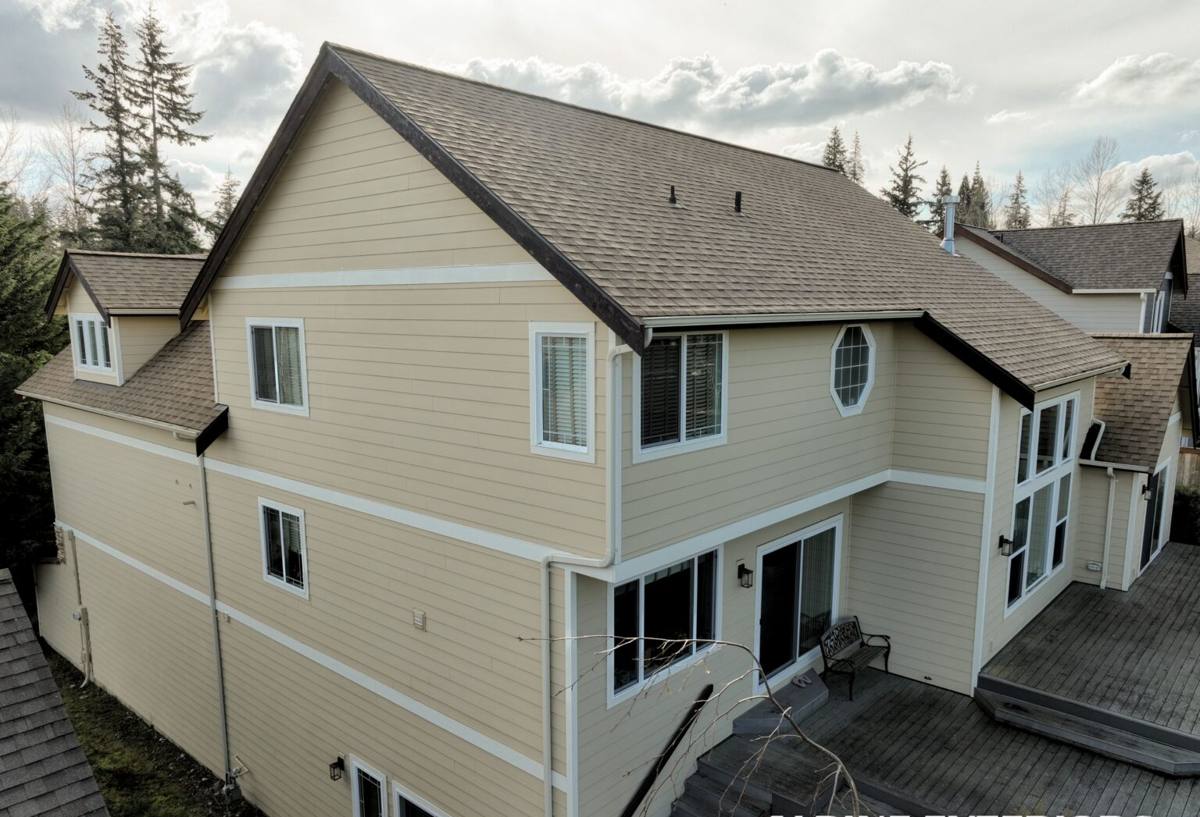
What a Deck Built for This Climate Needs to Get Right
Every deck needs a sound structure, but the priorities shift when the deck sits in a marine climate. A correctly built Anacortes deck needs to:
- Shed rainwater off the surface and out from under the frame instead of trapping it
- Use fasteners and connectors that won't corrode or stain the wood within a few seasons
- Keep the house's structure — the ledger board and band joist — fully sealed from water intrusion
- Leave enough airflow underneath and between boards that things can actually dry out
- Resist moss and algae buildup on walking surfaces, not just look good on installation day
A deck that checks these boxes will cost a bit more upfront in hardware and flashing than a bare-minimum build, but that difference is small compared to the cost of repairing rot damage to a house band joist or replacing decking that failed early.
Choosing a Decking Material That Can Take Salt Air and Moss
There's no single "right" decking material for Anacortes — it's a trade-off between upfront cost, how much upkeep you're willing to do, and how the material actually behaves in a wet, salty environment. Here's how the common options stack up:
| Material | Upfront Cost | Maintenance | Performance in Salt Air & Moisture |
|---|---|---|---|
| Pressure-treated fir/hem-fir | Lowest | Needs re-staining/sealing every 1-2 years | Fine if sealed regularly; end grain and fastener holes are the weak points |
| Western red cedar | Moderate | Regular sealing to hold color and resist checking | Naturally rot-resistant, but still needs a sealed finish in this much rain |
| Capped composite | Higher | Occasional washing, no sealing/staining | Doesn't absorb moisture or rot, but can still get slick with algae film and needs the right fastener system |
| Tropical hardwood (ipe, cumaru) | Highest | Periodic oiling to maintain color, minimal structural upkeep | Extremely dense and rot-resistant, holds up well to marine exposure over decades |
We'll talk through this trade-off honestly during your estimate rather than steering you toward whatever's most profitable to install. If you want a low-upkeep deck and don't mind the higher material cost, composite or hardwood makes sense here. If you're comfortable with a maintenance routine, cedar or treated lumber can still give you a great deck for less money.
A Note on Composite Decking
Not all composite boards handle the wet-dry cycling of this climate the same way. Fully capped boards (with a protective shell on all sides) resist moisture absorption far better than older uncapped composites, which can swell at the edges over time. If composite is the direction you're leaning, we'll point you toward products with a track record in wet Pacific Northwest conditions rather than whatever's cheapest at the yard.
Fasteners, Hardware, and Flashing That Won't Corrode or Rot
This is the part of a deck build that's invisible once the project is done — and it's the part that determines whether the deck is still solid in fifteen years. In a coastal environment, standard electro-galvanized screws and joist hangers will start showing rust and staining far sooner than they would inland. We build with stainless steel or high-grade hot-dip galvanized fasteners and connectors on exterior work in this area, because the cost difference over the life of the deck is small compared to the cost of replacing corroded hardware that's failed under a finished deck.
Just as important is how the deck attaches to your house. The ledger board connection is the single most common source of hidden rot on any deck, anywhere — and in a climate with this much driving rain, a poorly flashed ledger will let water behind the siding and into the band joist long before anyone notices from the outside. We flash that connection properly with self-adhering waterproof membrane and metal flashing that directs water out and away from the house, not into it.
Footings, Drainage, and Grading
Footings Sized for Local Soil and Frost Conditions
Footings need to be sized and set to the depth required for the soil and frost conditions on your specific lot, and tied into the framing with proper connectors rather than resting loosely on the posts. We don't guess at this — footing depth and spacing get worked out for your site and confirmed against the applicable building code before we pour anything.
Water Has to Go Somewhere
A deck that traps water underneath it is a deck that grows moss and stays damp between storms — which is exactly what shortens the life of the framing. Grading around and under the deck needs to move water away from the house and off the site, not pool against footings or the foundation. We check this during the site visit, because a drainage problem that isn't obvious in August becomes very obvious during a wet Skagit County winter.
Railings and Guards Built for a Marine Environment
Railings take a lot of direct weather exposure — rain, salt spray, and sun — and they're also a safety component, so material choice matters twice as much here. Aluminum and powder-coated steel railing systems hold up well against salt air corrosion when properly finished; raw or poorly coated metal will show rust streaks down the deck face within a season or two. Cable and composite rail systems are also solid options if you want a low-maintenance look. Whatever system we install, we build it to meet the guard height and baluster spacing requirements that apply to your project, since these aren't optional details on a code-compliant deck.
Our Deck Building Process
Our process doesn't change because a project is in Anacortes rather than Burlington, but the decisions we make within it do — because we already know what this climate does to a deck over time.
- Site visit and honest assessment — we look at sun and wind exposure, existing drainage, soil conditions, and how the deck will attach to your house before recommending anything.
- Material and design conversation — we walk through the cost, maintenance, and lifespan trade-offs above so you're choosing with full information, not guessing.
- Permitting — we handle the paperwork with the applicable local jurisdiction so your deck is built to code and won't cause problems if you sell the house later.
- Framing and flashing — the structural work and waterproofing details that don't show up in photos but determine how the deck ages.
- Decking, railing, and finish work — installed with corrosion-resistant fasteners and correct spacing for drainage and movement.
- Final walkthrough — we go over the finished deck with you, including what maintenance it actually needs going forward.
Staying Ahead of Moss Season
Even a well-built deck needs some seasonal attention in this climate — the goal is to keep moss and algae from getting a foothold rather than scraping it off once it has. A few habits go a long way:
- Sweep debris and fallen leaves off the deck regularly through fall, since trapped organic matter is what moss needs to establish
- Rinse the surface periodically through the wet months rather than letting a green film build up over winter
- Keep gutters and downspouts near the deck clear so runoff isn't dumping directly onto the surface
- Re-seal or re-stain wood decking on the schedule the product actually calls for, not "whenever it looks bad"
- Check railing posts and connection points once a year for early rust staining or loose hardware
Skipping these doesn't cause sudden failure, but it does compress the timeline — a deck that's neglected through a few wet Skagit County winters will need refinishing or repair years earlier than one that's kept up.
Why Hire a Crew That Already Works in Anacortes
A contractor who mostly builds decks in drier, inland conditions can still frame a deck that looks fine on day one. What's harder to get right without local experience is everything described above — the fastener grade that actually holds up to salt air, the drainage detail that matters because of how wet this area gets, the flashing approach that accounts for driving rain off the water. We build decks across this region regularly, which means we're not guessing at what Anacortes weather does to a deck over five or ten years — we've seen it, and we build accordingly from the start.
If you're planning a new deck or replacing one that's showing its age, we're happy to come take a look and give you a straightforward, no-pressure estimate — just fill out the form below.