 Burlington
 Why Windows in Bow Take a Different Kind of Beating
Bow sits close enough to Samish Bay and the open water of Skagit County that homes here deal with a different mix of weather than a house twenty minutes inland in Burlington proper. You get salt-laden air rolling off the water, wind-driven rain that hits window walls sideways instead of straight down, and long stretches of damp, low-light weather where surfaces almost never fully dry out. That combination is hard on window frames, hardware, and seals in ways that don't show up on a spec sheet — it shows up five or ten years later as pitted hardware, soft wood trim, foggy glass, and frames that won't latch square anymore.
A window that performs fine in a dry inland climate can struggle here. Salt air accelerates corrosion on metal components — hinges, cranks, locks, and screws — faster than plain rain does. Constant moisture combined with limited sun exposure means anything that isn't detailed correctly at installation stays wet longer and starts breaking down sooner. When we talk about "custom windows" for a Bow property, we mean windows and installation details chosen specifically to hold up under that combination, not a generic window dropped into any opening.
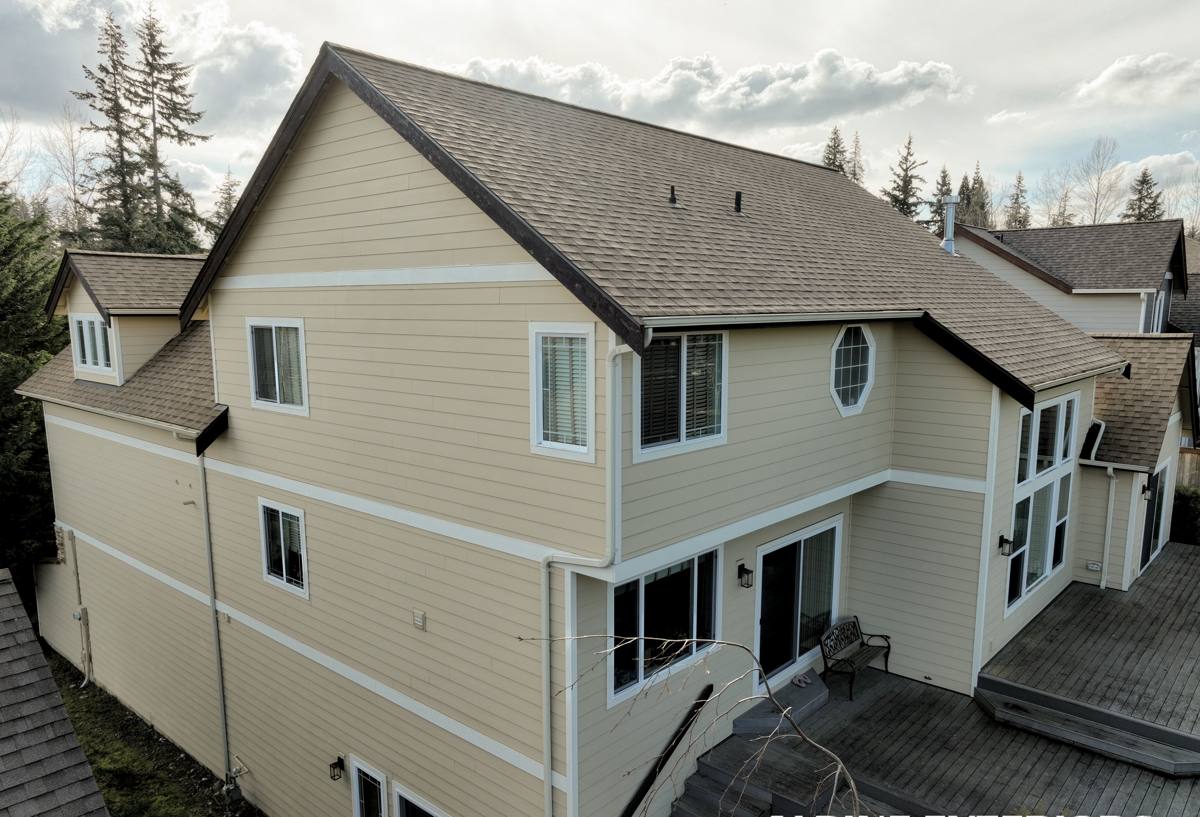
What "Custom" Actually Means Here
Custom doesn't just mean a nonstandard shape or a big picture window. Most of the work we do under that heading is:
- Windows sized and built to fit openings that aren't standard dimensions — common in older Skagit County homes and additions
- Frame and glass packages matched to a wall's sun and wind exposure, not a one-size-fits-all spec
- Replacement units built to fill an existing rough opening correctly, instead of forcing a stock size and shimming the gaps
- Matching sightlines and grid patterns across a home so new windows don't look bolted on next to originals
In a lot of houses around Bow — farmhouses, older ranch homes, and additions built over the decades — openings were framed by hand and aren't perfectly square or standard-sized. Custom sizing means the window fits the opening instead of the installer cutting corners to make a stock unit work, which is exactly where leaks start.
Frame Material Options for a Coastal-Adjacent Climate
There's no single "best" window material for every house — it depends on exposure, budget, and how much upkeep you want to take on. Here's how the common options actually perform in Bow's conditions:
| Material | How it handles salt air & rain | Maintenance | General cost position |
|---|---|---|---|
| Vinyl | Won't corrode or rust; good moisture resistance; seams and welds matter more in wind-driven rain | Low — occasional cleaning | Lowest to mid |
| Fiberglass | Very stable in temperature and moisture swings; holds paint well if you want a custom color | Low | Mid to higher |
| Wood-clad | Good insulating value; the clad exterior protects the wood, but any breach in the cladding lets moisture into wood over time | Higher — watch for cladding damage and reseal as needed | Higher |
| Aluminum | Strong but conducts cold and is more prone to corrosion in salt air without a quality finish | Moderate | Varies |
For most Bow homes we lean toward vinyl or fiberglass on the sides of the house that catch the most wind and rain, simply because there's no metal hardware exposed to corrode and no paint film that can fail. Wood-clad still has a place — especially where a homeowner wants a specific interior wood finish — but we're honest that it asks more of you in upkeep near the water.
Glass Packages
Double-pane, low-E glass with argon fill is the practical baseline for this area — it manages condensation better in our humid, low-sun-hour winters and cuts heat loss. Triple-pane can make sense on a north- or west-facing wall that takes the worst of the weather, but it adds weight, cost, and isn't always necessary on more sheltered elevations. We'll tell you where it's worth it and where it isn't rather than upselling it across the board.
The Installation Details That Actually Prevent Leaks
Most window failures we get called out to inspect aren't a bad window — they're a window that was installed without the right flashing and sealing sequence. In a climate with this much wind-driven rain, the installation details matter more than the brand name on the frame. A correct install includes:
- Removing old caulk and inspecting the rough opening and sheathing for hidden moisture damage before anything new goes in
- Installing a sloped sill pan so any water that does get behind the window drains back out instead of pooling
- Flashing tape applied in the correct shingle-lap order — sill, sides, then head — so water is always directed outward and down
- Proper shimming and fastening so the window stays square and operates smoothly for years, not just on day one
- Exterior sealant rated for the material and gap size, applied where it belongs and nowhere it doesn't (sealant is not a substitute for flashing)
- Interior air sealing so conditioned air isn't leaking out around the frame
Skip any one of those steps and a window can look fine for a year or two before moisture finds its way into the wall framing. In a place with as much sustained damp weather as Skagit County, that hidden moisture doesn't dry out on its own — it sits there and causes real damage.
Our Process for a Bow Window Project
Assessment and Measurement
We start by looking at the actual openings — not just taking a homeowner's word on size — and checking the condition of the surrounding trim, sheathing, and siding. If there's already water damage or soft wood around an opening, we flag it before ordering anything, because that has to be addressed as part of the job, not discovered halfway through.
Product Selection
Based on the wall's exposure to weather, your budget, and the look you're going for, we walk through frame material and glass package options and explain the real trade-offs — not just the ones that favor a higher-margin product.
Installation
Old windows come out, openings get inspected and repaired if needed, and new units go in following the flashing and sealing sequence above. We protect your landscaping and interior finishes while we work and keep the site clean day to day, not just at the end.
Final Check and Cleanup
Every window gets operated, checked for square, and inspected for a clean seal before we call the job done. We walk the finished work with you so you know what was done and what to watch for going forward.
Signs Your Current Windows Are Already Losing the Fight
If you're not sure whether it's time to replace versus repair, these are the signs we see most often on homes in this area:
- Fogging or moisture trapped between panes — the seal has failed and can't be fixed, only replaced
- Frames that feel soft, spongy, or discolored, especially at the bottom corners
- Visible black or green growth on frames or nearby trim that keeps coming back after cleaning
- Hardware that's corroded, sticky, or won't latch tight anymore
- Drafts you can feel around the frame on a windy day
- Condensation forming on the interior glass regularly through fall and winter
One or two of these on an older window might just mean a repair or reseal. Several at once, especially combined with soft framing, usually means replacement is the more honest recommendation — and we'll tell you which situation you're in rather than pushing a full replacement when a repair would do.
Moss, Mildew, and Living With a Long Damp Season
Skagit County's moss season is long, and it's not just a roof problem. Moss and mildew take hold on window sills, tracks, and exterior trim wherever water sits and doesn't get enough sun or airflow to dry. That's part of why sill design and drainage matter as much as the glass itself — a sill that sheds water quickly stays cleaner and lasts longer than one that holds moisture against the frame. A few habits go a long way between professional checkups:
- Clear debris out of window tracks and weep holes a couple of times a year so water can actually drain
- Rinse pollen, salt residue, and grime off frames periodically — buildup holds moisture against the surface
- Check exterior caulking annually for cracking or separation, especially on walls that take the brunt of the weather
Why Hiring a Crew That Already Works in Bow Matters
Window installation is one of those jobs where local experience shows up in the details — knowing which walls in this area take the worst weather, which older homes tend to have non-standard openings, and how aggressively salt air and moss actually behave on materials here versus a drier inland job. A crew that regularly works Bow and the surrounding Burlington area isn't guessing at flashing details or material choices — they've seen how those decisions hold up five and ten years later on houses just like yours. That local track record is worth more than a lower bid from a crew that's installing to a generic spec and moving on to the next region.
If your Bow home needs new windows — whether it's a full replacement project or just a few problem openings — we're happy to take a look and give you a straight assessment. Reach out for a free, no-pressure estimate using the form below, and we'll walk the property with you and talk through what actually makes sense for your home and budget.