 Burlington
 Building a Deck That Actually Holds Up in Edison
Edison sits close enough to Samish Bay and the tidal flats that homes here deal with a version of Skagit County weather that's a little harsher than places further inland. The salt-tinged air off the water, combined with long stretches of driving rain and a moss season that seems to start earlier and last longer every year, means a deck built to a generic spec often starts showing problems within a few seasons. A deck built for this specific stretch of ground behaves differently — and lasts longer — than one built from a one-size-fits-all plan.
We build and replace decks for homes around Edison and the rest of the Burlington area, and the patterns repeat: fasteners that rust before the boards even weather, ledger boards that trap water against the house, and framing that was never really rated for the amount of rain this region absorbs over a wet winter. A correct deck job here isn't about upgrading everything to the most expensive option — it's about matching materials and details to what this specific climate actually does to a structure.
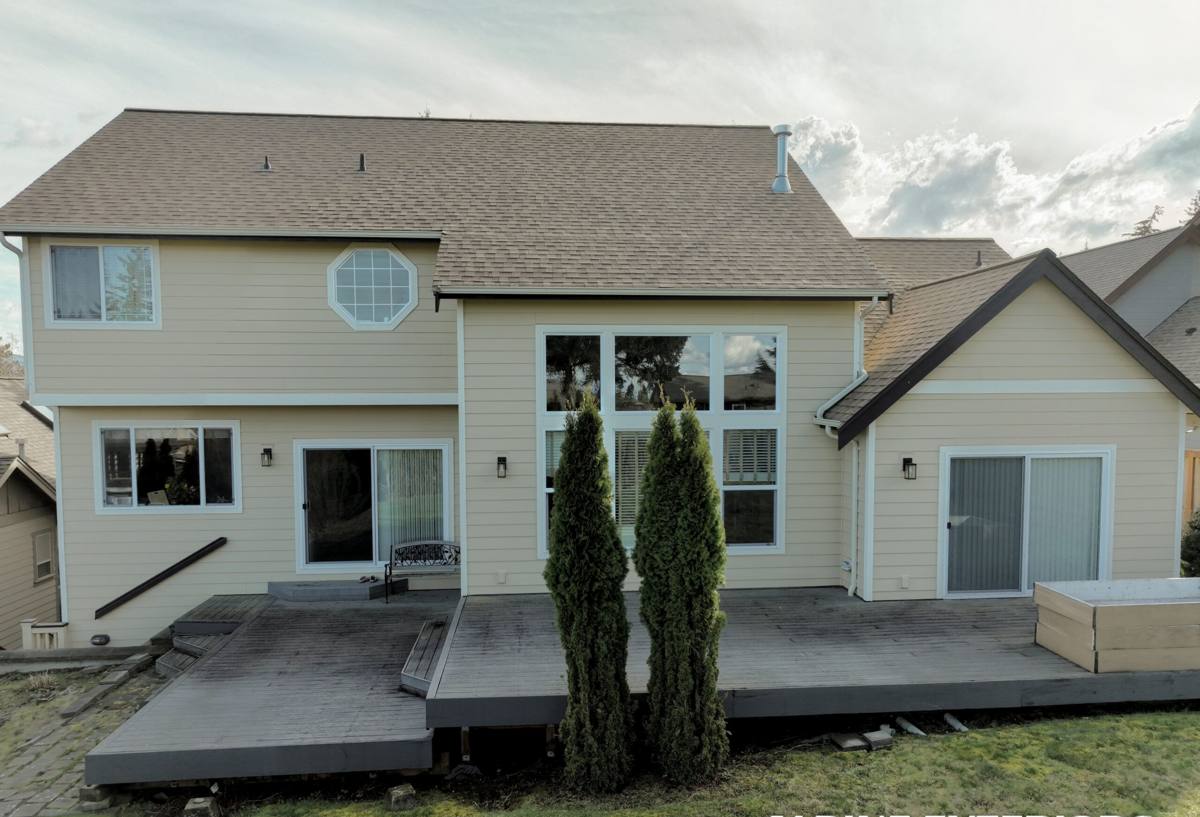
What Edison's Climate Does to a Deck Over Time
Salt Air and Metal Hardware
Proximity to Samish Bay means airborne salt reaches decks here more than it does further east in Skagit County. Salt accelerates corrosion in fasteners, joist hangers, and railing hardware that aren't rated for it. Once a hidden fastener starts rusting inside a joist hanger, you usually don't see it until the connection has already weakened — which is why hardware selection matters as much as the decking itself.
Driving Rain and Standing Water
Rain in this part of Washington doesn't fall straight down very often — wind-driven rain finds its way under boards, into end grain, and behind ledger connections if those areas aren't detailed correctly. Decks that look fine on top can be quietly rotting from the framing up if water isn't being shed away from the house and off the structure.
Moss, Algae, and Slow Drying Time
Overcast, damp stretches mean deck surfaces don't dry out quickly, and shaded decks under trees or on the north side of a house can stay damp for days. That's ideal growing conditions for moss and algae, which don't just look bad — they hold moisture against the decking surface and make boards slick and dangerous underfoot.
Choosing the Right Decking Material for an Edison Property
There's no single "best" decking material — there's a best material for a given budget, sun exposure, and how much upkeep a homeowner actually wants to do. Here's how the common options actually perform in this climate:
| Material | How It Handles Salt Air & Rain | Moss Resistance | Maintenance Level |
|---|---|---|---|
| Pressure-treated lumber | Good if properly sealed; treatment resists rot but surface still absorbs water | Needs regular cleaning; grain traps spores | High — annual cleaning and periodic sealing |
| Cedar | Naturally rot-resistant but still needs finish maintenance near salt air | Moderate; benefits from airflow underneath | Moderate to high — refinishing every few years |
| Composite decking | Excellent — doesn't absorb moisture or corrode | Good, though shaded areas still need occasional washing | Low — periodic washing, no sealing |
| PVC/capped polymer | Excellent — fully sealed surface, unaffected by salt | Best of the group; smooth cap sheds spores more easily | Low — occasional washing |
We're honest with homeowners about trade-offs rather than pushing whatever has the best margin. Wood costs less up front and can look great, but it asks for more of your time every year. Composite and PVC cost more initially but hold up better against the specific combination of salt, rain, and shade that Edison properties deal with. Our professional standard is to lay out the real maintenance burden of each option before you commit, not after.
What Correct Framing and Footings Look Like Here
The part of a deck nobody sees is the part that determines whether it's still solid in fifteen years. In this climate, that means:
- Footings set below frost depth and sized for the actual soil conditions on the lot, not a generic minimum
- Joists spaced tightly enough to support the specific decking material chosen — composite and PVC often need closer spacing than solid wood
- Structural screws or corrosion-rated bolts at every connection, not just nails
- Joist tape or flashing on top of every joist to keep water from wicking into the wood from above
- Proper airflow underneath the deck so framing can dry out between rain events instead of staying damp for weeks
Skipping any one of these doesn't show up right away. It shows up in year four or five, as soft spots, squeaking, or a railing post that's gone spongy at the base.
Ledger Attachment and Drainage: The Detail That Fails Most Often
Most of the deck failures we get called out to inspect in this area trace back to the ledger board — the piece that attaches the deck to the house. If it's not flashed correctly, water runs behind it and into the house's wall assembly, which can mean rot damage well beyond the deck itself. In a climate with this much sustained rain, ledger flashing isn't optional trim work — it's the single most important waterproofing detail on the whole project. We also make sure decking boards have proper gapping and slope so water sheds off the surface instead of pooling, which matters more here than in drier parts of the state because standing water simply doesn't evaporate quickly under a Skagit County overcast sky.
Railings, Fasteners, and Hardware Built for Coastal-Adjacent Air
Railings take a beating from both weather and daily use, and they're also where corroded hardware becomes a genuine safety issue rather than just a cosmetic one. For Edison projects we default to stainless or coated fasteners rated for coastal exposure, even though it costs more than standard galvanized hardware. The difference shows up in five to ten years, when standard fasteners near the coast are already showing rust bleed through the wood and coastal-rated hardware still looks the way it did on install day.
Our Process, Start to Finish
- On-site walk-through: We look at sun exposure, drainage patterns, existing structure (if it's a replacement), and how the deck ties into the house.
- Honest material conversation: We walk through the real cost and maintenance differences between wood, composite, and PVC for your specific spot on the property — not a generic sales pitch.
- Permitting and design: Decks tied to structural changes or elevated heights typically need permitting through the local jurisdiction; we handle that process.
- Framing and structural work: Footings, framing, ledger flashing, and structural connections go in first, built to hold up to this region's rain load, not a bare-minimum spec.
- Decking, railing, and finish work: Surface material and railings are installed with coastal-rated fasteners and correct spacing for drainage and airflow.
- Final walk-through: We review the finished deck with you and cover what maintenance it actually needs going forward.
Keeping a Deck Ahead of Moss Season
Even a well-built deck needs some seasonal attention in this climate. A simple annual routine goes a long way:
- Sweep debris and leaves off the surface regularly in fall — trapped organic matter is what moss and algae feed on
- Rinse the deck surface and railings at least once before winter to clear early moss growth
- Check gaps between boards periodically to make sure they haven't filled with debris that blocks drainage
- Inspect fasteners and railing connections yearly for early rust or looseness
- Re-seal wood decking on the manufacturer's recommended schedule rather than waiting until it looks weathered
Composite and PVC decks cut most of this list down to occasional washing, which is part of why so many homeowners in wetter, shadier parts of the property choose them over wood.
Why Local Experience in Edison Actually Matters
A crew that mostly builds decks in drier parts of the state will often default to standard hardware, standard flashing details, and standard framing schedules — because that's what works where they usually build. Working in and around Burlington and Edison regularly means we've already seen what fails here specifically: which fastener grades hold up near the water, which framing details keep ledgers from rotting through a wet Skagit County winter, and which decking materials actually resist the moss growth this area produces. That's not something you can fully substitute with a generic build spec, no matter how good the crew is on paper.
Getting Started
If you're planning a new deck or need to replace one that's showing its age, we're happy to walk the site with you, look at what your specific spot on the property is dealing with, and give you an honest read on materials and cost — no pressure, no obligation. The estimate form below is the easiest way to get that conversation started.