 Burlington
 Why Conway's Location Makes Siding a Bigger Decision Than It Looks
Conway sits low in the Skagit River delta, close to where the river meets Skagit Bay and the broader waters of Puget Sound. That location is part of what makes the area beautiful, and it's also exactly why siding here takes more punishment than siding fifteen or twenty miles inland. Homes in Conway deal with a near-constant marine influence: salt-tinged air drifting in off the Sound, moisture-heavy fog that settles into low ground and lingers, and wind-driven rain that doesn't just fall straight down but gets pushed sideways into wall assemblies during winter storms. Add in the shade and dampness that come with a river-delta landscape, and you get long stretches of the year where exterior surfaces simply don't dry out between rain events.
That combination — salt exposure, driving rain, and extended damp periods — is a tougher environment than most siding products were ever designed for. It's also why a siding installation in Conway needs to be evaluated differently than the same job would be evaluated in a drier part of Skagit County.
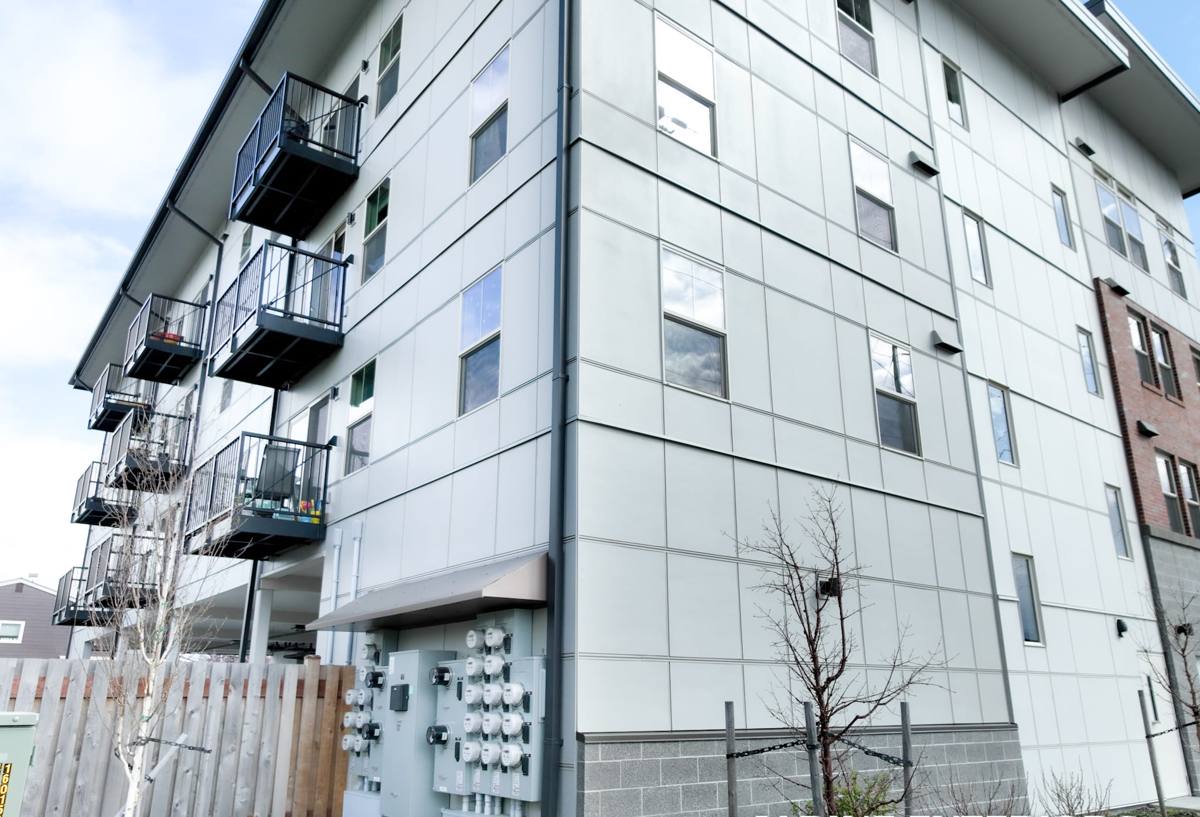
The Three Climate Stressors Conway Siding Has to Handle
Salt Air
Proximity to Skagit Bay means airborne salt is a real factor here, not a coastal-town abstraction. Salt accelerates the breakdown of certain finishes and fastener systems, and it's part of why we pay close attention to what kind of siding, trim, and hardware go on a Conway home.
Driving Rain
Storms moving through the delta tend to push rain horizontally against south- and west-facing walls. Any gap in flashing, caulking, or panel overlap becomes a point where water gets driven in rather than simply running off — which is why installation detail work matters more here than in calmer inland areas.
Moss Season
Skagit Valley's mild, wet winters and shaded, low-lying pockets create ideal conditions for moss and algae growth on north-facing and shaded wall sections. Moss holds moisture directly against the siding surface for months at a time, which is exactly the kind of sustained dampness that causes problems for moisture-sensitive materials.
What This Means for the Siding Material Itself
Given those three stressors, the material choice for a Conway home isn't cosmetic — it's structural. A siding product needs to resist moisture absorption, hold up to repeated wet-dry cycling without swelling or delaminating, keep its finish under salt exposure, and not become an ongoing maintenance project just to prevent moss and mildew from taking hold. This is why we install James Hardie fiber cement exclusively. We don't offer vinyl, LP SmartSide, Cemplank, Allura, or primed wood siding, and in a location like Conway that's not a marketing position — it's a reflection of what actually holds up in this specific climate.
Why Fiber Cement Specifically
Fiber cement is dimensionally stable in a way that wood-based and engineered-wood products aren't. It doesn't swell when it absorbs moisture the way OSB-core products can, and it isn't vulnerable to the edge-swelling and moisture wicking that shows up on engineered wood siding in wet coastal climates. It's also non-combustible, which matters given how dry Pacific Northwest summers have trended in recent years even in a generally wet county like Skagit.
Why James Hardie in Particular
James Hardie engineers its HardieZone products by climate region, and the Pacific Northwest falls into the HZ5 zone, formulated for high-moisture, freeze-thaw-capable climates like ours. Combined with the factory-applied ColorPlus finish — baked on under controlled conditions rather than field-painted on site — you get a finish that resists fading, chipping, and the kind of moisture intrusion at the paint layer that leads to early repainting. It's backed by a strong transferable warranty, which matters on a product that's meant to be a decades-long investment, not a ten-year one.
What a Correct Installation Actually Involves
Material choice only solves half the problem. In a delta environment like Conway, the installation details are what actually determine whether a home stays dry. A poorly installed premium product will fail faster than a well-installed mid-grade one, so this is where we spend the most attention.
- Proper weather-resistive barrier installed and lapped correctly behind the siding, not just stapled up as an afterthought
- Correct flashing at every window, door, and roof-to-wall intersection — the places wind-driven rain actually finds its way in
- Manufacturer-specified fastener spacing and depth, using corrosion-resistant fasteners appropriate for a salt-air environment
- Proper clearance between the bottom of the siding and grade, decks, and roof lines to avoid wicking moisture from standing water or splash-back
- Correct panel gaps and caulking at butt joints, sized to allow for expansion without opening a path for water
- Rainscreen or drainage plane detailing where the wall assembly calls for it, so any moisture that does get behind the siding has somewhere to go
Where Moss Prevention Actually Starts
You can't caulk your way out of a moss problem after the fact. Reducing moss buildup starts at installation — proper drainage behind the panels, correct grade clearance, and finish work that doesn't leave low spots or dead zones where water and debris collect. Homes with siding installed this way spend a lot less time fighting moss than homes where those details were skipped.
Our Process for a Conway Siding Installation
Every project starts with an on-site assessment of the specific wall — sun exposure, wind direction, existing moisture damage, and how close the home sits to the river or bay influence. From there we handle removal of the old siding, inspection and repair of the sheathing underneath (a step that often gets skipped by crews trying to keep a bid low, and one that matters more in a wet delta environment than almost anywhere else), correct installation of the weather barrier and flashing package, and then the Hardie panel or plank installation itself, finished with factory-matched trim and caulking. We walk the finished job with the homeowner before we consider it done, and we clean up thoroughly — this is your property, not a work site we're leaving mid-project.
Cost Factors for Siding Installation in Conway
Pricing on any siding job depends on the specifics of the home, but a few factors tend to move the number more than others in this area specifically:
| Factor | Why It Matters in Conway |
|---|---|
| Sheathing condition underneath old siding | Delta moisture exposure means underlying rot or water damage is more common here and needs repair before new siding goes on |
| Wall exposure (which sides face the Sound/prevailing wind) | South- and west-facing walls taking direct wind-driven rain often need extra flashing and drainage detail |
| Existing moss or algae damage | Heavily affected sections may need more extensive prep and sometimes trim replacement |
| Siding profile chosen | Lap plank, shingle-style panel, and vertical board options carry different material and labor costs |
| Home size and wall complexity | More corners, dormers, and roof-to-wall transitions mean more flashing detail work |
Signs a Conway Home May Need New Siding
Because of the local climate, some warning signs show up here earlier or more severely than they would inland. Worth checking for:
- Persistent moss or dark streaking on shaded or north-facing walls that keeps returning after cleaning
- Soft spots, bubbling, or visible swelling, especially near the bottom courses or around window trim
- Peeling or bubbling paint that keeps coming back within a couple years of repainting
- Visible gaps, warping, or separation at panel seams and corners
- A musty smell near exterior walls or unexplained interior moisture issues on walls facing the water side of the home
- Siding that's original to a home built decades ago and has never been fully replaced
Why It Matters That We Already Work in Conway
A crew that mostly works dry, inland neighborhoods doesn't necessarily think about drainage planes, salt-air fastener corrosion, or moss-prone shade patterns the same way a crew that regularly works this specific stretch of Skagit County does. Knowing how the delta's microclimate behaves — where the wind-driven rain actually hits hardest, which orientations grow moss fastest, how close is too close to grade given how wet this ground gets — isn't something you learn from a manual. It's something you learn by installing siding on homes in this exact environment, storm season after storm season. That local experience shows up in the small decisions made on-site, the ones that don't appear on a quote but end up determining whether the siding is still performing well fifteen years from now.
If you're weighing a siding project for a Conway home, we're happy to take a look and walk you through what we'd recommend and why — no pressure, no obligation. Use the form below to request a free estimate.