 Burlington
 Metal Roofing for Bow's Coastal Climate
Bow sits in one of the harder pockets of Skagit County to roof correctly. It's close enough to Samish Bay and the open water to catch salt-laden air, exposed enough to take wind-driven rain straight off the water, and shaded and damp enough in the right spots to grow moss on almost anything that sits still for a season. A roof that works fine in a drier, more sheltered part of Burlington doesn't automatically hold up the same way out here. Metal roofing, installed correctly for this specific environment, is one of the more reliable answers we recommend to homeowners in Bow — but "metal roofing" is not one product, and the difference between a roof that lasts decades and one that corrodes or leaks early almost always comes down to material choice and installation detail, not the fact that it's metal at all.
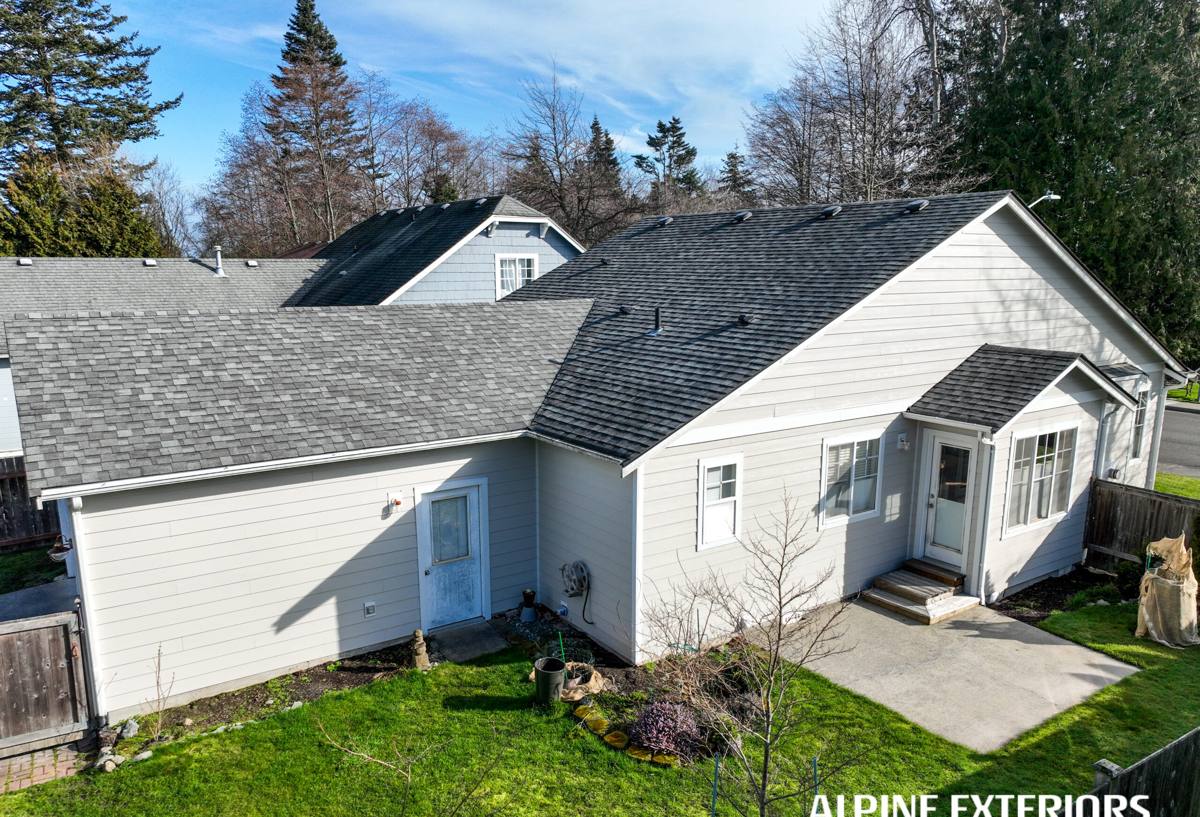
What Bow's Climate Actually Does to a Roof
Before talking about panels and fasteners, it's worth being specific about what a roof in Bow is actually up against, because the failures we see locally aren't random — they're predictable results of three conditions working together.
Salt Air
Airborne salt from the bay doesn't need direct spray to cause damage. It rides in on wind and settles on every exposed surface, including roofing metal, fasteners, and flashing. Over time it accelerates corrosion, especially at cut edges, fastener heads, and any spot where a protective coating has been scratched or worn thin during installation. This is the single biggest reason generic, big-box metal roofing choices underperform near the water — they're rated for average conditions, not a coastal exposure.
Driving Rain
Wind off open water pushes rain sideways, not straight down. That matters because a roof detailed only to shed water vertically — with light-duty flashing or minimal underlayment lap — can let wind-driven rain work its way up under panels and into seams that would stay dry in a calmer setting. Roof edges, valleys, and penetrations take the brunt of this and need to be treated as the highest-risk areas on the roof, not an afterthought.
Moss Season
Skagit County's long wet season, combined with tree cover and shaded north-facing slopes common around Bow, gives moss and algae months at a time to establish themselves. On composition roofing, moss holds moisture against the surface and lifts shingles. On metal, the risk is different but not zero — moss and organic debris that collect in valleys, around penetrations, or on low-slope sections can trap moisture against seams and fasteners, which is exactly where you don't want prolonged moisture sitting on a coastal roof.
Why Metal Makes Sense Here — When It's Done Right
Metal roofing has real advantages for a property like this: it sheds wind-driven rain more effectively than a shingle roof when properly seamed, it doesn't give moss and algae the same rough, granular surface to grip onto that composition shingles do, and a quality metal roof with the right coating system is built to handle decades of coastal weather rather than one or two. It's also lighter than many alternatives, which is a fair consideration on older Bow homes where roof framing wasn't necessarily designed with a heavy roofing material in mind.
None of that is automatic, though. Metal roofing performs well near the water specifically because of the metal alloy, the protective coating, and the way the panels and fasteners are installed. Cut a corner on any of those and you can end up with a roof that looks like metal but doesn't hold up like it.
Panel Style Comparison
| Panel Type | Best Fit For | Coastal Considerations |
|---|---|---|
| Standing seam | Most Bow homes, especially anything with water or wind exposure | Concealed fasteners mean fewer penetration points for salt air and rain to attack; higher upfront cost, longer service life |
| Exposed fastener panel | Outbuildings, shops, budget-driven projects | Lower cost, but exposed screws and washers are the first thing to fail in salty air and need periodic inspection |
| Metal shingle/shake profile | Homes wanting a traditional look with metal performance | More seams and detail work than standing seam; installation quality matters even more |
Choosing the Right Metal and Coating
Not all metal roofing is built for salt exposure, and this is where we spend real time with Bow homeowners before recommending a product. The base metal, the coating over it, and even the fastener hardware all need to be matched to a coastal environment rather than picked off a standard price sheet.
| Material | Salt-Air Performance | Trade-Offs |
|---|---|---|
| Galvalume or galvanized steel | Good with a quality factory coating; weak point is any exposed cut edge or scratch | Cost-effective, strong, widely available in standing seam profiles |
| Aluminum | Naturally resistant to salt corrosion, a common choice for true waterfront exposure | Costs more than steel, slightly softer material |
| Uncoated or poorly coated steel | Corrodes noticeably faster in salt air | We don't install this near the water — it's a maintenance and warranty problem waiting to happen |
We also match fastener and flashing hardware to the panel metal. Mixing incompatible metals — for example, the wrong fastener alloy against a steel panel — sets up galvanic corrosion that shows up as rust staining and premature fastener failure, often years before the panels themselves would have had any trouble. It's a small detail that has an outsized effect on how a roof ages near the bay.
What a Correct Installation Actually Involves
The panels get the attention, but most metal roof failures we're called out to inspect trace back to what's underneath and around them, not the metal itself. For a Bow property, we treat the following as non-negotiable:
- Synthetic underlayment rated for the full exposure period, not just the panel warranty period, since driving rain can find its way past panel seams during storms
- Ice-and-water or self-adhering membrane at eaves, valleys, and around all penetrations — the spots wind-driven rain targets first
- Properly lapped and sealed flashing at every roof-to-wall transition, chimney, vent, and skylight
- Fasteners and clips matched to the panel material to prevent galvanic corrosion
- Adequate roof ventilation, since trapping moisture under the deck causes problems just as fast as letting it in from above
- Clean, tight seams on standing seam panels — this is a skill difference between crews, not just a product spec
- Valleys and low-slope transitions detailed to shed both water and windblown debris rather than collect it
Any one of these done poorly can undercut an otherwise good metal roofing product. This is really the core of what a homeowner is paying for when they hire an experienced crew — not the panels, which are largely a commodity, but the judgment and attention to the details that determine whether the roof performs for 30-plus years or starts giving trouble in five.
Our Process for a Bow Metal Roof
We keep the process straightforward and try not to make it complicated for the homeowner:
- On-site assessment — we look at the existing roof, framing condition, ventilation, and specific exposure of your property (proximity to open water, tree cover, slope orientation) before recommending a panel and coating system.
- Material and profile selection — we walk through standing seam versus other profiles, metal and coating options, and color, with honest trade-offs for your budget and exposure level.
- Tear-off and deck inspection — we don't cover up a compromised deck; any rot or damage gets addressed before new material goes down.
- Underlayment and flashing detail — this is where most of our labor time actually goes, particularly at valleys, penetrations, and roof-to-wall transitions.
- Panel installation — installed to manufacturer spec with fasteners and clips matched to the panel metal.
- Final walkthrough — we go over the finished roof with you, including what routine maintenance, if any, we'd recommend given your specific site conditions.
Living With a Metal Roof Through Moss Season
One of the advantages we point out to Bow homeowners considering the switch from composition shingles is how much lower the moss maintenance burden becomes. Metal's smooth surface doesn't give moss spores the same foothold that granulated shingles do, so heavy moss growth on the field of a metal roof is uncommon when the roof is properly ventilated and pitched. That said, "low maintenance" isn't "no maintenance" — organic debris can still collect in valleys, around chimneys, and in any area where leaves and needles settle, and that debris holds moisture against the metal if it's left to accumulate season after season. A periodic check and clear-out of debris, especially heading into and out of the wet months, is the one habit we'd recommend to get the full lifespan out of the investment.
Why Hiring a Crew That Already Works Bow Matters
A lot of roofing problems in this area aren't caused by bad products — they're caused by installers applying general-purpose techniques to a specific coastal environment that doesn't forgive shortcuts. A crew that regularly works Bow and the surrounding Skagit County waterfront already knows which exposures need aluminum instead of steel, which roof orientations collect moss fastest, and where wind-driven rain typically finds its way into a poorly detailed roof. That local pattern recognition is hard to substitute for, and it's the difference between a metal roof that's simply installed and one that's installed for the specific conditions it has to survive.
If you're weighing a metal roof for a home in Bow, we're happy to take a look at your specific property, talk through material and coating options honestly, and give you a straightforward estimate — no pressure, no obligation. The form below is the easiest way to get that conversation started.