 Burlington
 Siding Built for Bow's Particular Mix of Weather
Bow sits close enough to the water that homes here deal with a combination most inland Skagit County properties don't: salt-laden air moving in off the bay, driving rain that comes sideways during winter storms, and shaded, damp lots where moss and algae get a long runway to establish themselves. Any one of those factors is manageable. Together, over years, they expose the weak points in a siding product fast — chalking finishes, swelling edges, streaked and stained faces, and trim that rots from the inside before the paint even looks bad.
This page is specifically about James Hardie fiber cement siding installed correctly on Bow homes. We don't install anything else — not vinyl, not LP SmartSide, not primed wood, not the other fiber cement brands — and we'll explain why as it becomes relevant, but the short version is that Hardie's material properties and factory finish hold up to this specific climate better than the alternatives we've evaluated, provided the installation is done to spec.
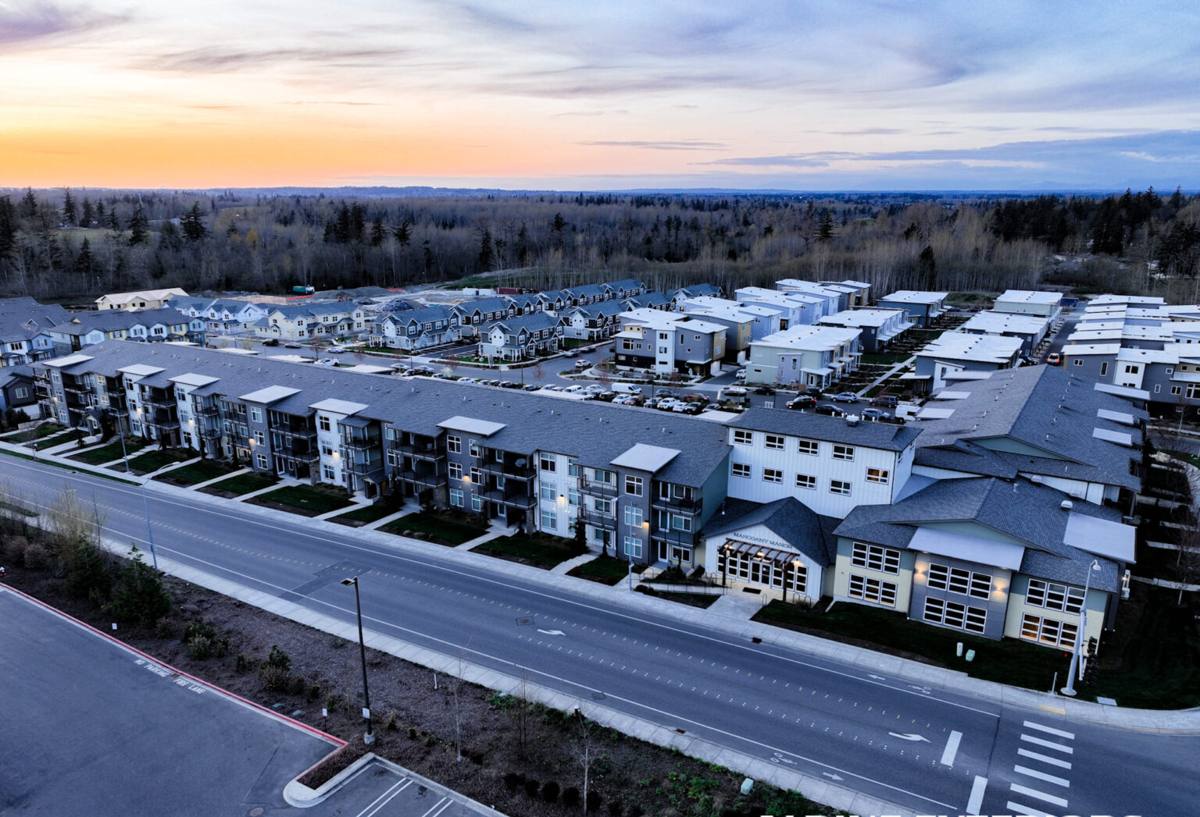
What Salt Air, Rain, and Moss Actually Do to Siding
Salt Air
Airborne salt is corrosive to fasteners and hard on paint film. Cheaper coatings chalk and fade faster near the water, and any exposed metal — nail heads, flashing, trim fasteners — corrodes quicker than it would ten or twenty miles inland. The fix isn't a thicker coat of paint; it's using a siding substrate and finish system that doesn't depend on paint film integrity to keep water out, plus corrosion-resistant fasteners installed correctly the first time.
Driving Rain
Wind-driven rain doesn't just fall on a wall — it pushes sideways and finds every gap in flashing, every under-caulked seam, every panel that wasn't given proper clearance to drain. Skagit County's wet season isn't a once-a-year event; it's months of sustained moisture load on the exterior envelope. Siding on a Bow home needs a drainage plane behind it and correctly lapped, gapped, and flashed joints — not just a water-resistant face.
Moss and Algae
Shaded, tree-covered lots near the water hold moisture longer after a storm passes, which is exactly what moss and algae need to take hold. Wood-based sidings feed moss — it's an organic material moss can actually colonize and, over time, help break down. Fiber cement doesn't give moss the same foothold, and a factory-baked finish resists the staining that comes from years of damp growth sitting against a wall.
Why We Standardized on James Hardie for This Area
We get asked regularly why we don't offer vinyl or LP SmartSide alongside Hardie. Both are legitimate products with their own strengths, and we're not going to pretend otherwise. But for a Bow property dealing with salt air, sustained rain, and moss pressure, here's the honest comparison we settled on:
- Vinyl is affordable and low-maintenance in mild conditions, but it can warp or become brittle with age and temperature swings, its seams and J-channels are a common water entry point in driving rain, and its color is baked into a thin material that fades unevenly over time near salt air.
- LP SmartSide is an engineered wood product — it performs well in many climates, but it's still wood at its core, meaning any breach in the coating or caulking gives moisture and, in a moss-prone area, organic growth a path into the substrate.
- James Hardie fiber cement is non-combustible, doesn't expand and contract with moisture the way wood-based products do, and comes from the factory with a ColorPlus finish baked on rather than field-applied — which matters when the finish is the first line of defense against a salt-air, high-rain environment.
None of this means the other products are bad products in the abstract. It means that for the specific stresses a Bow home faces, we'd rather stand behind one system we can install and warranty with confidence than offer three options and let a homeowner gamble on the wrong one for their site.
The James Hardie Product Lines We Use
James Hardie makes climate-engineered versions of its siding, and matching the right one to a property's exposure is part of doing this job correctly rather than just installing "Hardie siding" generically.
| Consideration | What it means for a Bow property |
|---|---|
| HZ5 engineered product | Formulated for wetter, harsher climates — the relevant baseline for anything near the water in Skagit County |
| ColorPlus factory finish | Baked-on finish resists fading and chalking better than field-applied paint, which matters under salt air exposure |
| Panel vs. lap siding profile | Lap siding sheds driving rain predictably when installed with correct overlap; profile choice should follow the home's exposure, not just style preference |
| Trim and soffit materials | Matching Hardie trim keeps expansion rates consistent across the whole exterior system, reducing joint stress over time |
What a Correct Installation Actually Involves
Most siding failures we get called out to inspect aren't a failure of the material — they're a failure of installation. Hardie's own warranty terms hinge on installation matching their published specifications, so cutting corners here isn't just a durability risk, it's a warranty risk.
Before the Siding Goes On
- Remove old siding down to the sheathing and inspect for existing rot or moisture damage
- Repair or replace any compromised sheathing before house wrap goes on
- Install a proper weather-resistive barrier as a drainage plane behind the siding
- Flash all windows, doors, and penetrations correctly — this is where most water intrusion actually starts
During Installation
- Maintain manufacturer-specified clearances from grade, roofline, and decks
- Use corrosion-resistant fasteners driven to the correct depth — overdriven nails crack the board's edge and create a moisture entry point
- Keep proper gaps at butt joints and seal them per Hardie's specification, not just "caulk it and move on"
- Maintain consistent reveal and lap so water sheds the way the profile is designed to shed it
After Installation
- Caulk and touch-up paint at cut edges and fastener heads where factory finish was disturbed
- Final walk-through comparing the finished work against the original scope
Our Process for Bow Homeowners
We keep the process straightforward because most homeowners are trying to fit this in around a busy year, not become siding experts:
- On-site assessment — we look at your current siding, sheathing condition, moisture history, and sun/shade exposure specific to your lot
- Product and color selection — we walk through HZ5 options and ColorPlus color choices suited to salt air exposure and your home's setting
- Written estimate — a clear scope of work, so you know what's included before anything is torn off
- Removal and prep — old siding comes off, sheathing gets inspected and repaired as needed, and any hidden moisture damage gets addressed and documented before it's covered back up
- Installation to manufacturer spec — flashing, drainage plane, fastening, and reveal done the way Hardie's warranty actually requires
- Final walk-through — we go over the finished exterior with you before calling the job done
Cost Factors Specific to a Bow Re-Side
| Factor | Why it affects your project |
|---|---|
| Extent of hidden rot found at tear-off | Damp, shaded lots near the water more often reveal sheathing damage once old siding comes off |
| Home's exposure to wind-driven rain | More exposed elevations may need additional flashing detail work, not just more siding |
| Trim and detail complexity | Dormers, multiple gables, and wraparound porches add labor time beyond flat wall square footage |
| Access and site conditions | Wooded or sloped Skagit County lots can affect staging, scaffolding, and material handling time |
| Color and finish selection | Standard ColorPlus colors versus premium or custom-matched finishes carry different costs |
Why It Matters That We Already Work in Bow
A crew that already understands Bow's exposure doesn't have to guess at it. We know to expect salt air's effect on fasteners and finishes, we know driving rain in this part of Skagit County demands real attention to flashing rather than reliance on caulk, and we know shaded, moisture-holding lots need moss-resistant material and design choices from day one — not a maintenance plan to fight moss after it's already established. That's the difference between a crew installing siding as a generic product and a crew installing a system matched to the conditions it actually has to survive.
Signs Your Current Siding Isn't Keeping Up
- Green or black staining that returns within months of cleaning
- Soft or spongy spots when you press on trim, corners, or lower wall sections
- Paint that's chalking, peeling, or fading unevenly, especially on the sides facing the water
- Visible warping, cupping, or gaps opening up at seams and butt joints
- Rising energy bills that suggest the wall assembly isn't performing the way it should
Any one of these on its own might just need a repair. Several together, especially on an older home, usually mean the siding system as a whole is past the point where patching makes sense.
Maintenance Once James Hardie Is Installed
Correctly installed Hardie siding with a ColorPlus finish is genuinely low-maintenance, but "low" isn't "none." A yearly rinse to keep moss and algae from establishing, prompt attention to any caulk that shrinks or separates at joints, and a periodic look at fastener heads and trim intersections will keep the system performing for decades. None of that requires repainting on the schedule wood siding typically demands.
If your Bow home's siding is showing its age, or you're planning ahead rather than reacting to a problem, we're happy to walk the property with you and give you an honest read on what it needs. There's a free, no-pressure estimate form below — no obligation, just a clear look at your options.