 Burlington
 Board & Batten in a Marine Climate: Why It Has to Be Done Right
Board and batten has been a Pacific Northwest look for well over a century, and it's easy to see why it still gets requested in the Oak Harbor area: the vertical lines read as clean and modern on newer builds, and as classic farmhouse or coastal-cottage on older ones. But the style was never the hard part. The hard part is that board and batten creates more vertical seams and more butt joints per square foot of wall than horizontal lap siding, and every one of those seams is a place water can find its way behind the cladding if the install isn't done correctly.
Homes in this part of Skagit County and the surrounding Puget Sound coastline deal with a specific combination of stressors: salt-laden air off the water, long stretches of driving, wind-pushed rain rather than gentle vertical rain, and a moss season that can run most of the year on north- and west-facing walls. None of that is exotic — it's just relentless. Board and batten done well shrugs it off for decades. Board and batten done with the wrong material or the wrong flashing detail turns into a maintenance headache within a handful of years, usually starting at the battens themselves.
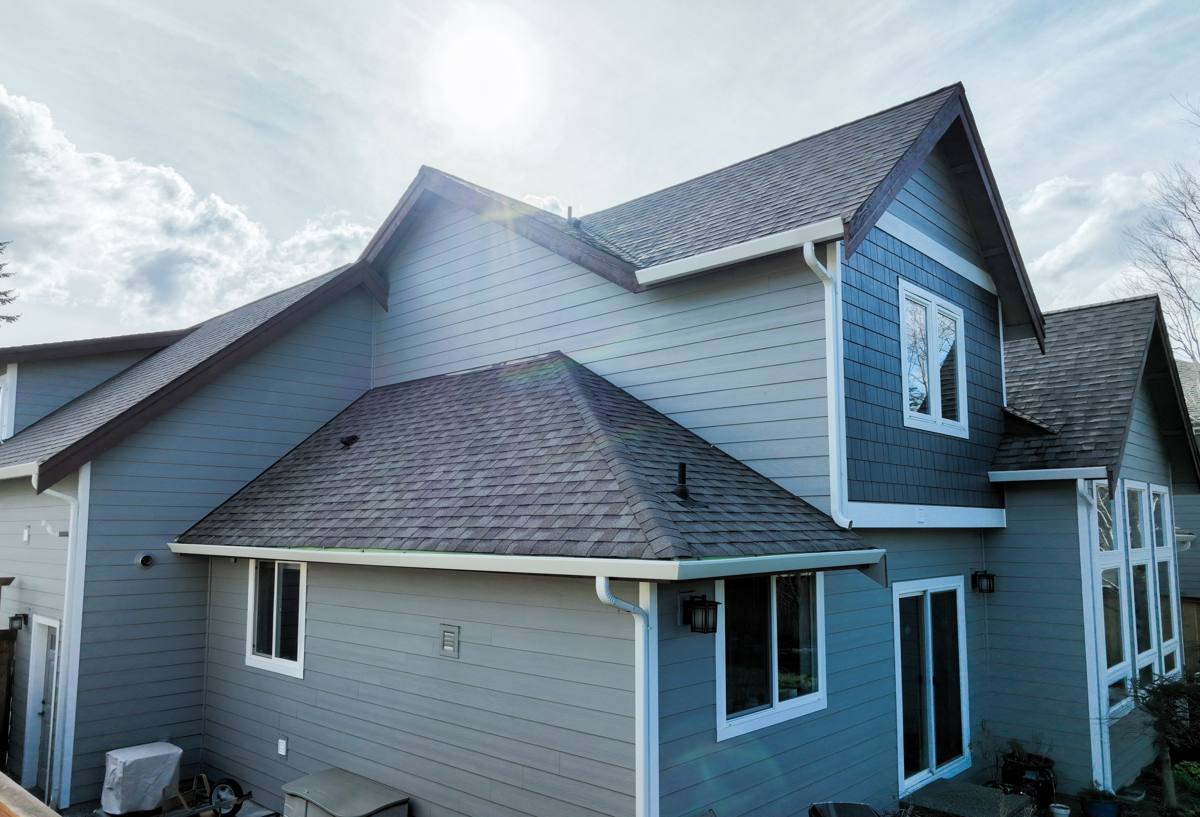
What Oak Harbor Homes Actually Need From This Siding
Moisture Management, Not Just a Water-Resistant Board
The board itself resisting moisture is only half the equation. A correct board and batten assembly manages water that gets behind the cladding — from wind-driven rain forced past the battens, from condensation, from the inevitable nail penetrations — and lets it drain and dry out instead of sitting against the wall sheathing. That means a proper weather-resistive barrier, correctly lapped flashing at every horizontal transition, and a rainscreen gap in most applications so air can circulate behind the boards.
Fasteners and Hardware That Won't Corrode
Salt air is hard on metal. Fasteners, flashing, and any exposed hardware need to be corrosion-resistant to the level the manufacturer specifies for coastal exposure — not just "what's in the nail gun." We've seen board and batten jobs elsewhere in the region fail early not because the siding itself gave out, but because standard fasteners rusted, stained the boards, and eventually lost their grip.
A Finish That Can Take Sustained Damp Without Feeding Moss
Moss doesn't just grow on roofs. On shaded, north-facing board and batten walls in this climate, organic growth can take hold on any surface that stays damp and doesn't fully dry between rain events. The finish and the installation gap both matter here — a wall that dries out between storms is a wall that doesn't grow a green film every winter.
James Hardie Board & Batten: The System We Actually Install
We install James Hardie fiber cement exclusively — no LP SmartSide, no vinyl, no Cemplank or Allura, no primed spruce or cedar board and batten. That's not a marketing line, it's a standard we hold ourselves to because we've seen what each alternative costs a homeowner over time in this climate, and we'd rather explain that up front than sell something we don't believe holds up.
For board and batten specifically, that means HardiePanel vertical siding paired with Hardie batten trim, installed with a factory ColorPlus finish baked on and warranted against fading and peeling — not job-site primed and painted, which is where a lot of the callback issues on other materials originate. In coastal exposure like Oak Harbor's, we spec Hardie's HZ10 climate configuration, which is engineered for wetter, harsher regional conditions rather than a one-size-fits-all product.
Why Fiber Cement Beats the Alternatives for This Application
- Non-combustible: fiber cement doesn't feed a fire the way wood-based products can.
- Dimensionally stable: it doesn't swell, cup, or warp with repeated wet-dry cycling the way engineered wood and solid wood battens can.
- Factory finish: ColorPlus is baked on under controlled conditions and comes with a real finish warranty — a field-painted board only has a paint job as good as the weather and prep it got that day.
- No feeding moss and mildew the way bare or lightly sealed wood can when the finish is intact.
- Backed by a strong, transferable manufacturer warranty when installed to Hardie's specifications.
Material Comparison: Board & Batten Options in This Climate
| Material | Moisture Behavior | Coastal Durability | Maintenance Burden |
|---|---|---|---|
| James Hardie fiber cement | Dimensionally stable, doesn't absorb and swell | Engineered climate configs (HZ10) for wet coastal exposure | Low — factory finish, occasional wash |
| Vinyl board and batten | Doesn't rot, but can warp/buckle with heat and doesn't manage a rainscreen the same way | Can become brittle and crack in cold snaps; seams open over time | Low upfront, but limited repair options once damaged |
| LP SmartSide (engineered wood) | Wood-based core is more moisture-sensitive at cut edges and joints | Requires diligent edge-sealing and caulk maintenance near saltwater | Moderate — edge and joint upkeep is ongoing |
| Primed cedar or spruce battens | Natural wood movement; absorbs moisture at end grain | Needs repainting/resealing on a regular cycle in marine air | High — repainting every few years is typical |
Our Process for a Board & Batten Job in Oak Harbor
- On-site assessment: we look at wall orientation, existing moisture damage, current siding condition, and how much shade and wind exposure each elevation gets.
- Tear-off and sheathing check: we don't cover up rot or water damage — anything found underneath the old siding gets addressed before new material goes up.
- Weather-resistive barrier and rainscreen: installed per manufacturer spec, with special attention to how it laps at windows, doors, and roof intersections.
- Flashing at every horizontal transition: this is the detail that separates board and batten that lasts from board and batten that leaks.
- HardiePanel installation: panels set with correct fastener spacing, penetration depth, and clearance from grade and hardscape.
- Batten placement: spaced and fastened to manufacturer tolerances, with corrosion-resistant fasteners appropriate for coastal exposure.
- Final detailing: caulking only where the manufacturer calls for it (not as a substitute for correct flashing), trim, and a walk-through.
Where We See Board & Batten Jobs Go Wrong in This Area
Most of the board and batten problems we get called to look at in the wider Oak Harbor and Skagit County area trace back to one of a few things: battens fastened directly over a wall with no drainage gap, flashing skipped or reversed at a horizontal joint, standard (non-coastal-rated) fasteners used near saltwater, or a wood-based product left to weather without a maintenance schedule anyone actually kept up with. None of these are dramatic failures — they're slow ones. A little bit of trapped moisture behind a vertical seam doesn't look like much the first year. By year four or five it's a stain, then a soft spot, then a repair that costs more than doing it right the first time would have.
Maintenance Checklist for Board & Batten in a Wet, Salt-Air Climate
- Rinse pollen, salt residue, and grime off the siding once or twice a year with a garden hose — no pressure washer directly into seams.
- Walk the property after major windstorms and check for loose or popped battens.
- Keep an eye on north- and west-facing walls for early moss or algae film, especially under trees or eaves that block sun.
- Keep gutters clear so overflow doesn't run down the wall face repeatedly.
- Trim back vegetation that keeps a wall section shaded and damp.
- Have any caulked joints inspected every few years — caulk is a wear item, not a permanent fix.
Why It Matters That We Already Work This Area
Board and batten installed to spec in a dry inland climate and board and batten installed to spec on a wall that takes direct salt air and driving rain off the water aren't quite the same job, even though the product and the basic technique are identical. A crew that already works the Oak Harbor area knows which elevations on a typical home take the worst of the weather, understands why fastener corrosion resistance isn't optional here, and has already made the calls on rainscreen detailing and flashing that a crew unfamiliar with this specific stretch of coastline might treat as a nice-to-have instead of a requirement.
We also know this climate rewards patience during install — waiting out a wet stretch rather than closing in siding over damp sheathing, for instance — which is a scheduling reality that matters more here than it does in a drier region.
What a Correct Job Costs You in Attention, Not Just Money
We won't quote a price without seeing the home, because board and batten costs vary with wall square footage, the number of corners and openings, current siding condition, and how much of the wall assembly needs repair before new siding goes up. What we can tell you is that the line items that matter most — the weather-resistive barrier, the rainscreen gap, correct flashing, and coastal-rated fasteners — are not places to cut cost. They're inexpensive relative to the whole job and expensive to fix later once they're covered up.
If you're weighing board and batten for a home in the Oak Harbor area, we're glad to come take a look, walk the exterior with you, and put together a clear, no-pressure estimate — no obligation, just a straight answer on what your walls actually need.