 Burlington
 Storm Damage Roofing in Blanchard: A Different Set of Problems
Blanchard sits in a pocket of Skagit County where big timber, open farmland, and proximity to Samish Bay all meet. That combination shapes what storm damage actually looks like on a roof out here. It's rarely just "shingles missing." More often it's a mix of wind uplift, falling limbs from the fir and cedar stands that ring so many Blanchard properties, and wind-driven rain that finds its way under flashing that held up fine in a light drizzle but couldn't handle a gusting southwesterly off the water. We've repaired roofs across Burlington and the surrounding Skagit County communities long enough to know that a storm-damage repair here needs to account for all three, not just the obvious hole.
This page is about one job done right: storm damage roof repair for homes in and around Blanchard. Not a full re-roof pitch, not a generic storm page — the specific work of assessing what a storm actually did to your roof and fixing it correctly the first time.
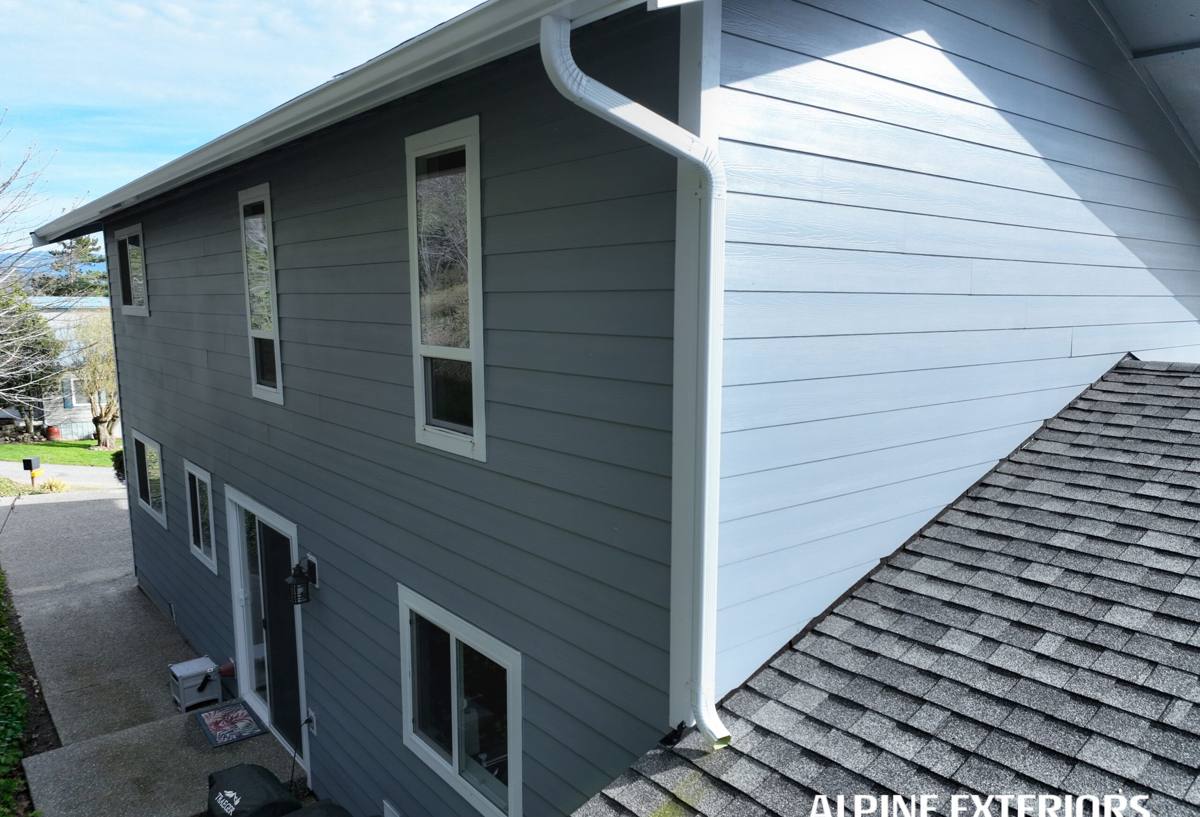
What Counts as Storm Damage (and What Doesn't)
Wind Uplift and Lost Shingles
Sustained wind events push up under the shingle tab, break the factory seal, and either tear the shingle off outright or leave it loose enough to flap and crack in the next blow. On older roofs where the adhesive strip has already weakened from age and heat cycling, it doesn't take much wind to start this chain reaction. Once a few tabs go, the exposed nail line underneath is an open door for water.
Falling Limbs and Debris Strikes
Blanchard's tree cover is part of what makes the area what it is, but it also means limb strikes are a routine cause of storm damage here — sometimes a small branch that punctures a shingle, sometimes a larger limb that cracks decking or bends a gutter and downspout out of shape. Even a strike that doesn't puncture through can bruise shingles or crack the mat underneath in a way that isn't obvious from the ground.
Wind-Driven Rain Intrusion
This is the damage type most often missed. Heavy rain pushed sideways by wind gets forced up under flashing, ridge caps, and valley metal that would never leak in a normal vertical rain. Homeowners frequently notice this weeks later as a ceiling stain or musty attic smell, with no memory of anything falling on the roof — because nothing did. The storm just found the roof's weakest seam and pushed water through it.
What generally does not qualify as storm damage: granule loss from normal aging, moss-related shingle deterioration that built up over years, or flashing that was already failing before the weather event. Distinguishing between storm-caused and pre-existing wear matters for both the repair plan and any insurance claim, and it's the first thing we look for on inspection.
The Moss Factor: Skagit County's Year-Round Complication
Skagit County's wet season runs long, and the north-facing, shaded roof sections common on tree-lined Blanchard lots rarely get enough sun to dry out between rains. That keeps moss active for most of the year, not just in a short winter window. Moss on its own is a slow problem — it lifts shingle edges and holds moisture against the roof deck over time. But moss becomes a fast problem after a storm, because a roof that already has moss-lifted shingle edges has far less resistance to wind uplift and wind-driven rain than a clean roof does. When we're called out for storm damage on a Blanchard roof, moss condition is one of the first things we check, because it often explains why the damage happened where it did and how much repair work is really needed versus a simple patch.
What a Correct Storm Repair Actually Involves
Inspection Before Anything Gets Fixed
A rushed repair — tarping the obvious hole and calling it done — is how homeowners end up with a second, worse repair bill six months later. A proper storm damage inspection covers the roof surface, the flashing details at every penetration and valley, the gutter and drip edge line, and the attic from the inside, where the earliest signs of intrusion actually show up. We document what we find with photos, both for our own repair plan and for any insurance claim you may file.
Matching Materials and Getting the Details Right
Patch repairs fail when the replacement shingle doesn't match the existing course's exposure and nailing pattern, or when flashing gets re-bent instead of replaced. Salt-influenced air near Samish Bay accelerates corrosion on lower-grade fasteners and thin flashing metal faster than it would inland, so we spec fasteners and flashing that hold up to that exposure rather than whatever's cheapest at the counter. A storm repair is only as good as its weakest seam, and seams are where corners get cut.
| Damage Type | Typical Repair Scope | What Gets Missed If Rushed |
|---|---|---|
| Wind-lifted or missing shingles | Replace affected shingles and surrounding course, reseal tabs | Nail line exposure under adjacent intact shingles |
| Limb strike | Replace shingles, inspect and repair decking if punctured | Hairline deck cracks that aren't visible until the next rain |
| Flashing/valley intrusion | Remove and replace flashing, not just recaulk | Underlayment already saturated beneath the flashing |
| Gutter/downspout damage | Realign or replace damaged sections, check fascia behind | Fascia board rot starting behind a bent gutter |
Our Process for Blanchard Storm Repairs
- Initial call and triage. We ask what happened and when, and whether there's active water intrusion. Active leaks get priority scheduling.
- On-site inspection. Roof surface, flashing, gutters, and attic — with photo documentation of everything storm-related.
- Emergency mitigation if needed. If the roof is actively leaking, we get it weathertight first — tarping or temporary flashing — before scheduling the full repair.
- Written scope and estimate. A clear explanation of what's storm damage, what the repair involves, and an honest cost range.
- Repair. Done to match existing materials and correct flashing detail, not a visible patch job.
- Follow-up check. We confirm the repair held through the next significant rain event where practical, since that's the real test.
Insurance and Storm Damage: What Homeowners Should Know
Most homeowner policies cover sudden storm damage — wind, falling limbs, hail — but the claim depends on clear documentation of what happened and when. This is where a rushed repair actually costs you: if the damage gets covered up before it's photographed and assessed, adjusters have less to work with. We provide the photo documentation and written scope you'll want on hand for a claim, but we're not your insurance company and don't promise claim outcomes — that decision sits with your adjuster and policy terms. What we can promise is an honest, itemized assessment of what the storm actually did to your roof.
Why a Crew That Already Works Blanchard Matters
Storm damage repair isn't a job you want to learn on the fly, and it isn't a job where a crew unfamiliar with the area's conditions serves you as well as one that already knows them. We work Burlington and the surrounding Skagit County communities regularly, which means we already know which roof orientations in tree-heavy areas like Blanchard tend to hold moss longest, which flashing materials actually hold up to the salt-air exposure near the bay, and how fast wind-driven rain can turn a small gap into a real problem during a long Pacific storm system. That local familiarity shows up in faster, more accurate diagnosis — we're not guessing at conditions we've never seen, we're confirming what we already expect to find.
It also means faster response. A roof with active water intrusion doesn't benefit from a crew driving in from out of the area after the damage has already had a day or two to soak into decking and insulation.
After a Storm: What to Do While You Wait for an Inspection
- Photograph any visible damage from the ground — don't get on the roof yourself, especially in wet or windy conditions
- Check the attic and ceilings for water stains, dark spots, or a musty smell
- Clear obvious debris away from gutters and downspouts if it's safe to reach from the ground
- Note the date and approximate time of the storm event for your records
- Avoid DIY tarping on steep or wet roof sections — a fall risk isn't worth saving a service call
- Call for an inspection promptly; delayed water intrusion causes more damage the longer it sits
Getting an Honest Assessment
Not every storm-related roof issue needs a full repair, and not every visible shingle problem is actually storm damage. What Blanchard homeowners need is a straight answer about which is which, and a repair that accounts for the moss, wind, and salt-air conditions specific to this part of Skagit County — not a generic patch that fails the next time the weather turns. If your roof took a hit in a recent storm, or you're not sure whether that ceiling stain is new damage or an old problem, we're glad to take a look. Reach out for a free, no-pressure estimate using the form below.