 Burlington
 Deck Building for Blanchard's Coastal-Foothill Climate
Blanchard sits in a distinct pocket of Skagit County — tucked against the Chuckanut foothills with Samish Bay close enough that salt-laden air is a regular visitor, not an occasional guest. That combination of marine moisture, hillside shade, and heavy Pacific Northwest rainfall creates conditions that are genuinely tougher on an outdoor deck than what you'd find a few miles inland in Burlington proper. A deck built without that context in mind will show it within a few seasons: soft spots, corroding hardware, and a slick green film that never fully goes away.
We build decks for homes in and around Blanchard with those specific conditions in mind — not a generic deck design pulled off a shelf, but one engineered for salt air, driving rain, and a moss season that can stretch from October through May.
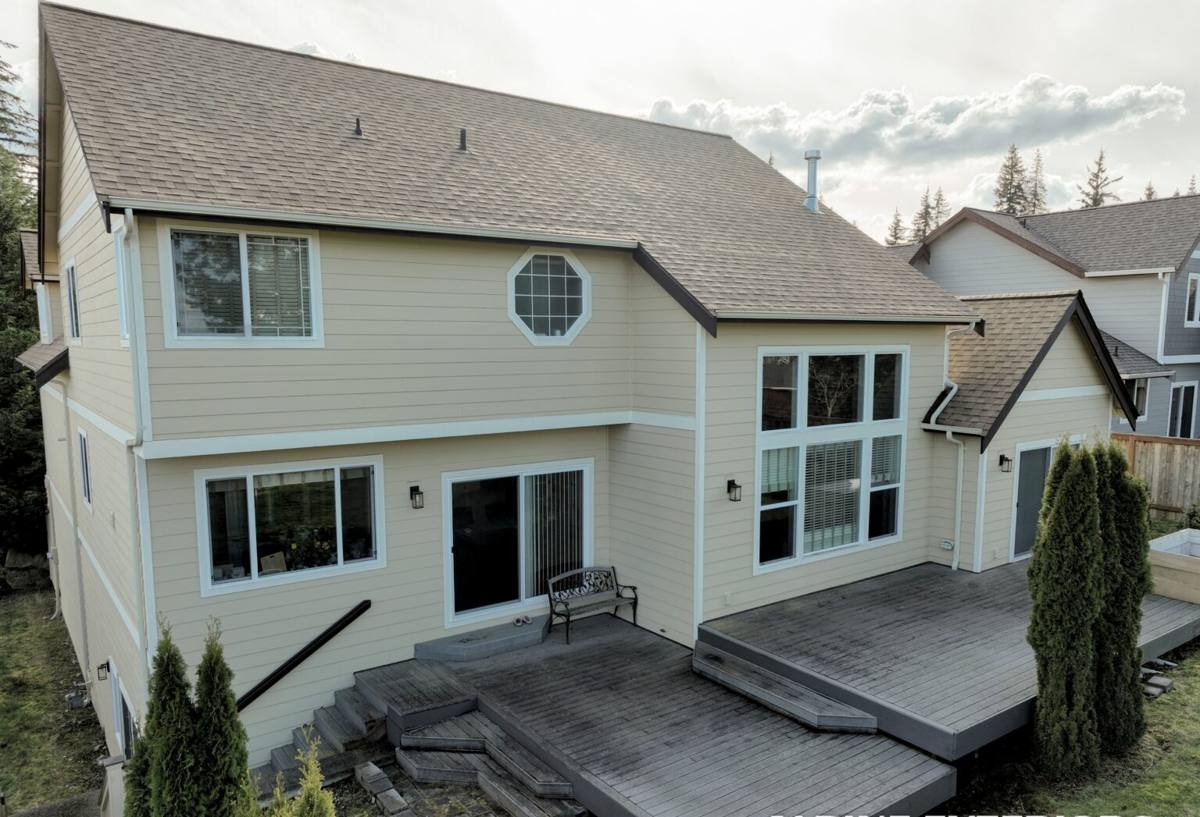
What Blanchard's Site Conditions Actually Demand
Most Blanchard properties fall into one of two categories: open lots with more direct exposure to wind and salt off the bay, or wooded, shaded lots tucked against the foothills where sunlight barely reaches the ground for months at a time. Each creates a different set of problems for a deck.
Salt Air and Exposed Sites
Homes closer to open water or higher, wind-exposed ground take on fine salt particulate that settles on every horizontal surface. Over time it accelerates corrosion in anything less than a properly rated fastener and can dull or discolor lower-grade finishes faster than the manufacturer's literature would suggest.
Shaded, Wooded Sites
Lots under fir and cedar canopy stay damp far longer after a rain event. Combined with limited direct sun, that moisture doesn't evaporate — it sits. That's the exact recipe for moss, algae, and the slow decay that starts underneath decking boards where nobody's looking.
A deck that ignores which category your lot falls into is a deck that's guessing. We don't guess — we design around the actual site.
Getting the Foundation Right: Footings, Drainage, and Frost
Everything visible on a deck sits on top of work nobody sees once it's finished, and that's where most long-term failures actually start. Skagit County's frost depth and soil conditions dictate how deep and how substantial footings need to be — cutting corners here doesn't show up as a problem in year one, it shows up as a heaving, uneven deck three or four winters later.
Drainage matters just as much. Water that pools under or against a deck's structure — instead of being directed away from the house — is what turns a routine deck into a rot and mold problem tied to your foundation. On Blanchard's sloped and hillside lots especially, grading and drainage planning around the footings isn't optional.
- Footings sized and set to local frost depth, not a one-size-fits-all minimum
- Positive drainage graded away from the house at every ledger connection
- Proper post spacing and beam sizing for the actual structure's span and load
- Ground-contact clearances that keep framing off damp soil year-round
Choosing Decking Material for Salt Air and Moss
There's no single "best" decking material — there's the material that's right for your site, your budget, and how much upkeep you're willing to do. In a climate like Blanchard's, that decision carries more weight than it would somewhere drier.
| Material | How It Handles Salt Air & Rain | Moss/Algae Resistance | Upkeep |
|---|---|---|---|
| Pressure-treated lumber | Good when properly sealed; needs reapplication | Moderate — moss can take hold if not cleaned periodically | Annual cleaning and re-sealing recommended |
| Cedar | Naturally decay-resistant; salt air can gray it faster | Moderate — same care as PT lumber | Periodic staining/sealing to hold color and protection |
| Composite decking | Very good — doesn't absorb moisture like wood | Good, though grain-textured boards in deep shade can still film over | Occasional washing; no staining or sealing |
| Untreated softwood | Poor — not our professional recommendation for this climate | Poor | High, and still shortens service life |
We'll walk you through the honest trade-offs for your specific lot rather than pushing whatever's easiest to install. On a shaded, moss-prone site, the lower-maintenance case for composite is usually straightforward. On a more open, sunnier lot, a well-maintained wood deck can perform just as well and may fit the look of the home better.
A Note on Product Selection
We stand behind what we install, which means we're selective about brands and grades of material we'll put our name on. If we steer you away from a particular product, it's because we've seen how it performs — or doesn't — in exactly this climate, not because of anything beyond our own installation standards and experience with moisture behavior over time.
Fasteners, Flashing, and the Details That Prevent Rot
The single most common cause of premature deck failure we see isn't the decking material — it's what's holding it together and what's protecting the ledger board where the deck meets the house.
- Fasteners: Standard hardware corrodes faster in salt-influenced air. We use fasteners and hardware rated for coastal and treated-lumber exposure, not general-purpose screws that look fine on day one.
- Ledger flashing: The ledger connection is the single most common point of hidden rot on any deck. Proper flashing, correctly lapped and sealed, keeps water from working its way behind the board and into the house's rim joist.
- Joist protection: Joist tape or an equivalent moisture barrier on top of framing members meaningfully extends the life of the structure underneath the decking.
- Post bases: Elevated, non-corroding post bases keep structural posts out of standing water and off damp soil.
None of this is visible once the deck is finished — which is exactly why it matters that it's done right the first time.
Railings, Guardrails, and Permits in Skagit County
Any deck built above a certain height needs a code-compliant guardrail system, and Skagit County has specific permitting requirements for new deck construction, including setbacks and structural review depending on size and height. We handle the permit process as part of the job rather than leaving it to the homeowner to sort out — it's one less thing you have to chase down, and it means the finished deck won't create problems if you sell the home later.
Railing material should match the same climate logic as the decking itself: powder-coated or naturally corrosion-resistant materials hold up better than bare or lower-grade metal in salt-air conditions.
Our Deck Building Process
- On-site consultation: We look at your specific lot — sun exposure, drainage, proximity to the water, existing structure — before recommending anything.
- Design and material selection: We walk through honest options for decking, railing, and layout based on your budget and how the space will actually be used.
- Permitting: We handle the Skagit County permit application and any required inspections tied to the build.
- Site prep and footings: Footings set to proper frost depth, graded for drainage from day one.
- Framing: Ledger flashing, joist protection, and corrosion-resistant hardware throughout.
- Decking and railing installation: Clean, level installation with attention to fastening patterns that hold up to seasonal movement.
- Final walkthrough: We go over care and maintenance specific to the material you chose, so you know what upkeep actually looks like.
Why a Crew That Already Works Blanchard Matters
Deck-building fundamentals don't change from town to town, but the details that determine whether a deck lasts fifteen years or five absolutely do. A crew that already works Blanchard and the surrounding Burlington area knows which lots sit exposed to wind and salt off the bay, which ones stay shaded and damp well into summer, and how the county's permitting process actually runs — not in theory, but from having gone through it repeatedly. That familiarity shows up in fewer surprises during the build and a deck that's specced correctly the first time, instead of a design that has to be corrected once problems show up.
Keeping Your Deck in Good Shape Between Builds
Whatever material you choose, a little seasonal attention goes a long way in this climate:
- Sweep debris off the deck regularly, especially under trees, so damp organic matter doesn't sit against the boards
- Rinse off salt residue on exposed sites a few times a year
- Check and clear gutters and drainage paths near the deck before the fall rains start
- Inspect ledger flashing and fasteners annually for early signs of corrosion or gaps
- Re-seal or re-stain wood decking on the manufacturer's recommended schedule — don't wait until it visibly needs it
- Address moss with a gentle wash rather than pressure-washing aggressively enough to damage the surface
If you're planning a new deck or replacing one that hasn't held up to Blanchard's weather, we're happy to take a look and talk through what your specific lot needs — no pressure, no obligation. Use the form below to request a free estimate.