 Burlington
 Building Decks for Blanchard's Coastal Climate
Blanchard sits close enough to the water that homes here deal with a different set of conditions than decks built further inland in Skagit County. Salt-laden air moves through regularly, rain comes in sideways as often as it falls straight down, and the shaded, damp stretches of fall through spring give moss and algae months to get established on any surface that holds moisture. A deck built without those three things in mind — salt air, driving rain, and a long moss season — will show it within a few years: soft spots, corroded hardware, and a walking surface that turns slick every winter morning.
A deck built for Blanchard has to do more than look good on installation day. It has to shed water fast, resist corrosion in fasteners and connectors that are constantly exposed to moist, salty air, and use surface materials that don't turn into a moss farm the moment the sun disappears for the season. That's the standard we build to on every custom deck project in this area.
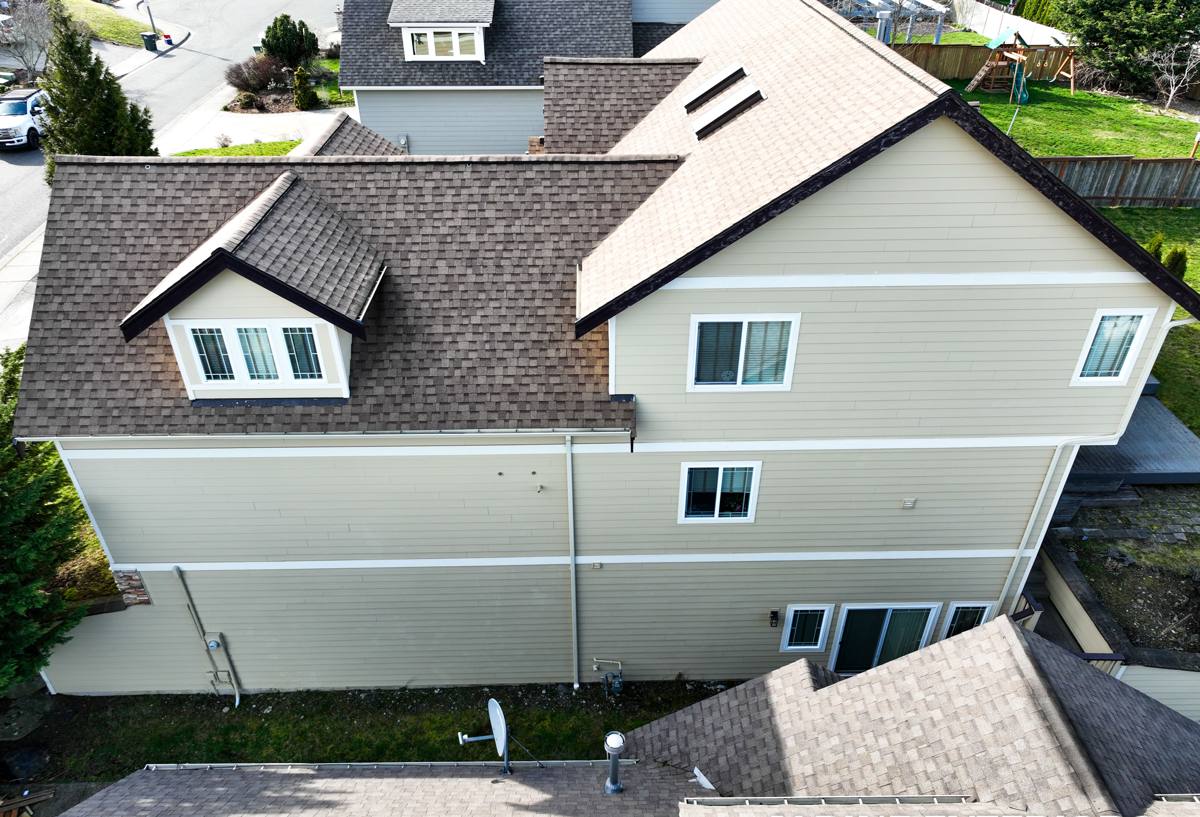
What Blanchard Homes Actually Need From a Deck
Drainage Comes First
Standing water is the single biggest cause of early deck failure in this part of Washington. Boards that don't drain properly stay wet for days after a storm, and wet wood or wet composite substrate is what invites rot, mold, and slip hazards. Proper board spacing, correct joist slope away from the house, and drainage planning underneath multi-level decks all matter more here than they would in a drier climate.
Salt Air and Metal Fatigue
Proximity to open water means airborne salt settles on every exposed surface, including the metal you can't see — joist hangers, structural screws, post bases, and railing brackets. Standard coated fasteners can start corroding years before the visible decking shows any wear, which is a problem because by the time you notice a railing post feels loose, the connection underneath may already be compromised.
Moss, Algae, and a Long Wet Season
Skagit County's wet season runs long, and shaded decks — especially those under trees or on the north side of a house — can stay damp for weeks at a stretch. That's ideal growing conditions for moss and algae, which don't just look bad; they hold moisture against the board surface and make the deck genuinely slippery underfoot.
Choosing the Right Decking Material for This Environment
There's no single "best" decking material for every Blanchard home — the right call depends on your budget, how much upkeep you want to take on, and how exposed the deck is to weather. Here's how the common options actually perform in this climate:
| Material | Moisture & Moss Resistance | Maintenance | Typical Lifespan |
|---|---|---|---|
| Pressure-treated wood | Fair — needs sealing to perform well | Annual cleaning and re-sealing recommended | 10-15 years with upkeep |
| Cedar | Good natural resistance, but surface still needs care | Periodic cleaning and oiling | 15-20 years with upkeep |
| Capped composite | Very good — dense cap sheds moisture and resists moss growth | Occasional washing, no sealing or staining | 25-30+ years |
| Uncapped/budget composite | Weaker — some products absorb moisture at the core over time | More frequent cleaning to prevent surface staining | 15-20 years |
We're honest about trade-offs rather than pushing one product on every job. Wood costs less up front and has a natural look many homeowners want, but it demands real annual maintenance to keep performing in this climate. Capped composite costs more initially but largely removes moss and moisture as ongoing problems, which matters most on shaded or north-facing decks. We'll walk through the actual choices for your site and sun exposure rather than defaulting to whatever's easiest to install.
Framing and Substructure — What's Underneath Matters Most
The decking boards are what you see, but the framing underneath is what determines whether the deck is still sound in fifteen years. On every custom deck we build, the substructure gets the same attention as the surface:
- Ledger board flashing installed correctly where the deck attaches to the house, so water can't work its way into the wall framing
- Joist tape or moisture barrier on top of every joist to keep water from pooling in the wood grain and starting rot from the inside out
- Stainless steel or heavily coated marine-grade fasteners and structural connectors, chosen specifically for salt-air exposure rather than standard hardware
- Post bases set above grade and away from standing water, with proper footing depth for our soil and frost conditions
- Ventilation gaps and slope built into the frame so air and water both move through and off the structure instead of getting trapped
This is the part of the job that doesn't show up in photos but is the actual difference between a deck that needs major repair in year eight and one that's still tight in year twenty-five.
Our Deck-Building Process
1. Site Assessment and Design
We start on-site, not with a generic template. Sun exposure, existing drainage patterns, tree cover, and how close the property sits to open water all shape the material and framing recommendations we make.
2. Permitting
Most new decks and many significant rebuilds in Skagit County require a permit, particularly for structures above a certain height or attached to the home. We handle that process as part of the job so you're not left guessing whether your deck is up to code.
3. Framing and Structural Work
This is where the corrosion-resistant hardware, flashing, and drainage planning described above actually get built in — the stage that matters most for long-term durability.
4. Decking, Railing, and Finish Work
Once the frame is inspected and sound, we install the decking surface and railing system you've chosen, with attention to board spacing and drainage gaps that keep water moving off the surface.
5. Final Walkthrough
We go over care and maintenance specific to the material installed, so you know what upkeep to expect given the site's sun exposure and how close it sits to salt air.
Railings and Hardware Built for Marine-Influenced Air
Railings take a lot of direct weather exposure and get touched constantly, so hardware choice matters as much here as it does in the framing. We spec fasteners, brackets, and post connectors rated for coastal or marine exposure rather than standard interior-grade hardware, because the cost difference is small compared to the cost of replacing corroded railing hardware in five years instead of fifteen. The same logic applies to any exposed metal accents — cable railing hardware, post caps, and light fixtures all need a corrosion rating that matches the environment, not just the look.
Maintenance in a Long Moss Season
No deck material is entirely maintenance-free once you factor in a Pacific Northwest wet season, but the right build and a simple seasonal routine keep moss and algae from becoming a real problem:
- Sweep debris and organic buildup off the deck regularly through fall, before it has a chance to trap moisture against the boards
- Wash the surface at least once or twice a year with a deck-safe cleaner to remove early moss and algae growth before it spreads
- Check and clear any gaps between boards so water and debris keep draining rather than backing up
- Inspect railing posts and connectors annually for looseness, which can be an early sign of hardware corrosion
- Re-seal wood or cedar decking on the schedule recommended for that species — skipping a year in this climate shows up fast
Composite decking cuts down on most of this list, but even capped composite benefits from an annual wash to keep the surface from staining in shaded, damp spots.
Why a Crew That Already Works Blanchard Matters
A deck built to a generic spec sheet doesn't account for how much salt air a specific property actually sees, how shaded a specific yard is through the wet months, or what Skagit County's permitting process actually requires. Crews that build regularly in this area make hardware and drainage decisions based on what actually holds up here, not just what's standard elsewhere in Washington. That local pattern recognition — which fasteners corrode fastest near open water, which decking surfaces stay slick the longest in a shaded yard, where standing water tends to collect on a given lot — is what separates a deck that needs early repair from one that doesn't.
If you're planning a new deck or replacing one that hasn't held up to Blanchard's weather, we're happy to walk the site with you and talk through material and framing options honestly. Reach out below for a free, no-pressure estimate.