 Burlington
 Big Lake Is Its Own Microclimate
Big Lake sits in a pocket of Skagit County just south of Burlington, and homes here don't weather quite the same way a house in downtown Burlington or out on the Mount Vernon flats does. The lake itself adds moisture to the air year-round, tree cover around the shoreline keeps siding shaded and slow to dry, and the combination of standing water, filtered sun, and mild temperatures is close to ideal growing conditions for moss and algae. Add in the driving rain that blows through this part of Skagit County most of the year, and you get siding that stays damp longer than it would on a more open, wind-exposed lot.
None of that means Big Lake homes need something exotic. It means the siding and the installation details have to be chosen with that dampness in mind, instead of assuming a product that works fine in a drier neighborhood will perform the same way here.
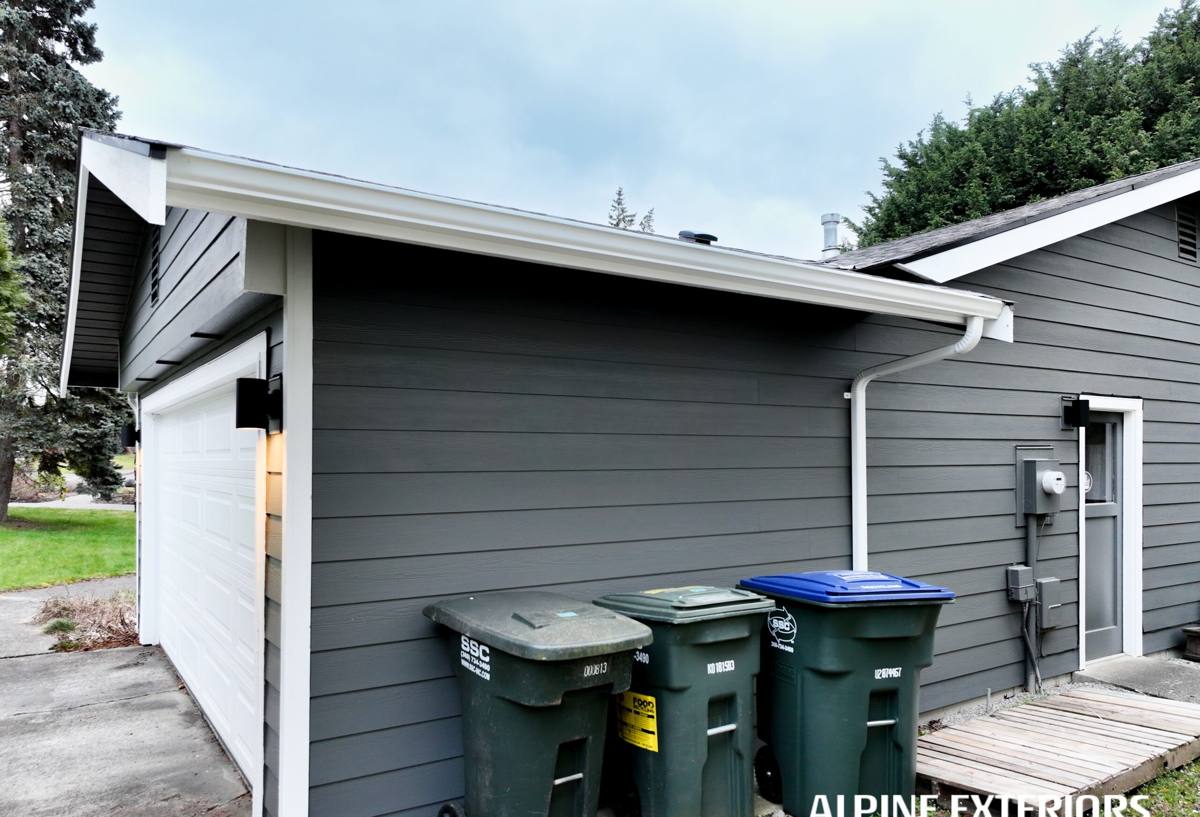
What Lake-Adjacent Weather Does to Siding Over Time
We see a pattern in siding failures around Big Lake that's different from what shows up on more exposed sites. It's rarely storm damage. It's slow, moisture-driven wear:
- Moss and algae growth on north- and shore-facing walls that stay shaded and damp longest
- Swelling, delamination, or soft spots on wood-based or engineered wood siding that's absorbed moisture repeatedly without fully drying
- Paint failure — peeling, bubbling, or chalking — where trapped moisture pushes through from behind
- Caulk and trim breakdown around windows and corners, which lets water behind the siding rather than off of it
- Discoloration and staining that no amount of pressure washing fully removes once it's soaked into the material
The common thread is time-under-moisture. A siding system that dries out quickly between rains holds up. One that holds water — because of the material itself, a failed finish, or poor detailing at the seams — breaks down years before it should, even with regular upkeep.
Signs a Big Lake Home Needs Siding Replacement
Some of these are obvious from the ground; others take a closer look, which is part of why a proper inspection matters more here than in a drier part of the county.
Visible from the yard
Persistent moss or dark streaking that returns within weeks of cleaning, visible warping or waviness in a wall plane, cracked or missing boards, and paint that's peeling in sheets rather than just fading are all signs the siding itself — not just the finish — is failing.
Signs that need a closer look
Soft or spongy spots when you press on the siding, gaps opening up at seams and corners, and a musty smell near exterior walls inside the home are all indicators that moisture has gotten past the surface. On engineered wood or untreated wood products, this is often the point where the damage is no longer cosmetic — it's structural, and patch repairs stop being a real option.
What a Correct Siding Replacement Involves Here
For a lake-adjacent home in this climate, the siding material is only part of the job. The system behind it matters just as much, and it's where a lot of shortcuts happen on lower-bid jobs.
Water management comes first
A correct install starts with a drainable weather-resistive barrier behind the siding, not just a wrap stapled up and covered over. Every window, door, and penetration gets properly flashed so water is directed out and down, never trapped behind the cladding. On a site like Big Lake, where walls can stay damp for extended stretches, this drainage plane is what actually protects the wall assembly — the siding is the first layer of defense, not the only one.
Material selection matters more than usual
This is exactly the environment where the difference between siding products shows up fastest. A material that shrugs off intermittent moisture in a drier climate can swell, cup, or lose its finish here within a few seasons. It's a major reason we standardized on one product line rather than offering several.
Proper fastening and clearances
Correct nailing patterns, proper gapping at butt joints, and keeping siding clearance off grade, decks, and roof lines all matter more in a consistently damp environment. Any of these done wrong becomes the entry point for the moisture problems described above.
Why We Install Only James Hardie Fiber Cement
We don't offer vinyl, LP SmartSide, Cemplank, Allura, or primed wood siding, and Big Lake is a good example of why. Fiber cement doesn't absorb and swell the way engineered wood can, and it doesn't soften or deform in prolonged damp conditions the way vinyl can along its edges and seams. It's also non-combustible, which matters to a lot of homeowners in wooded, semi-rural settings like this one.
ColorPlus finish
James Hardie's ColorPlus finish is baked on at the factory under controlled conditions, rather than field-applied paint drying in whatever weather shows up that week. In a climate where a fresh paint job can be rained on before it fully cures, that's a real practical advantage, not just a marketing point. It also holds color and resists the chalking and fading we see on older painted siding around the lake.
Engineered for this climate
James Hardie makes climate-specific product lines, and the Pacific Northwest falls into their HZ5 engineering zone — formulated for wetter, milder, moss-prone conditions rather than the hot, humid Southeast. That's a meaningful distinction from siding that's engineered as one generic product regardless of where it's installed.
Warranty backing
James Hardie backs its siding with a strong, transferable limited warranty, and ColorPlus finishes carry their own separate finish warranty. For a home that may change hands, that transferability is worth something a generic warranty on a cheaper product usually isn't.
Our Process for Big Lake Projects
1. On-site inspection
We walk the exterior, check moisture-prone areas first — shaded walls, low clearances, anywhere water pools or lingers — and identify whether we're dealing with cosmetic wear or something that's already reached the sheathing.
2. Scope and product plan
We spec the right Hardie board profile, exposure, and color for the home, and flag any trim, flashing, or drainage issues found during inspection so they're part of the bid, not a surprise mid-project.
3. Tear-off and wall prep
Old siding comes off, the sheathing gets inspected for rot or water damage, and any compromised material is repaired before anything new goes up. This step gets skipped by contractors trying to keep a bid low, and it's the step that determines how the new siding performs in five years, not five weeks.
4. Weather barrier and flashing
A drainable barrier goes on, then flashing at every window, door, and penetration, set up to shed water outward rather than let it collect.
5. Hardie installation
Siding goes up to manufacturer spec — correct fastening, gapping, and clearances — because an otherwise correct system installed off-spec can still fail early.
6. Final walkthrough
We go over the finished work with the homeowner, including basic care guidance for a lake-adjacent property, before calling the job done.
What Siding Replacement Costs Depend On
Every Big Lake home is different, so we don't quote sight-unseen — but these are the main factors that move a project's cost up or down:
| Factor | Why It Matters |
|---|---|
| Home size and wall complexity | More corners, gables, and dormers mean more cutting, flashing, and labor time |
| Condition of the sheathing underneath | Hidden rot found during tear-off adds repair work before new siding can go on |
| Siding profile and exposure chosen | Lap width, texture, and trim details affect material quantities and install time |
| Existing siding removal | Multiple layers or difficult-to-remove old material adds tear-off time |
| Access around the home | Tight lake-lot setbacks, slopes, or landscaping can slow staging and scaffolding |
| Trim and detail work | Window, corner, and fascia trim scope varies significantly by home |
We give straightforward, honest estimates after seeing the home in person — no inflated ranges to pad the number, and no lowball quote that leaves out drainage or flashing work to look competitive on paper.
What to Check Before Hiring a Siding Contractor Near Big Lake
- Do they inspect the sheathing before quoting, or just measure the exterior walls?
- Do they explain what weather barrier and flashing details are included, or just the siding brand?
- Are they licensed and insured for exterior work in Washington?
- Do they have experience with lake-adjacent or heavily shaded properties specifically?
- Is the warranty — both material and labor — explained clearly and in writing?
- Do they install one siding system to spec, or juggle several product lines with varying levels of familiarity with each?
A contractor who's worked around Big Lake before will already know to check the shaded, moss-prone walls first and will factor moisture management into the bid from the start — not treat it as an upsell after the tear-off is underway.
Why Local Experience Around Big Lake Matters
Skagit County's mix of lake, farmland, and coastal exposure means siding that performs well in one part of the county can underperform a few miles away. A crew that's already worked Big Lake properties knows which walls take the worst of the moss and moisture, how clearance and drainage details need to be handled near the shoreline, and what it actually takes for siding to hold up here through repeated wet seasons — not just look good on installation day.
If your Big Lake home's siding is showing moss that won't stay off, paint that's failing faster than it should, or boards that feel soft to the touch, we're happy to take a look and give you a straightforward, no-pressure estimate using the form below.