 Burlington
 Big Lake sits just southeast of Burlington in a pocket of Skagit County where the exterior conditions are a step beyond what a typical valley-floor home deals with. Lakefront and near-lake properties here get moisture from two directions at once — the same driving rain and salt-tinged marine air that moves through the rest of the county, plus the constant humidity and shade that come with living next to open water and tree-lined lots. That combination is hard on siding, and it's harder on siding that wasn't built to handle sustained moisture in the first place. This page covers what fiber cement siding work looks like specifically for Big Lake homes: what the local conditions demand, what a correct installation involves, and how we approach the job on this side of Burlington.
Why Big Lake Is a Tougher Environment Than a Typical Burlington Lot
Every home in this part of Skagit County deals with salt air, driving rain, and a long moss season. Big Lake adds a fourth factor: proximity to open water. Homes close to the lake sit in a microclimate with higher ambient humidity than lots a few miles inland, and many of them are tucked under mature tree cover that blocks the afternoon sun that would otherwise dry out a wall face after a storm. The result is siding that spends more of the year damp than siding on a more exposed, sun-facing lot elsewhere in Burlington.
That matters because moisture is the single biggest driver of premature siding failure. A wall that dries out within a day or two of a storm is in a different situation than a shaded, lake-adjacent wall that stays damp for a week. Moss and mildew take hold faster in the second scenario, and any siding material with an organic core — wood, engineered wood, some composite products — is put under real stress in exactly the conditions common around Big Lake.
North-Facing and Shaded Walls Take the Worst of It
On most Big Lake properties, the wall facing the water or shaded by trees is the one that shows moss, mildew staining, and paint failure first. It's rarely the whole house — it's usually one or two faces that never get direct sun and stay wet longest after weather moves through. A siding job here has to account for that unevenness rather than treating all four walls the same.
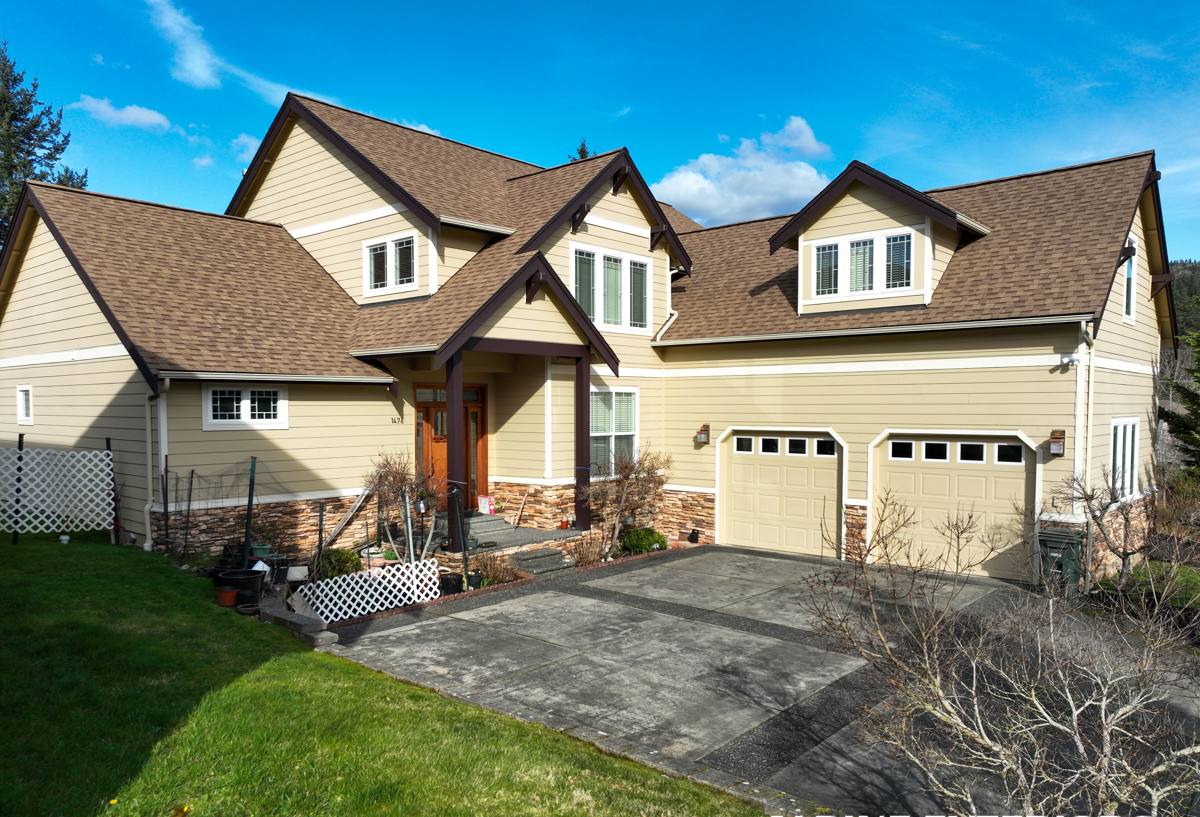
Why We Install Only James Hardie Fiber Cement
We install one siding product, on every home we work on, in Big Lake and everywhere else we serve: James Hardie fiber cement. We don't offer vinyl, LP SmartSide, Cemplank, Allura, primed spruce, or cedar. That's a deliberate professional standard, not a limited catalog, and it's especially relevant in a lakeside microclimate where the wrong material ages faster than it would in a drier part of the state.
Each alternative gets something right. Vinyl is inexpensive and low-maintenance in milder, drier climates. Engineered wood products install quickly and take paint well. Cedar has genuine natural character that some homeowners want. But each one carries a trade-off that we think matters too much next to a lake that keeps the air damp most of the year. Vinyl can warp with temperature swings and its seams are an easy path for wind-driven rain to work behind the panel. Wood-based products, however well treated at the factory, still have an organic substrate that depends on flawless field priming and caulking at every cut edge — a hard standard to hold on every job, forever, in a climate that doesn't offer much of a dry season to recover in between storms. Cedar looks good but asks for real ongoing upkeep — refinishing, sealing, moss treatment — to keep performing where humidity runs high and shade lingers.
Fiber cement handles the core problem differently because it isn't organic. There's no wood substrate for trapped moisture to work into, and it doesn't feed moss and mildew growth the way wood-based siding can. James Hardie builds climate-engineered HZ product lines around sustained moisture and coastal exposure rather than a single generic formulation sold everywhere in the country, and that engineering is exactly what a shaded, lake-adjacent wall in Big Lake needs. Paired with a factory-applied ColorPlus finish — baked on under controlled conditions rather than painted on-site — it holds color and resists cracking longer than a field-applied finish typically manages in a climate this consistently damp.
What a Correct Job Involves on a Lake-Adjacent Home
Fiber cement performs the way it's engineered to only when it's installed correctly, and that standard goes up, not down, on a home near Big Lake. Every clearance, flashing lap, and joint detail matters more when the wall behind it stays wet longer.
- Correct clearance from grade, decks, and any lakeside patio or walkway, so the bottom edge of the siding never sits in standing moisture
- Flashing integrated at every window, door, and roofline transition before siding goes on — not caulked over afterward as a patch
- Fastener pattern and spacing matched to the specific Hardie product line and to this site's wind and moisture exposure
- Extra attention to joint and seam treatment on shaded, north-facing, or tree-covered walls that dry out slower than sun-exposed faces
- Rainscreen or ventilated gap detailing where the wall assembly and site conditions call for it, to let trapped moisture escape rather than sit against the back of the panel
- Factory-finished color matched correctly at trim and touch-up points instead of a mismatched field repaint
Our Process for a Big Lake Siding Project
The process starts with a site walk, not a generic estimate. We look at which walls face the lake, which are shaded by trees, where moss or mildew staining already shows, and where the existing siding or trim has failed first — that tells us where the real problems are before we ever open a wall.
- Assessment: We walk the property, check existing siding condition wall by wall, and note sun exposure, shade cover, and any signs of trapped moisture or prior water damage.
- Scope and material plan: We specify the Hardie product line, profile, and color, and plan flashing and moisture-management details specific to the walls that need it most.
- Tear-off and inspection: Removing old siding lets us check the sheathing and framing underneath for hidden rot or moisture damage before new siding goes on — a step that matters more on a lake-adjacent home than almost anywhere else we work.
- Installation: Flashing, clearance, fastening, and joint treatment are handled to manufacturer spec, with extra care on shaded and lake-facing walls.
- Final walkthrough: We review the finished work with you, including care and maintenance notes specific to your home's exposure.
Why Hiring a Crew That Already Works Big Lake Matters
A siding crew that only works drier, more exposed lots elsewhere in the county can miss what matters here — the shaded wall that never fully dries, the fastener pattern that needs adjusting for a damper microclimate, the moss that will come back within a season if the underlying moisture problem isn't addressed. Experience with lake-adjacent Skagit County homes means knowing which walls to scrutinize before the tear-off even starts, not learning it partway through the job.
It also means being honest about tradeoffs specific to this setting — where a rainscreen gap is worth the added cost, where tree trimming would help siding longevity more than any product choice would, and where a homeowner's expectations for a "maintenance-free" material need a realistic gut check for a shaded lakefront lot.
Moss, Mildew, and Long-Term Maintenance Near the Lake
Fiber cement doesn't feed moss and mildew growth the way organic siding materials can, but that doesn't mean a Big Lake home is maintenance-free. Shaded, damp walls will still accumulate surface growth over time, and periodic gentle cleaning — never high-pressure blasting that can force water behind panels or damage the factory finish — keeps both the appearance and the underlying wall assembly in good shape. Keeping gutters clear and vegetation trimmed back from walls also does more for long-term siding performance here than most homeowners expect.
| Maintenance Task | Why It Matters at Big Lake | Suggested Frequency |
|---|---|---|
| Gentle rinse of shaded/lake-facing walls | Removes surface moss and mildew before it builds up and holds moisture | 1–2 times per year |
| Trim back trees and shrubs near walls | Improves airflow and sun exposure, speeding up drying time after storms | Annually or as needed |
| Inspect caulking at trim and penetrations | Prevents wind-driven rain from working behind panels at joints | Annually |
| Clear gutters and downspouts | Stops overflow from running down and saturating wall sections | Twice yearly |
| Check for fastener corrosion or staining | Salt-tinged, humid air accelerates corrosion of exposed metal | Every 1–2 years |
Comparing Siding Approaches for a Big Lake Home
Homeowners near the lake sometimes ask why we won't offer a lower-cost alternative for a smaller project. The honest answer is that the conditions here are exactly where cutting corners on material shows up fastest.
| Factor | Vinyl | Engineered Wood | James Hardie Fiber Cement |
|---|---|---|---|
| Behavior in sustained humidity | Can warp; seams allow water intrusion | Organic core vulnerable if seals fail | Non-organic; doesn't feed rot or moss |
| Performance on shaded, slow-drying walls | Prone to trapped moisture behind panels | Requires flawless field sealing to hold up | Engineered for sustained-moisture exposure |
| Finish durability near water/salt air | Fades and becomes brittle over time | Field paint needs more frequent upkeep | Factory ColorPlus finish resists fading |
| Typical maintenance around Big Lake | Low, but limited lifespan in this climate | Higher — repainting, resealing cut edges | Periodic cleaning; no repainting cycle |
Cost Factors for a Big Lake Fiber Cement Project
Every home is different, but a few factors consistently move the price of a fiber cement siding project for lake-adjacent properties, more than they might for a typical inland lot.
- Extent of tear-off and any hidden sheathing repair — more likely on a home that's had sustained moisture exposure for years
- Number of shaded or lake-facing walls needing extra moisture-management detailing
- Home size and trim complexity, including gables, dormers, and multiple roof-wall transitions
- Product line and profile selected, since Hardie offers different HZ formulations and panel styles at different price points
- Site access, particularly for homes with limited driveway or lakeside access that affects material staging and equipment setup
We provide a written, itemized estimate specific to your home rather than a flat per-square-foot number pulled from a generic price sheet.
Signs a Big Lake Home May Need Siding Work Soon
- Persistent moss or dark staining on one or two walls that doesn't wash off and returns quickly after cleaning
- Soft spots, visible warping, or gaps at seams and corner boards
- Paint or finish that's peeling, chalking, or visibly faded compared to the rest of the house
- Rusted or discolored fasteners showing through the surface
- Interior signs near exterior walls — musty smell, soft drywall, or visible water staining — that point to moisture getting past the siding
If you own a home in or near Big Lake and want a straight answer about what your siding needs — whether that's a full replacement, targeted repair, or just a maintenance plan for a shaded wall that's giving you trouble — we're glad to take a look. Reach out for a free, no-pressure estimate using the form below.