 Burlington
 Why Decks Age Differently Around Big Lake
Big Lake sits in a pocket of Skagit County that holds onto moisture longer than the surrounding valley. The lake itself keeps humidity elevated through the mild months, the tree cover ringing the shoreline blocks a lot of direct sun and airflow, and the region's driving rain and salt-tinged marine air add their own wear on top of that. Put those together and you get a longer moss season than homes just a few miles inland, more standing dampness under and around the deck surface, and hardware that corrodes faster than a warranty label ever accounts for.
None of that means a deck can't last in this area — plenty do, for decades. It means the deck has to be built and maintained with that climate in mind from the start. A deck detailed the same way you'd build one in a dry, open, sunny yard is going to fail early here, usually starting with soft framing or rusted fasteners long before the decking boards themselves look bad.
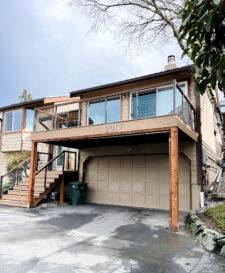
Signs a Big Lake Deck Needs Replacement, Not Another Repair
We get called out to a lot of decks that homeowners assume just need a board or two swapped. Sometimes that's true. Often the surface is the least of the problem. Here's what tells us a deck has moved from "repairable" to "replace it":
- Soft or spongy spots when you walk across the deck, especially near the house or along the edges closest to shade and tree cover
- Ledger board pulling away from the house, or visible gaps/staining where the deck meets the siding
- Rust streaks running down from screws, joist hangers, or railing posts
- Persistent green or black growth that comes back within weeks of cleaning, even after a good scrub
- Wobbly railings or posts that move at the base — often a sign the post connection or footing has failed, not just the wood
- Visible rot or crumbling wood where joists meet beams, or anywhere water tends to pool and sit
If it's one or two boards and the framing underneath is sound, repair makes sense. If the problems are structural — framing, ledger, footings, or post connections — patching the surface just delays a bigger job and adds cost you'll pay twice.
What a Proper Deck Replacement Actually Involves
Demolition and Honest Inspection
A full replacement starts with tearing the old deck down to the ledger and posts, not just pulling up the decking boards. That's the only way to actually see the condition of the framing, the ledger connection to the house, and the footings below grade. On lake-adjacent lots we pay close attention to how water has been draining — or not draining — around the foundation and post bases, since poor drainage is usually what shortened the old deck's life in the first place.
Framing and Structural Support
This is where a Big Lake deck earns its lifespan. We use pressure-treated framing rated for ground contact where posts meet soil, proper flashing at the ledger board so water can't wick into the house rim joist, and joist hangers and structural screws rated for the moisture and salt-air exposure common to this part of Skagit County. Footings get set below frost depth and checked for the soil conditions actually present on the lot, not assumed from a standard plan.
Decking Surface and Fasteners
Whatever surface material you choose, it only performs as well as what's under it and what's holding it down. We use hidden fastening systems or corrosion-resistant coated screws depending on the material, spaced and gapped to allow for the wood movement and drainage a wet climate demands.
Railings and Guards
Railings take a lot of abuse near a lake — leaned on, climbed over by kids and dogs, exposed to spray and splash if the deck is close to the water. We build railing systems to current code height and spacing requirements, with post connections designed to resist the lateral loads a real family actually puts on them, not just the minimum a board looks like it can handle.
Choosing a Decking Material for This Location
There's no single "right" material for every home, but the moss, moisture, and shade around Big Lake do narrow the field. Here's how the common options actually behave in this specific setting:
| Material | How it handles Big Lake's moisture & moss | Maintenance | Typical lifespan here |
|---|---|---|---|
| Pressure-treated wood | Affordable, but shaded/damp spots need more frequent cleaning to stay ahead of moss and mildew | Annual cleaning, periodic staining/sealing | 10-15 years with upkeep |
| Cedar | Naturally rot-resistant and handsome, but softer surface holds moisture longer in shaded areas | Regular cleaning and re-sealing to hold color and resist moss | 15-20 years with diligent care |
| Composite decking | Resists rot and doesn't need sealing; still needs cleaning where moss and algae can gain a foothold on any surface | Periodic washing, no staining/sealing needed | 25-30 years, manufacturer-warrantied |
| PVC/capped polymer | Fully sealed surface, best resistance to moisture wicking and staining in low-sun, high-shade spots | Lowest maintenance of the group | 25-30+ years, manufacturer-warrantied |
Homes with heavy tree cover or a north-facing deck that rarely sees direct sun tend to do best with composite or PVC decking, simply because those surfaces don't give moss and mildew the organic material to grip onto the way wood grain does. Homes with more open, sunny exposure have more flexibility to choose wood and keep up with it. We'll walk your specific lot with you and give an honest read on which category fits before you commit to a product.
Permits and Shoreline Considerations
Deck replacement in unincorporated Skagit County typically requires a building permit, and that's true whether the deck is a simple ground-level platform or an elevated structure with railings and stairs. If a property is close to the Big Lake shoreline, there can be additional shoreline setback or critical-area review layered on top of the standard building permit — the specifics depend on the parcel, its zoning, and its distance from the water. We handle the permit application and any required documentation as part of the job, and we'll tell you upfront if your lot looks like it needs the extra shoreline review rather than assuming it doesn't.
Our Deck Replacement Process
- On-site assessment. We walk the existing deck, check framing and footings where accessible, and talk through how you actually use the space — lake access, entertaining, grilling, hot tub, whatever's relevant.
- Written estimate. You get a clear scope and price before any work starts, including material options and what each one changes about cost and upkeep.
- Permitting. We pull the required permit and handle inspections so you don't have to chase paperwork.
- Removal. The old deck comes down to the ledger and posts, and we haul away the debris.
- Framing and structural work. New footings, posts, beams, joists, and ledger flashing go in to current code and to the standard we hold ourselves to for this climate.
- Decking and railings. Surface material and railing system installed per your selection, fastened for long-term performance in a damp, shaded environment.
- Final walkthrough and inspection sign-off. We review the finished deck with you and make sure the permit closes out properly with the county.
Keeping a New Deck in Good Shape Around Big Lake
A well-built deck still needs a bit of seasonal attention in this environment. A short list of what actually matters:
- Sweep off fallen leaves and needles regularly — trapped organic debris is what feeds moss and holds moisture against the surface
- Clean the deck at least once a year, more often in heavily shaded areas, to stay ahead of algae and moss before it takes hold
- Check railing posts and stair connections annually for movement, especially after a hard winter
- Keep gutters and downspouts clear so runoff isn't dumping extra water onto or under the deck
- If you have wood decking, don't let a stain/seal cycle lapse — once bare wood starts absorbing moisture, moss and rot follow fast in this climate
- Watch for standing water anywhere on the surface after rain; pooling usually means a drainage or slope issue worth addressing early
Why Hire a Crew That Already Works in Big Lake
A contractor who mostly builds decks in drier, more open parts of the state will often use the same details everywhere — because it's what they know. Around Big Lake, that shows up later as a ledger that traps moisture, a decking material that can't shake moss in the shade, or fasteners that weren't specified for this level of dampness and marine-influenced air. We work in Burlington and the surrounding Skagit County communities regularly, including lake-adjacent properties like this one, so the framing details, material choices, and drainage planning we bring to your job are ones we've already proven out on homes dealing with the same conditions yours faces. That's less guesswork for you and fewer surprises three or five years down the road.
If your deck is showing its age, or you're just not sure whether it's a repair or a replacement, we're happy to come take a look. There's no cost and no pressure for an honest assessment and a written estimate — fill out the form below and we'll get in touch.