 Burlington
 Why Avon Siding Wears Out Faster Than Homeowners Expect
Avon sits low in the Skagit Valley, close to the Skagit River and near enough to Skagit Bay that salt-laden air moves through on a regular basis, especially during fall and winter storms. Add the valley's open farmland, which gives wind a long, unobstructed run at the walls of a house, and you have a set of conditions that ages exterior siding faster than most manufacturers' glossy brochures account for.
Three things do most of the damage over time: salt-carrying air that accelerates corrosion on fasteners and trim, wind-driven rain that gets pushed sideways into laps and seams rather than falling straight down, and a moss season that, in low-lying, shaded parts of the valley, can run most of the year. None of these are dramatic on their own. Together, over a decade or two, they're what separates a siding job that still looks tight from one that's cupping, staining, and rotting at the bottom courses.
Salt Air and Wind Off the Delta
Homes in Avon don't get the direct salt spray of a beachfront property, but the airborne salt content in this part of Skagit County is real and it accumulates. It's hardest on unprotected metal — nail heads, flashing, and trim fasteners — which is why fastener choice and flashing detail matter more here than they would on a home fifty miles inland.
The Long Wet Season and Moss
Skagit Valley's combination of low elevation, river humidity, and surrounding tree lines and farm structures creates plenty of shaded, slow-drying wall surfaces. North- and east-facing walls in particular hold moisture longer, and that's exactly where moss and algae take hold first. Once moss establishes on a wall, it holds even more moisture against the siding surface, which speeds up whatever failure is already starting underneath.
What "Siding Replacement" Actually Means
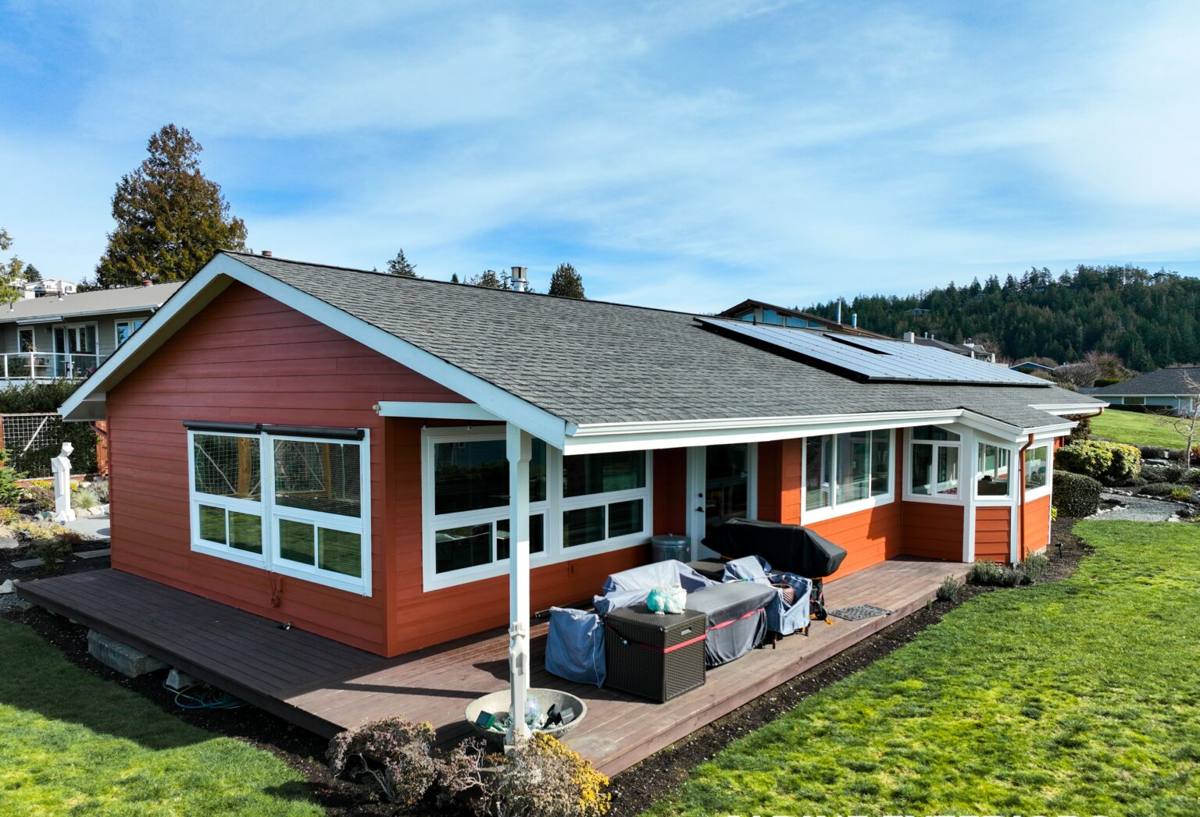
Replacement is not the same job as a repair, and it's not the same as re-siding over what's already on the wall. A true replacement means removing the existing siding down to the sheathing, which is the only way to find out what's actually happening behind it — hidden rot, failed flashing, a water-resistive barrier that's degraded or was never installed correctly the first time. Covering over those problems with new siding just resets the clock on the same failure.
When Replacement Beats Repair
Spot repairs make sense when the damage is isolated and the rest of the siding is sound. Full replacement is the right call when you're seeing widespread moss staining that keeps coming back after cleaning, soft or delaminating boards in more than one area, siding that's been patched repeatedly over the years, or when other exterior work — new windows, a re-roof, trim replacement — is already planned and it makes sense to address the wall system as a whole.
What a Correct Replacement Involves in This Climate
The materials matter, but installation detail is what actually determines whether a siding job holds up in Avon's conditions. A handful of details separate a job that lasts decades from one that starts showing problems in five years.
Ground Clearance and Splash-Back
Siding installed too close to grade takes constant splash-back from rain hitting the ground and bouncing up, and on the flatter, lower-lying properties common around Avon, that ground can stay wet longer after a storm than it would on higher ground. Proper clearance between the bottom of the siding and soil, mulch, or hardscape is a basic detail that gets skipped more often than it should.
Flashing at Windows, Doors, and Penetrations
Wind-driven rain finds any gap in flashing around openings and penetrations — window and door frames, hose bibs, vent penetrations, deck ledger connections. Every one of those needs correctly lapped, sealed flashing integrated with the water-resistive barrier before a single piece of siding goes up. This is the step that's invisible once the job is finished, and it's the step that determines whether water gets behind the wall in the first place.
We also install a drainage gap behind the siding so that any moisture that does get past the outer layer has somewhere to go and a way to dry out, rather than sitting trapped against the sheathing.
Why We Install Only James Hardie Fiber Cement Here
We standardized on James Hardie fiber cement and don't install vinyl, LP SmartSide, or cedar, and the reasoning comes directly from what holds up in a climate like this one. Fiber cement doesn't absorb and swell the way wood-based products can, and it doesn't soften or distort under sustained damp conditions the way vinyl can over time. It's also non-combustible, which is worth something on its own regardless of climate.
Hardie's HZ5 product line is engineered specifically for climates like the Pacific Northwest's, with moisture and freeze-thaw performance built into the formulation rather than added as an afterthought. And the ColorPlus factory finish matters more here than in a drier climate — a factory-baked finish holds up better against the mold and mildew growth that a humid, shaded valley environment promotes, and it stretches out the repainting cycle homeowners would otherwise be facing every few years.
| Material | Moisture Behavior in a Wet, Salt-Air Climate | Ongoing Maintenance |
|---|---|---|
| James Hardie Fiber Cement | Does not rot, swell, or support moisture absorption into the substrate | Occasional wash-down; ColorPlus finish reduces repainting |
| Vinyl | Can warp or distort with temperature swings; seams allow moisture behind panels | Low, but panels can't be spot-repaired invisibly |
| LP SmartSide (engineered wood) | Cut edges and panel joints are vulnerable to moisture intrusion if not sealed and maintained | Requires diligent caulk and paint upkeep |
| Cedar | Absorbs moisture readily; prone to rot and moss growth without consistent sealing | Regular staining or sealing required |
Our Process for an Avon Siding Replacement
Every replacement starts with an on-site walk of the property, not a drive-by estimate. We look at which walls are taking the worst weathering, check for soft spots and existing moss patterns, and talk through what's driving the decision to replace rather than repair.
From there, the job follows the same sequence on every home: full tear-off of the existing siding, inspection and repair of any damaged sheathing found underneath, installation of a new water-resistive barrier and correctly lapped flashing at every opening and penetration, then the Hardie panels and trim installed to manufacturer spec with a drainage gap behind them. We finish with caulking and touch-up where needed and a final walk-through before we consider the job done.
- On-site assessment of existing siding, trim, and known trouble spots before any pricing is finalized
- Full tear-off — not layered re-siding over the existing wall
- Sheathing inspection, with any rot or water damage repaired before new material goes up
- New water-resistive barrier and correctly integrated flashing at all windows, doors, and penetrations
- Drainage gap behind the siding for ongoing moisture management
- Corrosion-resistant fasteners appropriate for a salt-air environment
- Manufacturer-spec installation of James Hardie panels and trim
- Final walk-through with the homeowner before the job is signed off
Why a Crew That Already Works Avon Matters
A siding crew that works this specific corner of Skagit County regularly develops a feel for which walls fail first and why. That's not something you get from a general contracting background alone — it comes from repeatedly seeing how the valley's wind and rain patterns interact with the mix of older farmhouses and newer construction around Burlington and Avon.
Older homes in this area sometimes have sheathing and framing that don't match what's typical in newer subdivisions, and knowing what to expect before the tear-off starts helps a crew move efficiently instead of discovering surprises mid-job. Local crews are also familiar with the permitting process through Skagit County and the City of Burlington, and with scheduling work around the shorter dry windows this climate tends to offer, so the job isn't left exposed to weather any longer than it has to be.
Cost Factors for an Avon Siding Replacement
Every home is different, and we won't quote a number without seeing the property, but the same handful of factors drive cost on nearly every job in this area.
| Factor | How It Affects the Project |
|---|---|
| Home size and wall area | More square footage means more material and labor, straightforwardly |
| Hidden rot or sheathing damage | Not known until tear-off; repair adds time and material before new siding goes up |
| Number of windows, doors, and trim details | More openings mean more flashing and trim work per square foot of wall |
| Site access and staging | Tighter lots or obstructed sides of the house slow tear-off and material handling |
| Age and type of existing siding | Older homes occasionally have original materials that require extra care to remove safely |
Maintenance After Installation
A correctly installed Hardie system needs far less upkeep than the alternatives, but "less" isn't "none." Keeping gutters clear so water isn't dumping down a wall face, and keeping shrubs and vegetation trimmed back a few inches from the siding, both go a long way toward keeping moss and algae from re-establishing on shaded walls. An occasional rinse on north- and east-facing walls during the drier months helps too. Because ColorPlus is a factory finish rather than a field-applied paint job, you're not looking at a repainting cycle every few years — just periodic checks of caulking and trim as the house settles over time.
If your Avon home's siding is showing moss that keeps coming back, soft spots, or trim that's starting to separate, we're happy to take a look and walk you through what we're seeing — no pressure, no obligation. Use the form below to request a free estimate.