 Burlington
 Windows Built for Avon's Low-Lying Skagit County Climate
Avon sits low, flat, and close to the Skagit River, which means homes here take on weather differently than a house up on a hillside in Burlington proper. Moisture sits longer in the air, wind has nothing to break it before it hits your siding and window walls, and the growing season for moss and algae runs nearly year-round. Windows in this pocket of Skagit County don't just need to look good — they need to shed water fast, seal tight against wind-driven rain, and hold up to salt-tinged air drifting in off the nearby bay waters without their seals and hardware breaking down early.
A lot of window problems we see in Avon aren't really about the glass at all. They're about a window that was sized, flashed, or sealed for a drier climate and is now years past the point where it can keep up. Custom windows done right for this specific area account for all of that from the start, rather than treating Avon the same as an inland, sheltered lot.
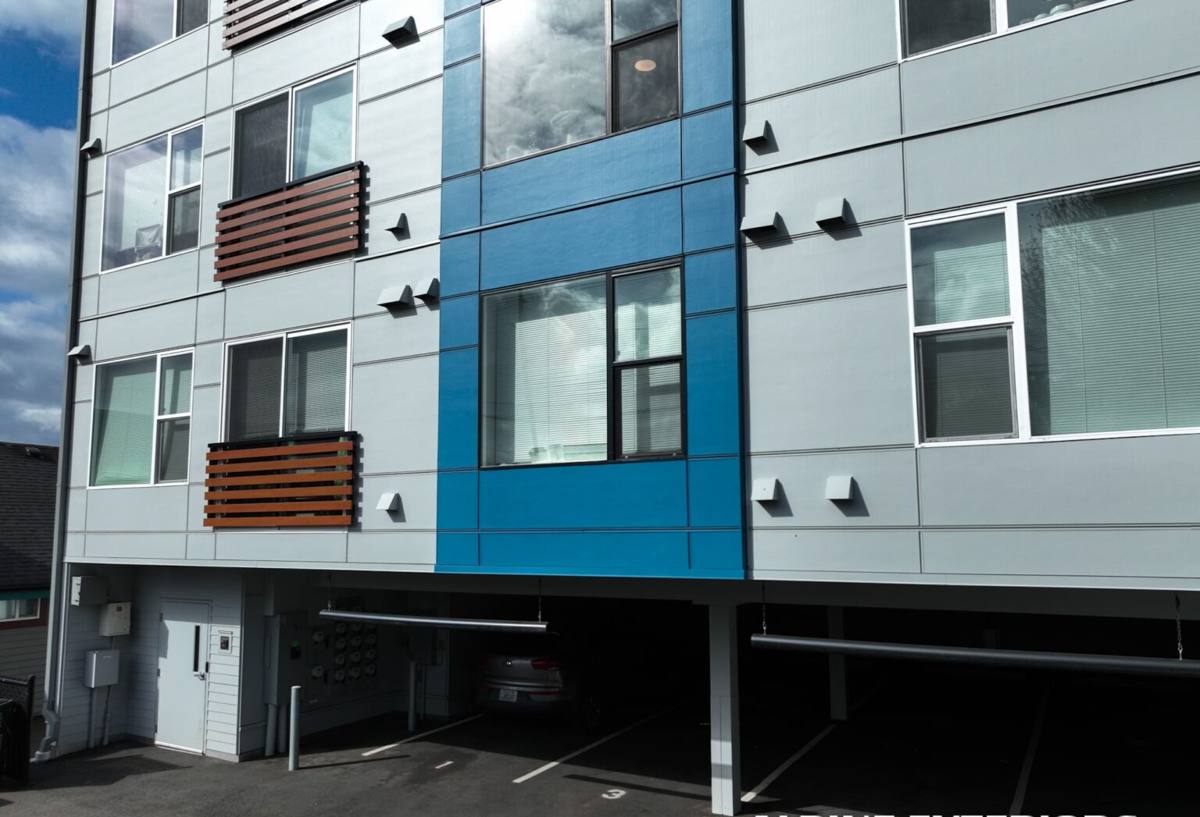
What Driving Rain, Salt Air, and Moss Do to Ordinary Windows
Wind-Driven Rain
When rain comes in sideways instead of straight down, it finds every weak point in a window's flashing and seal. Standard installation details that work fine on a calm inland lot can let water track behind the trim on an exposed Avon wall, especially on the sides of a house that face open farmland or the river corridor with no windbreak.
A Long Moss Season
Constant dampness means moss and algae get a foothold on window sills, frames, and the wood trim around them earlier in the year and hang on longer into summer than in drier parts of the county. Left alone, that growth holds moisture directly against the frame material, which accelerates rot in wood components and can stain vinyl and fiberglass surfaces.
Salt-Tinged Air
Air moving inland off the Skagit River delta and nearby Puget Sound waters carries a fine salt content that speeds up corrosion on hardware — hinges, locks, balance mechanisms — and can dull or pit lower-grade metal components over time. It's a slow process, but it's steady, and it's part of why hardware quality matters more here than it would somewhere landlocked.
What a Correct Custom Window Installation Actually Involves
"Custom" doesn't just mean a special order size. For an Avon home, a properly done window job means every one of these gets attention, not just the glass itself:
- Accurate field measurement — older farmhouses and homes on softer, low-lying ground often have openings that have shifted slightly out of square over the years; a custom window has to be built to the opening as it actually is, not as it was on the original plans.
- Proper flashing and drainage detail — water that gets behind the window needs a clear path back out, especially on walls that catch driving rain directly.
- A continuous air and moisture seal — gaps here are where cold drafts, moisture intrusion, and eventually frame rot all start.
- Glass and frame matched to exposure — a west- or south-facing wall that takes the brunt of storms coming up the valley may call for a different glass package or reinforcement than a sheltered north wall.
- Trim and sill work that sheds water — the finish carpentry around a window is part of its weatherproofing, not just its appearance.
Skip any one of these and you can end up with a window that looks brand new for a year or two while quietly failing behind the trim.
Signs Your Current Windows Are Losing the Battle
Homeowners in Avon often live with a slowly failing window for longer than they realize, because the early signs are easy to write off as normal wear. Worth checking for:
- Fogging or a hazy film between panes of double-glazed glass — a sign the seal has failed and moisture has gotten into the gas-filled space
- Soft or discolored wood at the sill or bottom corners of the frame
- Moss or dark green-black staining that keeps coming back on the sill no matter how often it's cleaned
- A window that's noticeably harder to open, close, or lock than it used to be
- Visible daylight or a draft you can feel at the frame edge on a windy day
- Paint or finish that's peeling specifically around the window opening and nowhere else on that wall
- A musty smell in the room nearest the window, especially after a stretch of wet weather
Any one of these on its own might just mean a minor repair. Two or three together, especially on the same window, usually means the unit is past the point where repair makes sense.
Choosing the Right Frame and Glass for This Climate
There's no single "best" window material for every home — it depends on your home's style, your budget, and how exposed the specific wall is. Here's how the common options actually perform under Avon's conditions:
| Frame Material | How It Handles Moisture & Salt Air | Maintenance |
|---|---|---|
| Vinyl | Won't rot or corrode; performs well in damp, salty air with no coating to fail | Low — occasional cleaning |
| Fiberglass | Very stable in temperature and moisture swings; strong seal retention over time | Low |
| Wood | Classic look but vulnerable to prolonged dampness and moss contact if not maintained | High — regular refinishing needed |
| Wood-clad (wood interior, metal or vinyl exterior) | Good compromise, but exterior cladding seams need careful sealing against driving rain | Moderate |
| Aluminum | Prone to corrosion from salt-tinged air over time unless well-coated; conducts cold | Moderate to high |
For most Avon homes, we lean toward vinyl or fiberglass frames for anything on an exposed wall, and we're honest with homeowners about the upkeep that solid wood frames demand in a climate like this one — not because wood is a bad product, but because the maintenance schedule needs to match what the owner is actually willing to keep up with.
Glass Packages Worth Considering
Double-pane, low-E glass is the baseline we recommend for this area — the coating helps manage heat loss through the long, wet Skagit County winters. On walls that take the worst of the wind and rain, we'll sometimes discuss a triple-pane or upgraded gas-fill option, though that's a cost-versus-benefit conversation specific to your home rather than a blanket recommendation.
Cost Factors Worth Understanding Up Front
Every home is different, so we won't quote a number without seeing the openings, but these are the main factors that move the price on a custom window job:
| Factor | Why It Matters |
|---|---|
| Number and size of openings | More or larger windows means more material and labor |
| Frame material chosen | Fiberglass and higher-end vinyl typically cost more than builder-grade vinyl; wood costs more still |
| Glass package | Triple-pane or specialty coatings add cost over standard double-pane low-E |
| Condition of the existing opening | Rot, out-of-square framing, or old flashing failures found during removal add repair work |
| Trim and finish work | Matching existing exterior trim or repairing weather-damaged trim adds scope |
We'd rather walk your home and give you real numbers than throw out a broad range that doesn't hold up once we open the wall.
Our Process, Start to Finish
- On-site assessment — we look at each opening, check for existing water damage or rot, and note which walls take the worst of the weather.
- Honest recommendation — we walk you through frame and glass options suited to your home and your budget, without steering you toward whatever's easiest for us to install.
- Precise measurement and custom order — windows are built to your actual openings, not a stock size.
- Careful removal — old units come out with attention to the surrounding structure, so we catch any hidden rot or flashing failure before it becomes a bigger problem.
- Correct flashing, sealing, and insulation — this step is where most of a window's long-term performance actually gets decided.
- Finish work — trim, caulking, and cleanup so the final look matches your home.
- Final walkthrough — we check operation, seal, and appearance with you before we call the job done.
Why a Crew That Already Works in Avon Matters
A contractor who's worked plenty of jobs in Avon already understands things a crew from outside the area has to learn on your dime: how the ground here settles differently than it does on higher ground, which wall exposures in this stretch of the valley take the worst of the storms coming up from the Skagit River corridor, and how much moss and moisture pressure a window really needs to be built to withstand. That local knowledge shows up in better flashing decisions, smarter material choices, and fewer surprises once the old windows come out.
It also means straightforward accountability. We're a Burlington-based crew working in Skagit County day in and day out — if something needs a second look after the install, we're not far away and we're not hard to find.
Keeping New Windows Performing for the Long Haul
Even a well-installed window benefits from a little regular attention in a climate like this one:
- Clean sills and tracks a couple of times a year to keep moss and algae from taking hold
- Check exterior caulking annually, especially after a hard winter, and have any cracked or shrunk sealant redone before it lets water in
- Operate locks and hardware periodically so salt-air corrosion doesn't get a chance to seize a mechanism unnoticed
- Keep gutters and downspouts clear so runoff isn't sheeting directly down over window heads
None of this is heavy maintenance — it's the kind of upkeep that takes an hour or two a year and adds real years to the life of the installation.
If your Avon home has windows that are fogging, drafting, sticking, or just past their prime, we're happy to take a look and give you a straight assessment — no pressure, no upsell, just an honest read on what your home actually needs. Use the form below to request a free estimate.