 Burlington
 Anacortes' Marine Climate Puts Siding to the Test
Anacortes sits out on Fidalgo Island, surrounded by saltwater on nearly every side, which means homes here take a different kind of weathering than houses ten miles inland in Burlington or Mount Vernon. The siding on an Anacortes home deals with salt-laden air, wind-driven rain coming off the water, and a moss season that can run most of the year in shaded, north-facing exposures. None of that is dramatic on any single day, but it adds up fast, and it adds up faster on the wrong siding material.
This page is about one product, in one place: James Hardie fiber cement siding, installed correctly for Anacortes homes. We're not going to cover general siding basics here — we cover those elsewhere. This is about what the coastal edge of Skagit County actually does to a house, and what it takes to keep siding looking and performing the way it should for decades instead of years.
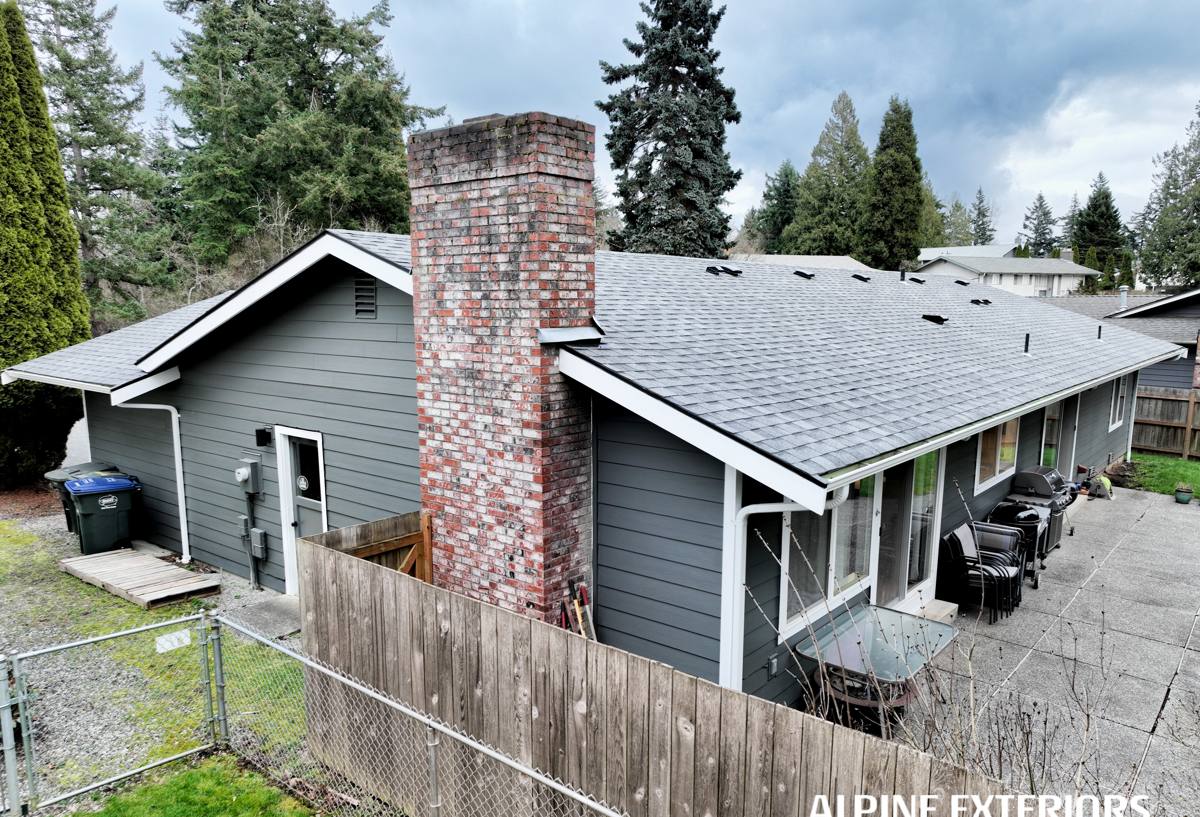
What Salt Air and Coastal Moisture Actually Do to Siding
Salt air isn't just "humid air near water" — it carries fine salt particles that settle on every exterior surface and accelerate corrosion of anything metal: fasteners, flashing, trim screws, hose bib fittings. On a house with siding that depends on caulk and paint film to stay watertight, that corrosion process works from both directions — moisture gets in through failing seals while salt speeds up the breakdown of the metal components holding the assembly together.
Combine that with driving rain. When wind pushes rain sideways instead of letting it fall straight down, water gets forced up under laps, into butt joints, and around window and door trim in ways that calm-weather siding details were never built to handle. A siding system that's marginal in a sheltered inland yard can fail years earlier on an exposed Anacortes elevation facing the water.
Then there's moss. Cool, damp, shaded surfaces in western Washington grow moss and mildew almost year-round, and siding materials that hold moisture at the surface — or that have organic material in their composition — give moss something to root into. Moss doesn't just look bad; it holds water against the siding face longer than it would otherwise sit there, which extends every other moisture-related problem.
Why We Only Install James Hardie Fiber Cement Here
We made the decision, as a company, to install James Hardie fiber cement siding exclusively — not LP SmartSide, not vinyl, not Cemplank or Allura fiber cement, not primed spruce or cedar. That's a deliberate standard, not a sales preference, and it matters more in a place like Anacortes than it does somewhere drier and more sheltered.
Fiber cement itself is inorganic — it's cellulose fiber reinforcing a cement-based matrix — so it doesn't feed moss and mildew the way wood-based siding can, and it doesn't combust the way wood-based or foam-core products do. James Hardie backs its boards with a factory-applied ColorPlus finish baked on under controlled conditions, which holds up to UV and salt-air exposure far better than field-applied paint that has to be reapplied every several years to keep working.
The HardieZone System and Western Washington
James Hardie engineers its product lines by climate zone rather than shipping one formulation nationwide. Western Washington's marine climate — mild temperatures paired with sustained moisture — falls into the HardieZone category built for humid, moisture-heavy regions rather than the freeze-thaw formulation used in colder, drier climates. That distinction is exactly why we don't treat "fiber cement" as a single generic material — the product has to match the climate it's going on, and Anacortes' climate is specific enough that this isn't optional.
What Correct Installation Requires in a Coastal Climate
Fiber cement siding fails less often because of the material and more often because of how it was installed. In an exposure like Anacortes gets, the installation details matter even more than usual:
- Proper drainage plane and weather-resistive barrier behind the siding, so any moisture that does get past the surface has somewhere to go
- Correct fastener type, spacing, and depth — over-driven or corrosion-prone fasteners are a leading cause of early failure near saltwater
- Flashing integrated at every horizontal trim board, window head, and roof-to-wall intersection, not just caulk bridging the gap
- Manufacturer-specified gaps at butt joints and trim, sealed with the right sealant rather than sealed everywhere out of habit
- Bottom clearance from grade, decks, and roof lines held to spec so wicking moisture doesn't sit against the board's cut edge
- Factory-cut edges primed and sealed before or during install, since a raw cut edge is the most moisture-vulnerable point on the board
Skip any one of these and you can end up with a board that's rated for coastal exposure but installed like it's going on a house in a dry inland subdivision. The material only performs as well as the installation lets it.
How Siding Materials Hold Up in Anacortes' Coastal Exposure
| Material | Salt Air / Corrosion | Moisture Handling | Moss & Mildew Resistance | Ongoing Maintenance |
|---|---|---|---|---|
| James Hardie fiber cement | Inorganic, resists salt-driven breakdown | Engineered for humid coastal climates | Non-organic surface, doesn't feed growth | Occasional wash; factory finish holds color |
| Vinyl siding | Doesn't corrode, but seams and fasteners can | Relies on lap seams; can trap moisture behind panels | Can hold moss/algae film in shaded areas | Low, but can crack or fade over time |
| LP SmartSide / engineered wood | Metal trim and fasteners still exposed to salt air | Wood-based core is moisture-sensitive at cut edges and seams | Organic content is more vulnerable to moss and rot | Regular inspection of seams and edges needed |
| Cedar or primed wood siding | No corrosion issue, but coatings degrade in salt air | Absorbs and releases moisture with weather cycles | Fully organic, most vulnerable to moss and decay | Frequent refinishing and upkeep |
This isn't a claim that every alternative product fails on the coast — plenty of them perform reasonably well when installed and maintained correctly. It's why, when we weigh the trade-offs for the climate we actually work in, James Hardie fiber cement is the one we're willing to put our name behind.
Moss, Mildew, and Long-Term Maintenance
Even the right siding material benefits from a little homeowner attention in a climate like this. Moss and mildew growth on siding is usually a sign of persistent moisture and shade, not a defect in the siding itself — but left unaddressed, it can mask early signs of a bigger problem underneath.
Homeowners in Anacortes and around Skagit County should watch for a few things each year, especially after the wetter fall and winter months:
- Dark streaking or green film building up on north-facing or heavily shaded siding sections
- Soft spots, bubbling, or discoloration near ground level, deck ledgers, or under windows
- Caulk that has cracked, shrunk, or pulled away from trim and joints
- Gutters or downspouts discharging water directly onto or near a siding wall
- Visible rust staining running down from fasteners or metal flashing
A gentle rinse and occasional inspection go a long way. What you shouldn't need, on a correctly installed James Hardie system, is constant recaulking, spot repainting, or board replacement every few years just to keep moisture out.
Our Process for Anacortes Homes
We approach every Anacortes project with the coastal exposure in mind from the first walk-around, not as an afterthought once the boards are already ordered.
Assessment
We look at the home's specific exposure — which elevations take the worst of the wind-driven rain, where shade and moisture create moss risk, and where existing trim, flashing, or drainage details need to be corrected rather than just covered over.
Prep and Installation
Old siding and compromised sheathing or trim get addressed before new material goes up — covering a moisture problem with new siding just delays it. We install the drainage plane, flashing, and fastening per James Hardie's specifications for our climate zone, not a generic national spec.
Final Inspection and Warranty
Once the job is complete, we walk it with the homeowner, and the installation is registered so the manufacturer's transferable warranty is properly in place — worth having if the home ever changes hands.
Why Hiring a Crew That Already Works Anacortes Matters
Siding installed to a generic spec, by a crew unfamiliar with what this stretch of coastline throws at a house, is more likely to show problems early — usually right where the wind and rain hit hardest. A crew that regularly works Anacortes and the surrounding Skagit County waterfront already knows which elevations need extra flashing attention, how much clearance to leave at grade given the local rain patterns, and how to sequence a project around the area's weather windows.
That local familiarity isn't a marketing point — it shows up in fewer callbacks, fewer surprises during installation, and siding that's actually built for the exposure it's going to face for the next several decades.
If you're weighing a siding project on an Anacortes home, we're happy to walk the property, look at your specific exposure, and give you a straightforward, no-pressure estimate — use the form below to get started.