 Burlington
 Anacortes' Marine Climate Is Hard on Asphalt Shingle Roofs
Anacortes sits close enough to salt water that its roofs deal with a different set of stresses than homes further inland in Skagit County. Salt-laden air moving off the water accelerates corrosion on exposed metal — fasteners, flashing, drip edge, and vent caps all age faster here than they would twenty miles east. Driving rain, often pushed sideways by wind off the water, tests every seam, valley, and penetration on a roof far more aggressively than straight-down rainfall does. And because so many lots in and around Anacortes carry mature fir and cedar cover, a lot of roof surface stays shaded and damp for much of the year, which is exactly what moss and algae need to get established.
None of this means asphalt shingle roofing is a poor choice for the area — it's still the most practical, cost-effective option for most homes here. It means the installation details matter more than they would in a drier, more sheltered location. A roof that's "close enough" in a low-moisture climate can fail early in a marine one.
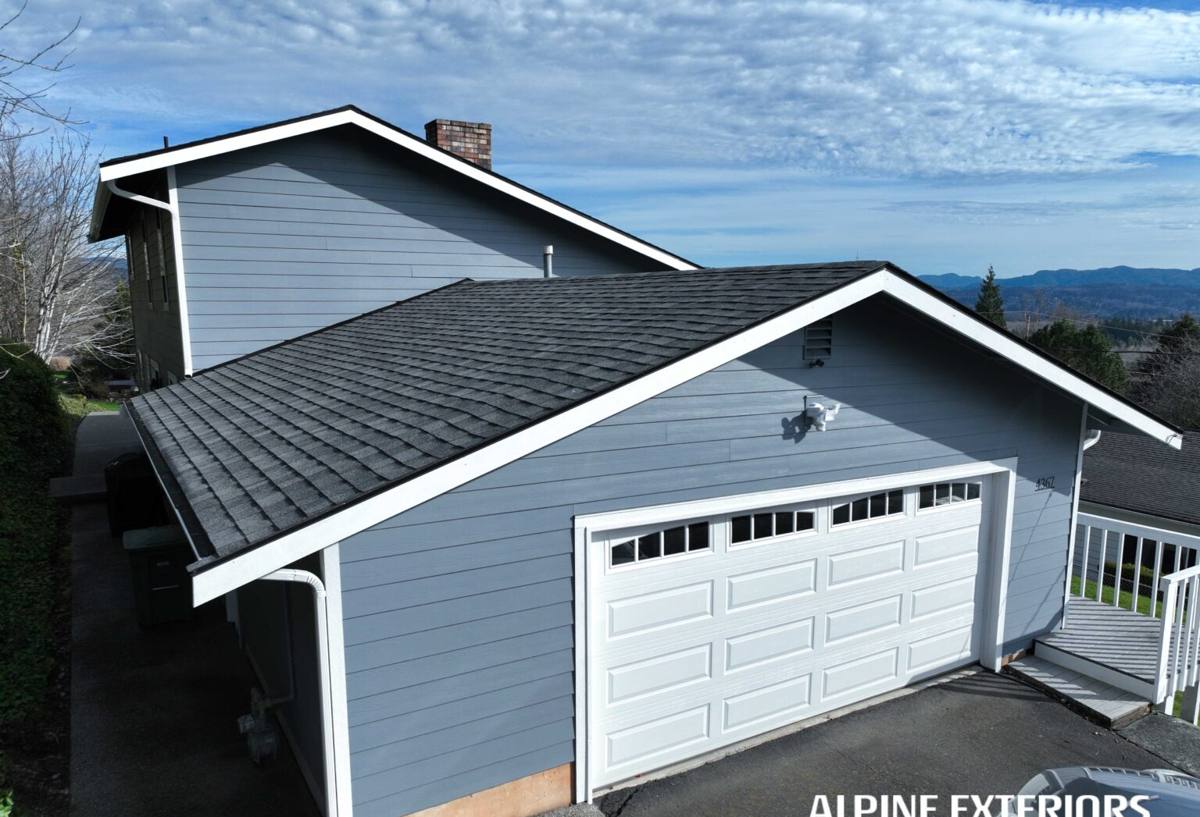
What a Correctly Installed Roof Needs in This Climate
A shingle roof that's going to hold up near Anacortes needs a few things done right that are easy to skip or shortcut:
Water Protection at the Vulnerable Points
Self-adhering ice-and-water membrane belongs at eaves, valleys, and around every penetration — chimneys, plumbing vents, skylights. In a driving-rain climate, we typically run this coverage wider than the bare minimum code requires, because wind-blown rain finds its way under shingles at these transition points before anywhere else.
Corrosion-Resistant Metal
Standard galvanized fasteners and flashing hold up fine inland. Closer to the water, we favor better-rated corrosion-resistant fasteners and flashing at the points most exposed to salt air, so the roof isn't developing rust streaks and weak fastener heads within a few years.
Wind-Rated Installation
Proper starter strip placement and nailing pattern are what actually keep shingles attached during a real windstorm — not the shingle product alone. A shingle rated for high wind, installed with a shortcut nailing pattern, will still lift.
Balanced Ventilation
Intake at the eaves and exhaust at the ridge, sized to move air evenly across the attic. Without it, moisture gets trapped under the roof deck, which shortens shingle life from underneath and makes the deck itself more likely to hold rot — a problem that shows up whether or not the topside is ever compromised.
Signs an Anacortes Roof Needs a Closer Look
Because of the moss and moisture factors specific to this area, we see a slightly different pattern of wear here than on drier sites. Worth checking for:
- Moss buildup on north-facing or shaded slopes, especially where tree cover keeps the roof damp longer than the rest of the house
- Granules collecting in gutters or at downspout outlets — a sign shingles are losing their protective surface
- Curling, cupping, or lifted shingle edges, often worse on slopes that catch the most wind-driven rain
- Dark streaking or staining that keeps returning after cleaning
- Soft or spongy spots underfoot near valleys or chimneys, which usually points to deck moisture, not just a surface issue
- Visible rust at flashing, vent caps, or fastener heads
Any one of these on its own isn't necessarily an emergency. Several together, or any sign of moisture actually getting under the roofing, is worth a professional look before it turns into a deck repair on top of a roof repair.
Repair or Replace? What Actually Drives That Decision
We don't default to "replace it" just because a roof shows some age. Where a roof genuinely sits — age, condition, and history — should drive the recommendation, not the other way around.
| Factor | Leans Toward Repair | Leans Toward Replacement |
|---|---|---|
| Roof age | Under 12–15 years | Approaching or past manufacturer's expected service life |
| Moss/algae condition | Surface growth, shingles intact underneath | Moss has lifted shingle edges or is embedded under tabs |
| Granule loss | Isolated to one slope or area | Widespread, shingles look bare in patches |
| Deck condition | Solid, no soft spots | Soft, stained, or spongy decking found on inspection |
| Repair history | First or second repair | Third or more repair on the same roof |
| Leak pattern | Single, identifiable source | Multiple leak points or unclear origin |
An honest inspection will usually make the answer clear. If a repair is the right call, that's what we'll recommend — a full replacement isn't the right answer just because it's the bigger job.
How We Approach a Roofing Project in Anacortes
1. Inspection
We look at the whole system, not just the shingles — decking condition, existing ventilation, flashing at every penetration, and how much moss or moisture damage is present on the shaded slopes. Proximity to the water and surrounding tree cover both factor into what we recommend.
2. A Straightforward Estimate
You get a clear scope of what needs to happen and why, with options where they genuinely exist — not a single inflated number or a bare-minimum lowball that leaves out work you'll need later.
3. Tear-Off and Deck Check
Old roofing comes off down to the deck so we can actually see what's underneath, rather than layering new shingles over unknown problems. Any soft or damaged decking gets addressed before anything new goes down.
4. Underlayment, Flashing, and Ice-and-Water Shield
This is where the climate-specific work happens — the membrane at eaves and valleys, corrosion-resistant flashing at penetrations, and a properly lapped synthetic underlayment across the field.
5. Shingle Installation and Ventilation
Shingles go down with the correct starter strip and nailing pattern for the product's wind rating, and ridge/soffit ventilation is balanced so the finished roof can actually breathe.
6. Cleanup
Job site and yard get cleared of debris, including a magnetic sweep for stray nails, before we consider the job finished.
Choosing the Right Shingle for a Coastal Skagit County Home
Asphalt shingles aren't one product — the differences between lines matter more in a climate like this one.
Architectural vs. 3-Tab
Architectural (dimensional) shingles are heavier, carry higher wind ratings, and generally hold up better to the sustained wind-driven rain this area sees. 3-tab shingles are lighter and less expensive, but their lower wind rating and thinner profile make them a harder sell for homes with real exposure to weather off the water. For most Anacortes-area homes, we lean toward architectural products as the better long-term value, though 3-tab remains a legitimate option for budget-driven projects on more sheltered lots.
Algae-Resistant Granules
Given how much shaded, damp roof surface is common here, we typically recommend shingles with algae-resistant granules (copper- or zinc-infused) over standard granules. They won't make a roof immune to moss, but they measurably slow algae staining compared to standard shingles, which matters on north-facing slopes that rarely get direct sun.
Warranty Structure
Manufacturer warranties cover material defects; they generally do not cover moss damage, improper ventilation, or damage from someone walking on a moss-covered roof to try to clean it. Our workmanship warranty covers the installation itself. Knowing which warranty covers what avoids a bad surprise later if a claim ever comes up.
Keeping a New Roof Healthy Through Anacortes' Moss Season
A well-installed roof still needs some upkeep in this climate — the moss season here is long enough that "installed and forgotten" isn't realistic for most properties with tree cover.
- Clear gutters and downspouts at least twice a year, more often under heavy fir or cedar cover
- Trim back overhanging branches where practical to cut down shade and let a slope dry out between rains
- Have moss removed with a soft, low-pressure wash rather than a pressure washer, which can strip granules and shorten shingle life
- Get flashing and penetrations checked annually, since these are the first points to show wear from salt air
- Address new moss growth early — a light coating is a maintenance task, moss that's lifted shingle edges is a repair
Why It Matters to Hire a Crew That Already Works This Area
Roofing crews that mostly work drier, more sheltered inland areas can still do competent work, but they're often applying a general-purpose spec to a site that doesn't behave like a general-purpose site. A crew that regularly works Anacortes and the surrounding waterfront communities in Skagit County already knows which roof orientations hold moss longest, how much wind exposure a given lot actually sees, and where the salt-air corrosion shortcuts show up first on a roof that was installed without accounting for it. That local pattern recognition tends to show up as fewer callbacks and a roof that ages the way it's supposed to, rather than one that needs attention again in year four or five.
Get a Straightforward Look at Your Roof
If your Anacortes-area roof is showing moss, granule loss, or you're just not sure how much life it has left, we're happy to take a look and give you an honest read on repair versus replacement — no pressure either way. Use the form below to request a free estimate.