 Burlington
 Alger's Climate Is Harder on Siding Than It Looks
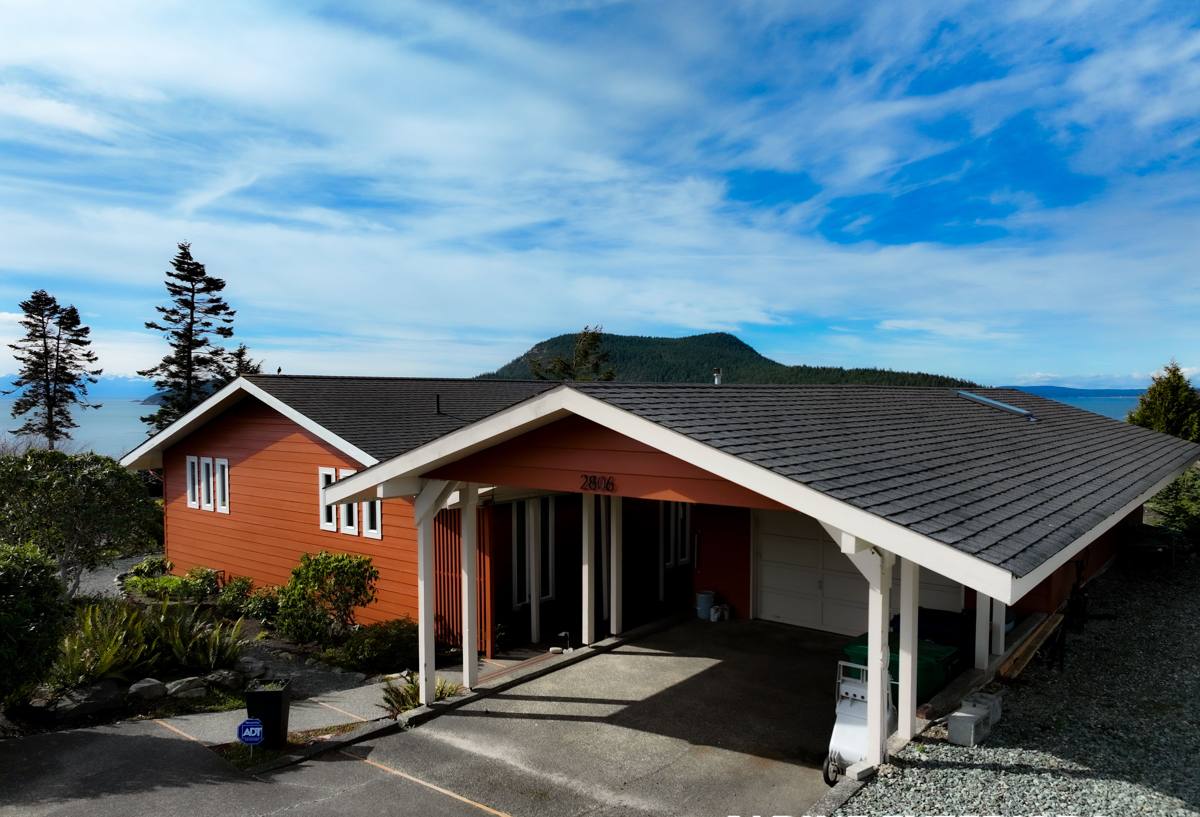
Alger sits in a stretch of Skagit County where three things work against exterior siding at the same time: salt-laden air moving in off the water, driving rain that comes at walls sideways during winter storms, and a long moss season fed by shade, dampness, and mild temperatures that never really dry things out. Any one of those on its own is manageable. Together, over years, they wear down siding faster than homeowners expect, especially on products that weren't built with this kind of exposure in mind.
Salt air is corrosive to fasteners and hard on painted or coated surfaces, slowly breaking down finishes and accelerating rust at nail heads and trim connections. Driving rain finds every gap, seam, and undersized flashing detail and pushes water behind the siding instead of off of it. And moss doesn't just sit on a roof — it colonizes shaded siding, gutters, and trim, holding moisture against the wall assembly long after a storm has passed. That combination is exactly why a siding replacement in Alger needs to be planned differently than one in a drier, more exposed part of the state.
Signs a Repair Won't Fix It Anymore
Homeowners often start with patching — recaulking a seam, repainting a faded section, pressure-washing off moss. Those steps buy time, but they don't fix an underlying problem once the siding or the wall assembly behind it has started to fail. Common signs that Alger homes are past the point of spot repair include:
- Soft or spongy spots when you press on the siding, especially near the bottom courses and around windows
- Paint that keeps peeling or bubbling in the same spots no matter how often it's redone
- Moss or algae staining that returns within a season of cleaning, particularly on shaded walls
- Visible gaps opening up at seams, corners, or where trim meets siding
- Panels or planks that have started to warp, cup, or pull away from the wall
- A musty smell or visible staining on interior walls that share an exterior wall with damaged siding
Any of these, especially in combination, usually means moisture has already reached the sheathing or framing behind the siding. At that point, painting over the problem just seals moisture in rather than solving it.
What a Correct Siding Replacement Actually Involves
Tear-Off and Inspection
A proper job starts with removing the old siding down to the sheathing, not siding over it. That's the only way to actually see what condition the wall is in. In a climate like Skagit County's, we routinely find rot or soft sheathing hiding behind siding that looked fine from the street. Any damaged sheathing or framing gets repaired or replaced before anything new goes back on — covering it up just resets the clock on the same failure.
Weather-Resistive Barrier and Flashing
This is the layer that actually keeps a home dry, and it's also the layer that's easiest to shortcut. A continuous weather-resistive barrier, properly lapped and sealed, combined with correct flashing at windows, doors, and any horizontal trim, is what stops driving rain from reaching the framing even when water does get past the siding surface — which it eventually will on any home, in any climate. Skipping or rushing this step is the single biggest reason siding fails early in wet, wind-driven climates like this one.
Fastening and Clearances
Manufacturer-specified fastener type, spacing, and penetration matter more in salt-influenced air, where the wrong fastener corrodes faster and starts staining or loosening the siding around it. Proper ground clearance and gaps at grade, decks, and roof lines also keep splashback and standing moisture away from the bottom of the wall, which is where we see the most moss and rot in this area.
Why We Install Only James Hardie Fiber Cement
We standardized on James Hardie fiber cement siding and don't install vinyl, engineered wood, or unfinished wood siding products. That's not a marketing position — it's based on what actually holds up under years of salt air, driving rain, and moss exposure without turning into a maintenance burden for the homeowner.
Vinyl can work fine in drier, more sheltered climates, but it moves with temperature swings, isn't rated to stop fire the way fiber cement is, and its seams and J-channels give moisture a path to travel behind the panel over time. Engineered wood and unfinished wood products are more moisture-sensitive by nature — exactly the vulnerability that matters most in a place where shaded walls stay damp for weeks at a stretch and moss has time to establish itself. Fiber cement doesn't rot, doesn't feed moss the way wood substrates can, and holds paint and factory finishes far longer in salt-influenced, high-moisture air. It also carries a Class A non-combustible fire rating, which matters on a lot of Skagit County properties bordered by trees and brush.
Choosing the Right Hardie Line and Finish for an Alger Property
James Hardie engineers its HZ5 product line specifically for climate zones like the Pacific Northwest, where moisture exposure and temperature swings are more of a factor than extreme heat. That means the plank, panel, or shingle siding going on an Alger home is formulated for this environment rather than a generalized national product.
Most Alger homes do well with HardiePlank lap siding for the main field, sometimes paired with HardieShingle in a staggered or straight-edge pattern as an accent on gables or entry features. Because the ColorPlus factory finish is baked on under controlled conditions rather than field-painted on site, it holds color and resists fading and moisture intrusion at the finish layer better than a job-site paint job — which matters directly here, since field-applied paint is one of the first things to fail under repeated damp, shaded conditions. Color choice is largely personal preference, but on wooded, shaded lots we often see homeowners lean toward tones that read clean against green surroundings without showing every water spot or streak of moss residue between cleanings.
Our Siding Replacement Process, Start to Finish
- Inspection and estimate — we walk the exterior, check for moisture and rot indicators, and put together a written scope and price before any work starts
- Tear-off — old siding and any compromised trim come off down to the sheathing
- Substrate repair — damaged sheathing or framing is replaced, not patched over
- Weather barrier and flashing — a continuous, properly lapped barrier and correct flashing at every penetration and transition
- Hardie installation — plank, panel, or shingle installed to manufacturer fastening and clearance specifications
- Trim, caulking, and detail work — corners, window and door trim, and transitions finished to shed water rather than trap it
- Final walk-through and cleanup — we review the finished work with the homeowner and clear the site
What Affects the Cost of a Siding Replacement in Alger
Every home is different, but the same handful of factors drive most of the cost variation we see on projects in this area:
| Factor | Why It Matters |
|---|---|
| Home size and story count | More wall area and taller walls mean more material, labor, and staging/access equipment |
| Condition of the sheathing underneath | Rot found during tear-off adds repair work that can't be scoped until the old siding is off |
| Number of siding layers to remove | Some older homes have more than one layer of siding stacked over the years, which adds tear-off time |
| Trim, accent, and detail complexity | Multiple gables, window trim styles, and accent shingle areas take more labor than a simple rectangular wall |
| Site access | Tree cover, slope, and driveway access affect how efficiently material and equipment can move around the home |
| Siding product and finish selected | Plank profile, shingle accents, and factory color options carry different material costs |
We don't quote a project until we've actually seen the home — anything else is a guess that ignores exactly the kind of hidden moisture damage that's common in this climate.
Why Hire a Crew That Already Works in Alger
A contractor who works regularly in and around Alger and greater Skagit County already knows what to expect before they pull the first piece of old siding off: which walls tend to hold moss the longest, how far salt-influenced air realistically affects fastener and finish choices this far inland, and how local permitting and building department expectations work. That local pattern recognition shortens the guesswork on inspection and helps us plan flashing and drainage details around the specific way water actually moves on wooded, shaded lots in this area — not a generic checklist written for a different climate.
It also means realistic scheduling. Wet-season work windows, drying times between steps, and material lead times all get planned around what actually happens here through a Skagit County winter, not around a best-case forecast.
Questions Worth Asking Before You Hire
- Are you licensed, bonded, and insured to do exterior work in Washington?
- Are your installers certified or trained specifically on James Hardie fiber cement products?
- Will the written estimate spell out weather-resistive barrier and flashing details, not just "siding installation"?
- What does the manufacturer warranty cover, and what's required to keep it valid?
- Have you worked on homes in Alger or nearby parts of Skagit County before?
- What's the realistic project timeline given current weather and material lead times?
If you're seeing early paint failure, recurring moss staining, or soft spots on your siding, it's worth getting a straight answer on whether repair is still realistic or replacement makes more sense. We offer free, no-pressure estimates for Alger homeowners — walk us through what you're seeing and we'll give you an honest read on where things stand.