 Burlington
 Roof Repair for Alger's Wooded, Wet Environment
Alger sits in one of the wetter, more heavily wooded pockets of Skagit County, tucked between the I-5 corridor and the timber and lake country that stretches toward the Whatcom County line. That setting is beautiful, but it's hard on a roof. Homes here sit under fir and cedar canopy that drops needles and debris into valleys and gutters year-round, they catch salt-tinged air drifting up from the Samish Bay and Puget Sound side of the county, and they sit through a driving-rain season that can run from October clear into May. Add a moss season that never fully ends in the shaded, north-facing sections of most lots, and you have a roof that's working harder than one in a drier, more open part of the state.
Roof repair in this environment isn't a generic patch job. It's diagnosing what's actually failing — flashing, underlayment, ventilation, moss-driven granule loss — and fixing that specific problem so it doesn't come back with the next atmospheric river. This page covers what Alger homes typically need, what a correct repair involves, and how we approach the work.
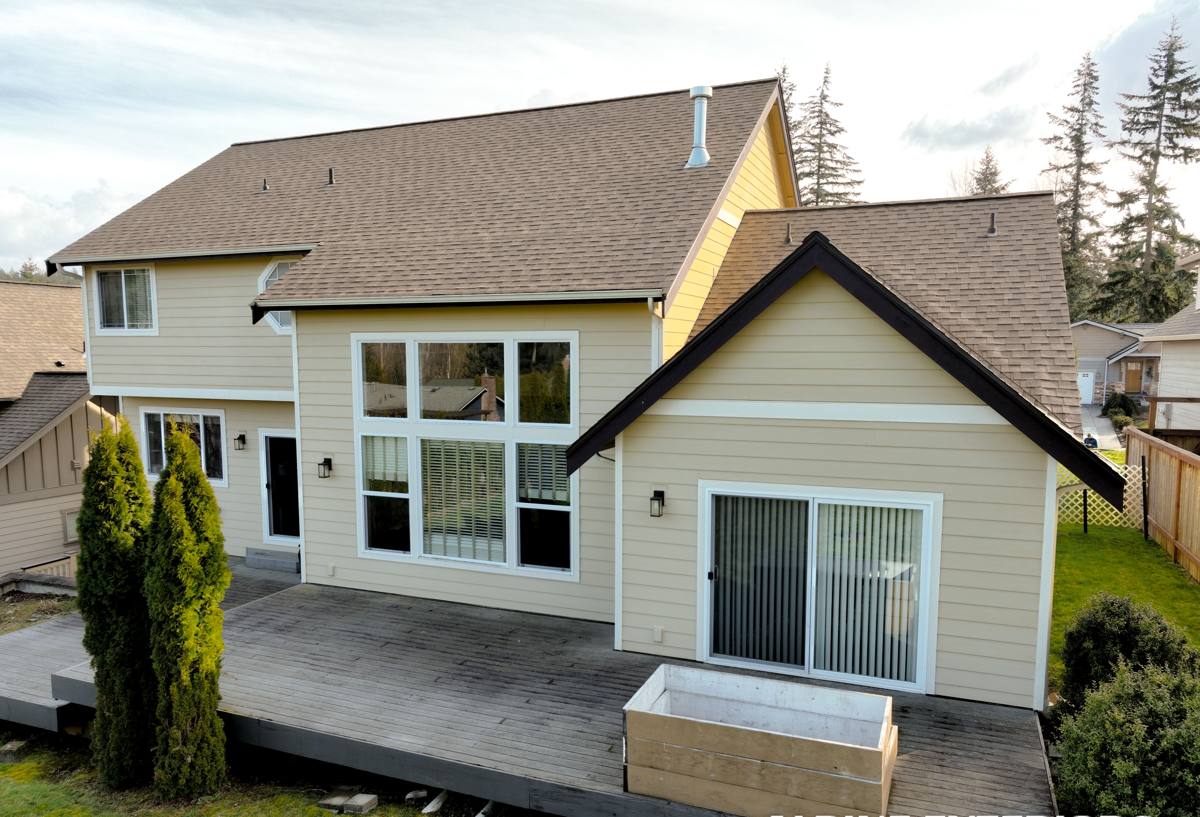
What Alger's Climate Does to a Roof
Salt Air and Metal Fatigue
Homes closer to the Samish Bay side of the area see a steady, low-level dose of salt-laden air. It doesn't corrode asphalt shingles directly, but it accelerates the breakdown of exposed metal — flashing, nail heads, vent stacks, and gutter hardware. Once metal flashing starts to pit or a nail head rusts through its seal, water finds a path underneath the roofing material long before the shingles themselves look worn.
Driving Rain and Wind-Driven Water
Skagit County storms don't just fall straight down — wind pushes rain sideways and up under shingle edges, especially at ridges, valleys, and anywhere two roof planes meet. A roof that would shed a light, calm rain without issue can leak in the exact same spot during a wind-driven storm. This is why so many "mystery leaks" only show up during specific weather, not every time it rains.
Moss Season That Runs Long
Shaded, tree-covered lots — common throughout Alger — stay damp longer after every rain, which is exactly what moss needs to take hold. Moss doesn't just look bad; it lifts shingle edges as it grows, holds moisture against the roofing material, and works its way into fastener holes over time. On a lot with heavy fir or cedar cover, moss can return within a season or two of a full roof cleaning if there's no ongoing plan for it.
Signs an Alger Roof Needs Repair
- Water stains on ceilings or upper walls that appear only during wind-driven storms, not steady rain
- Granules collecting in gutters or at downspout outlets, a sign shingles are wearing thin
- Moss or dark algae streaking on north- or shade-facing slopes
- Curling, cracked, or lifted shingle edges, especially near valleys and ridge lines
- Rusted or visibly separated flashing around chimneys, skylights, and vent stacks
- Sagging sections along gutter lines or at roof edges where debris has held moisture
- Daylight visible through the attic roof deck in spots
- A roof that's 15+ years old and hasn't had flashing or underlayment inspected recently
Any one of these can be a simple, inexpensive fix if caught early. Left alone through another wet season, most of them turn into deck rot, insulation damage, or interior repairs that cost far more than the roof work itself.
What a Correct Roof Repair Actually Involves
Diagnosis Before Anything Else
A leak's entry point is often several feet from where the water stain shows up inside — water follows rafters, sheathing seams, and insulation before it drips somewhere visible. We trace the actual path rather than just patching near the stain, because a patch in the wrong spot leaves the real problem untouched.
Flashing and Underlayment Come First
Most roof leaks in this region trace back to flashing — around chimneys, skylights, dormers, and where roof planes meet — or to underlayment that's failed at a seam or fastener. Shingles are usually the last thing to fail, not the first. A repair that only replaces surface shingles without addressing the flashing or underlayment underneath tends to fail again in the next storm cycle.
Matching Materials Where Possible
When we patch into an existing roof, we match shingle profile, color, and exposure as closely as the existing product allows, and we tie new underlayment and flashing into the old correctly so water sheds over every seam rather than into it. On older roofs where an exact shingle match isn't available, we're upfront about that before starting the work.
Moss and Debris Treatment
Where moss or built-up needle debris is part of the problem, repair includes safe removal and treatment, not just a pressure wash that can drive granules loose or force water under shingle edges. We also check gutters and valleys while we're up there, since clogged drainage is one of the most common causes of repeat leaks on tree-covered Alger lots.
Ventilation Checks
Poor attic ventilation traps moisture that can cause sheathing rot from underneath, which looks like a roofing problem but isn't fixed by roofing work alone. Part of an honest repair is checking whether ventilation is contributing to what we're seeing, and telling you if it is.
Our Repair Process
- Inspection and diagnosis — we get on the roof (or use a lift where pitch or access requires it) and trace the actual source, not just the visible symptom
- Straight explanation — you get a clear rundown of what's failing, why, and what it takes to fix it correctly, in plain terms
- Written estimate — scope, materials, and cost, with repair and replacement options laid out honestly if both are on the table
- The repair itself — flashing, underlayment, shingles, and moss/debris work as needed, done to shed water correctly under this area's wind and rain patterns
- Cleanup and walkthrough — debris cleared, gutters checked, and a rundown of what was fixed and what to watch going forward
Repair vs. Replacement: How We Decide
Not every damaged roof needs full replacement, and not every roof is worth continuing to patch. Here's how the decision typically breaks down:
| Factor | Favors Repair | Favors Replacement |
|---|---|---|
| Age of roof | Under ~15 years | Nearing or past manufacturer's expected lifespan |
| Extent of damage | Localized — one slope, one flashing point, one leak source | Widespread granule loss, multiple leak points, moss damage across several slopes |
| Deck condition | Sheathing solid where inspected | Soft, spongy, or rotted decking found during inspection |
| Shingle match availability | Existing product still available or a close match exists | Discontinued product, patch would be visibly mismatched |
| Storm/moss history | First significant issue on an otherwise sound roof | Repeat repairs in the same areas over recent years |
We'll tell you honestly which side of that table your roof falls on — including when a repair now is the right call and replacement can reasonably wait.
Why a Crew That Already Works Alger Matters
Roof repair done right depends on understanding what a specific climate does to a specific roof over time. A crew that regularly works Skagit County's wooded, salt-air-influenced areas already knows which flashing details tend to fail first under wind-driven rain, how fast moss returns on a shaded Alger lot compared to a more open one, and what a repair needs to hold through a full wet season rather than just look fixed on a dry day. That local pattern recognition is the difference between a repair that lasts and one that's back on the schedule next winter.
It also means straightforward, unhurried service — access roads and lot layouts around Alger vary, and a crew familiar with the area plans for that rather than treating every job like an unfamiliar one.
Before You Call: A Quick Homeowner Checklist
- Note when leaks appear — during heavy wind, steady rain, or anytime — this narrows down the likely cause before we arrive
- Check gutters and downspouts for granule buildup or standing debris
- Look for moss or dark streaking concentrated on shaded slopes
- From the ground, note any visibly lifted shingles or rusted flashing around chimneys and vents
- If accessible and safe, check the attic for daylight, damp insulation, or staining on the underside of the roof deck
- Avoid walking on the roof yourself, especially on moss-covered or wet sections — it's easy to lose footing and easy to do more damage than good
If your roof is showing any of these signs, or it's just been a while since anyone looked at the flashing and moss situation up there, we're happy to take a look. Fill out the form below for a free, no-pressure estimate — we'll tell you plainly what we find and what it would take to fix it right.