 Burlington
 Deck Building in Alger, Washington
Alger sits in a stretch of Skagit County where the weather doesn't do a homeowner any favors. You've got salt air drifting in off the Sound, driving rain for a good chunk of the year, and a moss season that seems to start earlier every fall and end later every spring. A deck built without that in mind will look fine for a year or two and then start showing problems — soft spots, green film, rust streaks at the fasteners, boards that cup and split. A deck built for this specific area holds up the way it's supposed to.
We build and repair decks for homeowners around Burlington and out into Alger regularly, and the lessons don't change much from one property to the next: this climate punishes shortcuts. The good news is that a properly built deck in this area isn't exotic or expensive to get right — it just requires the right materials, correct spacing and drainage, and fasteners rated for what our air actually does to metal.
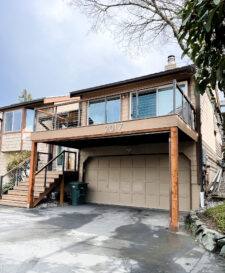
What Alger's Climate Does to a Deck
Before we talk about building, it's worth understanding what you're up against, because it shapes every decision from framing to finish.
Salt Air and Corrosion
Even set back from the water, homes in this part of Skagit County get enough marine air moving through that ordinary hardware corrodes faster than people expect. Galvanized screws and brackets that would last decades inland can start rusting and staining the wood around them in a few years out here. Once a fastener starts to corrode, it weakens, and it also bleeds rust into the surrounding wood or composite — a cosmetic and structural problem at the same time.
Driving Rain
Rain that comes in at an angle, pushed by wind, gets up under railings, into end-grain cuts, and behind ledger boards in ways that straight-down rain doesn't. Any place water can collect or get trapped against wood — under a poorly flashed ledger, in a fastener hole without a sealed pilot, between boards spaced too tight — becomes the starting point for rot.
Moss and Standing Moisture
Moss doesn't just grow on roofs. Decking that stays shaded, doesn't drain well, or gets pressure-washed instead of properly cleaned will grow moss and algae on the surface. Beyond looking bad, a mossy deck surface holds moisture against the boards continuously and becomes slick and genuinely dangerous underfoot, especially on stairs.
What a Correctly Built Deck Needs Here
None of this is complicated, but it has to be done deliberately rather than assumed. A deck built to a generic national spec, with no adjustment for our conditions, is the deck that fails early.
- Stainless or coated fasteners rated for coastal/marine exposure — not the basic galvanized screws that are fine two hundred miles inland.
- Proper board spacing so water drains through instead of pooling, which also cuts down on moss taking hold between boards.
- Correctly flashed ledger connection where the deck meets the house — this is the single most common source of hidden rot we find on older decks.
- Footings set below frost depth and sized for our soil, so the structure doesn't shift with seasonal ground moisture.
- Airflow underneath — decks built low and tight to the ground without ventilation trap moisture in the framing.
- A decking material chosen for our climate, not just for upfront cost.
Decking Material Options for This Area
There's no single right answer for every homeowner — it depends on budget, how much upkeep you want to do, and how long you plan to stay in the house. Here's how the common choices actually perform in Alger's conditions.
| Material | How It Handles Our Climate | Maintenance | Typical Lifespan Here |
|---|---|---|---|
| Pressure-treated wood | Good if properly sealed and re-sealed; end-grain cuts need extra attention against rot | Annual cleaning, re-staining every 2-3 years | 15-20 years with upkeep |
| Cedar | Naturally moisture- and insect-resistant, but still needs sealing against our rain and salt air | Cleaning and sealing every 1-2 years | 15-25 years with upkeep |
| Composite decking | Doesn't rot or split; resists moss better than wood but still needs cleaning where it stays shaded | Periodic washing, no staining or sealing | 25-30+ years |
| PVC/synthetic decking | Fully moisture-proof surface; best moss resistance of the options here | Occasional washing | 25-30+ years |
We'll walk you through the honest trade-offs for your specific project rather than push whatever's easiest for us to install. A lot of Alger homeowners land on composite or PVC decking specifically because they're tired of the re-sealing cycle wood demands in this rain — but plenty of people love the look and feel of real wood and are fine maintaining it, and that's a legitimate choice too.
Substructure: Where the Real Difference Is Made
The decking surface gets all the attention, but the framing underneath is what determines whether your deck is standing solid in fifteen years or getting rebuilt in eight. Pressure-treated framing lumber is standard, but the fasteners, joist hangers, and connectors holding it together matter just as much as the boards on top — and it's the part most likely to get value-engineered down on a lowball bid.
Our Deck Building Process
We keep this straightforward. A deck project doesn't need to be a mystery, and you should know what's happening and why at every stage.
- On-site assessment. We look at your specific lot — sun exposure, drainage, how close you are to prevailing weather, whether you're replacing an existing structure or starting fresh.
- Design and material selection. We talk through layout, size, railing style, and decking material against your budget and how much maintenance you actually want to do.
- Permitting. Most decks above a certain height or attached to the house require a permit through the county or city. We handle this so it's done correctly, not skipped.
- Footings and framing. Footings set to proper depth, ledger flashed and fastened correctly, framing built square with corrosion-rated hardware throughout.
- Decking and railing installation. Boards spaced for drainage, railings set to code height and spacing, all fasteners appropriate for our marine-influenced air.
- Final walkthrough. We go over the finished deck with you, including basic care specific to whatever material you chose.
Repair vs. Rebuild
Not every deck problem means starting over. If the framing and footings are sound and the issues are limited to surface boards, railings, or a section near a leaky ledger, targeted repair can extend the life of a deck for years at a fraction of rebuild cost. The call comes down to a few things:
- Is the framing structurally sound, or has rot reached the joists and beams?
- Are the footings still adequate, or has the deck shifted?
- Is this an isolated moisture problem (like a bad ledger connection) or widespread deterioration across the whole structure?
- Does the existing layout still work for how you use the space, or is this a good time to reconfigure it?
We'll give you a straight answer on which category your deck falls into rather than defaulting to "replace everything" — a full rebuild only when it's genuinely the better value.
Deck Maintenance for Skagit County Conditions
Whatever material you choose, a little seasonal attention goes a long way toward avoiding the moss, rot, and corrosion problems this climate creates.
Spring and Fall Checklist
- Sweep off leaves and debris regularly — trapped organic matter holds moisture and feeds moss growth
- Check for gaps or soft spots around the ledger board where the deck meets the house
- Look at fasteners and hardware for early rust staining, especially on older galvanized connectors
- Clean the surface with an appropriate deck cleaner rather than a straight pressure wash, which can damage wood fibers and force water into joints
- Re-seal or re-stain wood decking on the schedule appropriate to the product — don't wait until it's visibly gray and dry
- Confirm drainage is working — water should never pool on the surface after rain
Why Hire a Crew That Already Works in Alger
A deck contractor who mostly works dry, inland climates will build to a spec that simply isn't matched to what happens here. We work in and around Burlington and out into Alger regularly, so we're not guessing at what the salt air, the rain patterns, or the moss season do to a structure over time — we've seen it firsthand on other decks in this area, both the ones built right and the ones that weren't. That experience shows up in the hardware we spec, how we detail the ledger flashing, and which materials we actually recommend versus which ones we steer people away from.
It also matters for something as basic as permitting and code requirements specific to Skagit County, and for knowing which crews and suppliers in the area are reliable when something needs to move fast.
If you're planning a new deck or dealing with an existing one that's showing its age, we're happy to come take a look and give you a straightforward, no-pressure estimate. Use the form below to get started.