 Burlington
 Board & Batten Siding Built for Alger's Weather
Alger sits close enough to the water that homes here deal with a different mix of weather stress than siding just a few miles inland. Salt-laden air moves through on a regular basis, driving rain comes in sideways during fall and winter storms, and the shaded, tree-covered lots common around this part of Skagit County stay damp long enough each year to grow a serious moss problem on north- and west-facing walls. Board and batten siding, done correctly, handles all three of these conditions well — but "done correctly" is doing a lot of work in that sentence. The vertical panel-and-batten design has more seams and more fastening points than standard lap siding, and every one of those details either sheds water properly or becomes a place for moisture to collect.
This page is about that one product, in this one area: what Alger's climate actually asks of a board and batten installation, what a correct job looks like from the framing out, and why we install only James Hardie fiber cement for this application rather than the vinyl or engineered-wood board and batten systems that show up in a lot of online searches.
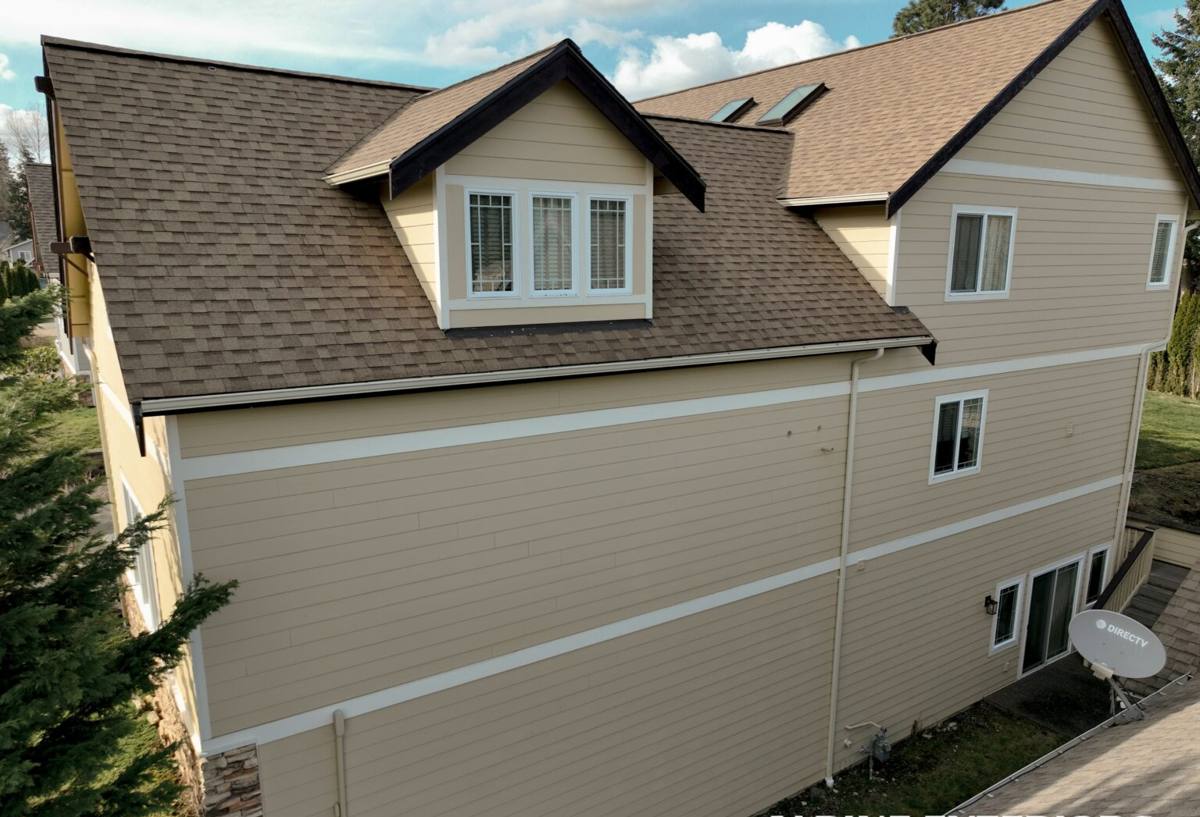
What Salt Air, Driving Rain, and Moss Actually Do to Siding
Salt Air and Corrosion
Homes closer to Puget Sound and the surrounding saltwater inlets take on airborne salt that settles on exterior surfaces and accelerates corrosion of anything metal — fasteners, flashing, and trim. Over years, corroded fasteners loosen, and loosened fasteners are one of the most common reasons board and batten siding starts to cup or pull away at the edges. The siding material matters less here than the hardware behind it, which is why fastener spec and flashing detail get more attention on a coastal-influenced job than they would on a dry, inland lot.
Driving Rain and Wind-Driven Water
Wind off the water doesn't just drop rain straight down — it pushes it sideways, into laps, seams, and the vertical joints between boards. Board and batten siding has more vertical seams per square foot than horizontal lap siding, which means more opportunities for wind-driven water to find a way behind the cladding if the drainage plane underneath isn't built right. This is a climate where the water management behind the siding matters as much as the siding itself.
Moss and Shaded, Damp Walls
Skagit County's tree cover and long wet season give moss and algae plenty of time to establish on siding that doesn't get much direct sun, especially north-facing walls and areas shaded by mature landscaping. Moss holds moisture against the siding surface far longer than open air would, which is hard on any organic or semi-organic siding material and can shorten the life of a factory finish that isn't built to resist it.
The James Hardie Board & Batten System We Install
We install James Hardie vertical panel siding with Hardie trim battens — a fiber cement system engineered specifically for climate zones like ours. Hardie's HZ5 product line is formulated for regions with sustained moisture exposure, which fits Skagit County's rain totals and humidity far better than a general-purpose panel product.
Why Fiber Cement for This Look
Board and batten is a style choice as much as a product choice — homeowners like the clean vertical lines and the shadow relief the battens create. Fiber cement gives you that look without the trade-offs of the materials most commonly used to achieve it. It doesn't absorb water the way engineered or primed wood battens can, and it doesn't expand and contract with temperature swings the way vinyl board and batten panels do, which matters when panels are fastened at both edges and have less room to move than lap siding.
ColorPlus Factory Finish
We spec ColorPlus finish on Alger board and batten projects whenever the homeowner is open to it. It's baked on at the factory under controlled conditions, which gives it better resistance to fading and moisture intrusion at the finish layer than field-applied paint — a real advantage on walls that stay damp for weeks at a stretch during moss season.
What a Correct Board & Batten Installation Actually Involves
Board and batten fails early almost exclusively because of installation shortcuts, not because the material itself is wrong for the job. The panel and batten system relies on a working drainage plane behind it — skip that, and you're trusting caulk alone to keep water out, which never holds up long-term in this climate.
- Weather-resistive barrier installed and lapped correctly over the sheathing before any siding goes up
- A rainscreen gap (vertical furring strips) behind the panels so any water that gets past the batten joints can drain and the wall can dry
- Panel and batten fastening pattern that follows Hardie's published spec for panel thickness and stud spacing — not a generalized "close enough" pattern
- Flashing at every horizontal panel joint, not just at windows and doors
- Kickout flashing at roof-to-wall intersections so runoff is directed away from the siding, not down behind it
- Battens set with the gap and fastening spec Hardie requires, so they don't trap water against the panel joint below
- Proper ground clearance at the base of the wall to keep the bottom course out of standing moisture and splash-back
- Caulking limited to where Hardie's install guide actually calls for it — over-caulking a rainscreen system can trap water instead of releasing it
Any one of these steps skipped can undercut the whole system, even with premium material on the wall. This is the level of detail we walk through with every Alger homeowner before work starts.
Board & Batten Options Compared for This Climate
| Material | Moisture Behavior in Wet, Coastal-Influenced Air | Long-Term Maintenance | Our Position |
|---|---|---|---|
| James Hardie fiber cement | Non-combustible, engineered for high-moisture climate zones, dimensionally stable | Occasional wash; factory finish resists fading and moisture damage | What we install |
| Vinyl board & batten | Won't rot, but expands/contracts with temperature and can warp or gap at fasteners over time | Low, but panels can't be repainted if the color fades | Not installed by our crew |
| LP SmartSide / engineered wood | Wood-based core is more sensitive to sustained moisture exposure at cut edges and seams than fiber cement | Regular caulk and paint upkeep to keep seams sealed | Not installed by our crew |
| Primed spruce or cedar board & batten | Natural wood movement plus direct moisture absorption; performs best with attentive, frequent maintenance | Repainting/restaining on a recurring schedule | Not installed by our crew |
We're not going to tell you vinyl or engineered wood board and batten can't be installed well — they can, in the right hands, in the right conditions. Our position is narrower than that: given the moisture load Alger sees over a typical year, we standardized on the one material system that asks the least ongoing maintenance from the homeowner and holds its shape and finish the longest without repainting or resealing.
Our Process for Alger Projects
We start with a walk-around assessment of the existing wall, checking for signs of moisture intrusion behind the current siding, condition of the trim and window flashing, and any areas where landscaping or roof lines concentrate water against the wall. If we're removing existing siding, we check the sheathing underneath before anything new goes up — covering a hidden moisture problem with new siding just delays the real repair.
From there, the sequence is: repair or replace any damaged sheathing, install the weather-resistive barrier, build out the rainscreen furring, hang the vertical panels, install battens to spec, and flash every joint and penetration as we go — not as an afterthought at the end. We do final inspection walk-throughs looking specifically at fastener lines, batten spacing consistency, and flashing details before calling a project complete.
Why a Crew That Already Works Alger Matters
A contractor who works this part of Skagit County regularly has already seen how the local weather pattern plays out on real walls over multiple seasons — which sides of a house take the worst of the driving rain, which shaded walls need extra attention for moss, and how salt-influenced air affects fastener choice over the years rather than in a showroom. That's different knowledge than a general contractor picks up doing one job in the area. It shows up in small decisions — flashing details, batten spacing, where the rainscreen gap gets extra attention — that aren't visible in a finished photo but matter a great deal five and ten years down the road.
Maintenance After Installation
Board and batten in fiber cement is low-maintenance, not no-maintenance. In this climate we recommend an annual rinse-down to keep moss and organic growth from establishing, particularly on shaded or north-facing walls, and a periodic check of caulking at trim and penetration points. Beyond that, ColorPlus-finished Hardie siding is built to go a long stretch without repainting, which is the main maintenance savings homeowners notice compared to wood or engineered wood alternatives.
If you're considering board and batten siding for a home in Alger, we're glad to walk the property, look at what your walls are currently dealing with, and put together a straightforward, no-pressure estimate. There's a form below this page to get that conversation started.