 Burlington
 Why Fir Island Roofs Wear Differently Than the Rest of Skagit County
Fir Island sits low, flat, and close to the water where the Skagit River meets the Sound. That geography is part of what makes it beautiful, and it's also exactly what makes roofs there age faster than roofs a few miles inland in Burlington or Mount Vernon. Homes out here take a steady diet of salt-laden air, wind-driven rain that doesn't fall straight down, and long stretches of overcast, damp weather that never quite lets a roof dry out between storms. None of that is dramatic on its own. It's the cumulative effect that gets homeowners — a roof that looked fine in August starts showing stains, soft spots, or granule loss by the following spring.
A roof repair on Fir Island isn't just "fix the leak and move on." It has to account for corrosion-prone fasteners, moss that regrows within a season if it isn't handled at the root, and flashing details that have to shed water coming in sideways, not just from above. We treat Fir Island repairs as their own category of work, not a smaller version of a Burlington repair.
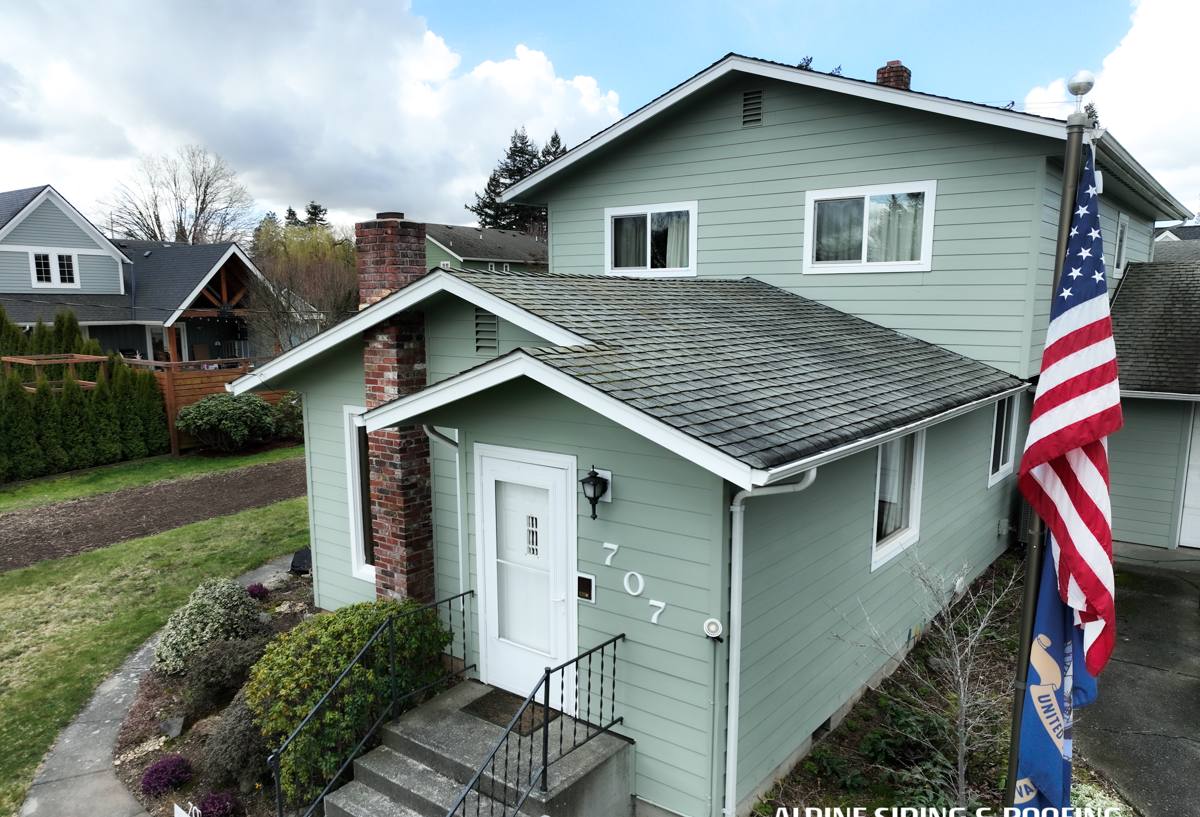
How Salt Air Actually Damages a Roof
Salt air doesn't just make things smell like the coast — it's chemically aggressive toward exposed metal. On Fir Island, that shows up in a few predictable places:
- Exposed fasteners on metal roofing or flashing corrode faster than the same fasteners would inland, especially where the coating has been nicked during a prior repair.
- Galvanized flashing around chimneys, skylights, and roof-to-wall transitions can lose its protective coating years ahead of its rated life, leading to rust streaks and eventual pinholing.
- Gutter systems and drip edge made from lower-grade aluminum or steel pit and thin out unevenly, which quietly undermines the roof's water-shedding path even while the shingles above look intact.
The fix isn't to avoid metal altogether — metal flashing is still the right tool for the job in most cases. It's choosing the correct alloy and coating for a marine-influenced environment, sealing fastener penetrations properly the first time, and not cutting corners on the small flashing details that are cheap to do right and expensive to redo.
What This Means for a Repair Estimate
When we look at a Fir Island roof, we're checking metal condition as carefully as we check the roofing material itself. A shingle-only repair that ignores corroding flashing underneath it is a repair that fails again within a year or two — and that's not a repair we're willing to hand a homeowner.
Moss: The Slow Damage Skagit County Roofs Live With
Skagit County's moss season isn't a few weeks — it's most of the year. Cool, damp, shaded conditions are exactly what moss and algae need to establish, and Fir Island's flat, open exposure to moisture-laden air off the water only extends the window. Moss does more than look bad. It holds water against the roofing material long after a storm has passed, works its way under shingle tabs and along seams, and on cedar or older composition roofing it can lift material enough to create a direct path for water.
Where Moss Causes Real Damage vs. Cosmetic Damage
| Location | Risk Level | Why |
|---|---|---|
| North-facing slopes and shaded valleys | High | Stays damp longest, moss roots deepest, shingle lift is common |
| Ridge and hip lines | Moderate | Moss buildup can force water sideways under cap shingles |
| Full-sun, south-facing slopes | Low | Dries out between rains, moss growth is usually surface-level |
| Gutters and valleys | High | Trapped organic debris holds moisture and can back water up under the roofing |
A correct repair addresses moss at three levels: removing what's already established without tearing up sound material underneath, treating the roof to slow regrowth, and — where the underlying cause is a shaded, poorly ventilated section of roof — talking honestly with the homeowner about whether trimming back nearby vegetation or improving attic ventilation would actually solve the problem instead of just delaying it.
Signs a Fir Island Roof Needs Repair Now
Because of the climate here, small issues don't stay small for long. Homeowners on Fir Island should treat these as reasons to get a roof looked at, not wait for the next dry stretch:
- Dark streaking or green-black growth concentrated on shaded slopes
- Granules collecting in gutters or at downspout outlets
- Soft or spongy spots when walked on, especially near valleys or penetrations
- Rust staining below metal flashing, vents, or chimney caps
- Ceiling stains that appear or worsen after wind-driven storms specifically (a sign water is being pushed sideways past a flashing detail, not just pooling)
- Curling, cupping, or lifted shingle edges on wind-exposed sections
That last point matters more on Fir Island than in more sheltered parts of Burlington — the open exposure means wind-driven rain finds weaknesses that a straight-down rain never would.
What a Correct Repair Actually Involves
A roof repair done right isn't a patch job. Our process on Fir Island roofs generally includes:
1. Diagnosis, Not Guesswork
We trace leaks to their actual source, which is often several feet from where the stain shows up inside. Water travels along the underlayment or framing before it drips, so a repair aimed at the visible stain instead of the real entry point is a repair that doesn't hold.
2. Full Removal of Damaged Material
We pull damaged shingles, felt, or flashing back to sound material — not just the section directly over a stain. Given how far moisture travels under Skagit County's rain patterns, a narrow patch often leaves compromised material in place.
3. Correct Flashing and Underlayment
This is where most repair failures on this coast actually originate. We replace flashing with material rated for a marine-influenced environment and make sure underlayment laps correctly for wind-driven rain, not just standard drainage.
4. Moss and Debris Treatment
Any moss or algae in the repair area gets removed and the surrounding roof is treated so the same spot doesn't fail again from the same cause within a season or two.
5. Matching Materials
We match shingle type, color, and exposure as closely as the existing roof allows, so a repair doesn't stand out as an obvious patch.
Repair or Replace? Honest Cost Factors
Not every roof issue on Fir Island calls for a full replacement, but the salt air and moss exposure here do shorten the window where repair still makes sense. These are the factors that actually drive that decision:
| Factor | Favors Repair | Favors Replacement |
|---|---|---|
| Age of roofing material | Under 12-15 years | Approaching or past manufacturer's expected life |
| Extent of moss/moisture damage | Localized to one or two areas | Widespread across multiple slopes |
| Flashing condition | Isolated corrosion or gaps | Systemic rust or failed seals throughout |
| Decking condition underneath | Solid, no rot found | Soft or delaminated decking discovered during inspection |
| Number of prior repairs | First or second repair to this area | Repeated patching of the same section |
We'll tell a homeowner plainly if we think a repair is a short-term fix on a roof that's genuinely at the end of its service life. Recommending a full-price replacement when a solid repair would do the job just as well isn't how we want to be known on Fir Island, and neither is patching a roof we know won't hold through next winter.
Why Local Experience on Fir Island Specifically Matters
A crew that mostly works drier, more sheltered neighborhoods can still do competent general roofing work — but Fir Island punishes assumptions that work fine elsewhere. Standard fastener specs, standard flashing details, and standard moss-treatment schedules all need adjusting for this exposure. A crew that's repaired roofs out here repeatedly knows which slopes on a given home orientation tend to hold moisture, which flashing failures show up first in this air, and how much margin to build into a repair so it isn't back on the schedule the following winter.
That kind of familiarity isn't something you can shortcut with a general checklist. It comes from doing the work, in this specific place, over multiple seasons.
What Homeowners Can Do Between Service Visits
A well-executed repair lasts longer with a little basic upkeep in between. On Fir Island, we recommend:
- Clearing gutters and valleys at least twice a year, more often if there's overhanging tree cover
- Watching shaded, north-facing slopes for early moss regrowth and addressing it before it establishes
- Checking attic ventilation — poor airflow keeps roof decking damp longer and accelerates moss and rot from underneath
- Having flashing and fastener condition checked after major windstorms, not just after visible leaks appear
- Trimming back vegetation that keeps sections of the roof shaded and slow to dry
Get an Honest Look at Your Roof
If you're dealing with a leak, moss buildup, or just want an honest read on how much life is left in your roof, we're happy to take a look. We'll tell you straight whether you're looking at a repair, what's actually causing the problem, and what it would take to fix it right for this stretch of Skagit County. Reach out for a free, no-pressure estimate using the form below.