 Burlington
 Window Replacement Built for Mount Vernon's Weather, Not Just Any Weather
Mount Vernon sits in the heart of Skagit County, close enough to the water that salt air is a real factor in how building materials age here, and squarely inside a weather pattern that delivers long stretches of driving rain followed by a moss season that seems to start earlier every year. Windows in this part of Washington don't fail the way they do in drier climates. They fail slowly, from the outside in, as moisture works past worn seals and into framing that never gets a real chance to dry out between storms.
That's the backdrop for every window replacement we do in Mount Vernon. It's not just picking a window style and swapping it in. It's understanding how a specific house, facing a specific direction, with a specific amount of tree cover and rain exposure, is going to hold up over the next twenty years. A window that's a fine choice in Eastern Washington can be the wrong call here if it's not installed with this climate in mind.
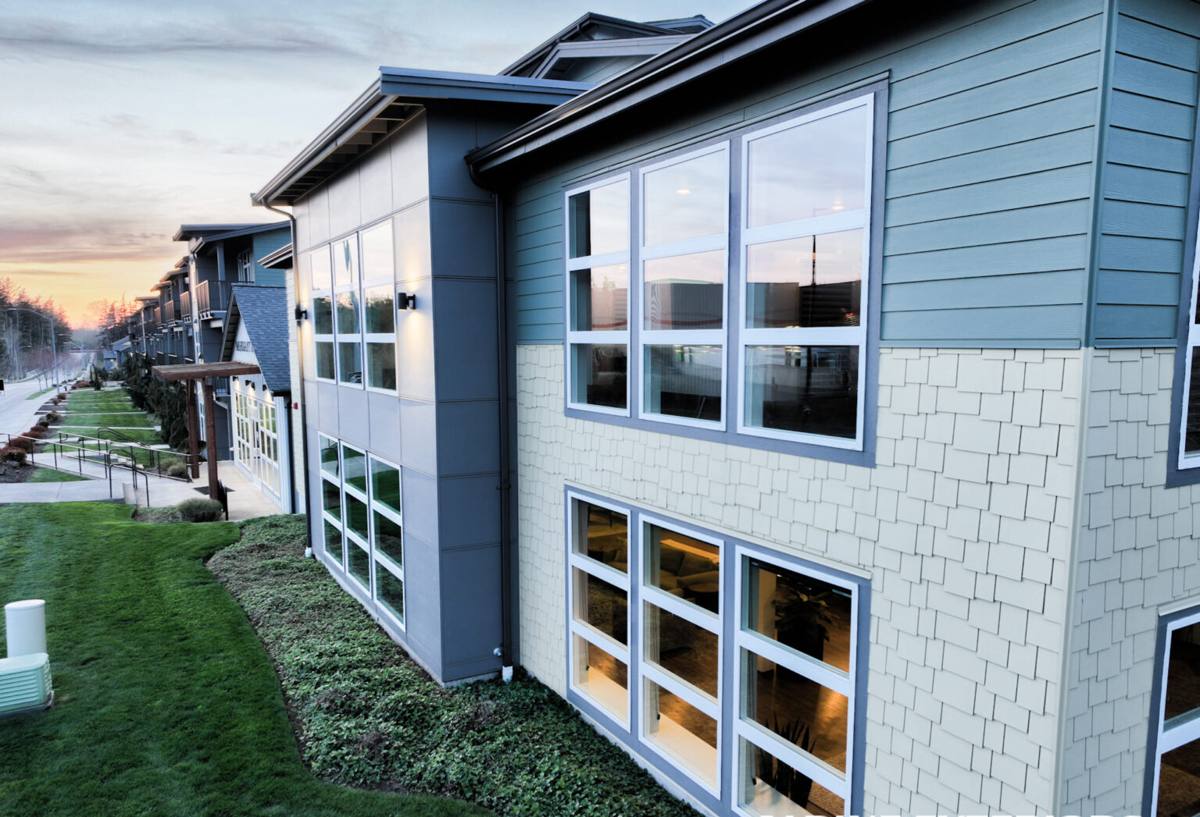
How Salt Air, Rain, and Moss Actually Damage Windows
Salt Air
Homes closer to the water deal with airborne salt that settles on hardware, frames, and especially any exposed fasteners. Over years, that accelerates corrosion on cheaper hinges, locks, and cranks, and it can pit unprotected metal components faster than homeowners expect. It's a slow process, which is exactly why it gets ignored until a window won't latch properly anymore.
Driving Rain
Skagit County storms don't just fall straight down — wind-driven rain gets pushed sideways into wall assemblies, testing every seam around a window opening. A window itself can be in perfectly good shape while the flashing and sealant around it have failed, letting water track behind the trim and into the wall cavity. This is one of the most common problems we find that has nothing to do with the window unit and everything to do with how the last one was installed.
Moss and Sustained Moisture
A long moss season means extended periods where wood trim, sills, and siding around windows stay damp rather than drying out between rain events. Moss and mildew growth on and around window frames isn't just cosmetic — it holds moisture against the surface longer, which speeds up rot in wood components and can degrade caulk and weatherstripping faster than in a drier climate.
Signs Mount Vernon Homeowners Should Watch For
Most window problems show up gradually. Here's what tends to show up first in this climate specifically:
- Soft or spongy wood at the sill or bottom corners of the frame
- Visible moss, mildew, or dark staining around the window exterior
- Condensation building up between panes, which usually means a failed seal
- Drafts you can feel near the frame even when the window is fully closed
- Windows that stick, won't latch fully, or have corroded hardware
- Paint that's peeling or bubbling specifically around the window trim
- A musty smell near windows after several days of rain
Any one of these on its own might be minor. Two or three together, especially on the same window, usually means water has been getting behind the frame for a while.
What a Correct Window Replacement Job Actually Involves
The window itself is only part of the job. In a climate like ours, the installation details matter as much as the product, because a good window installed poorly will leak just as badly as a bad window. A correct job includes:
Assessing the Opening, Not Just the Window
Before anything is ordered, we check the condition of the framing, sill, and sheathing around the existing window. If there's rot or water damage from a prior installation, that gets addressed before a new window ever goes in. Installing a new window into a damaged opening just hides the problem for a few more years.
Proper Flashing and Water Management
Flashing is what directs water away from the opening and out past the siding, and it has to be layered correctly — house wrap, flashing tape, and trim all working together so water sheds outward at every layer, never inward. This is the single most common point of failure we see in older installations in this region, and it's invisible once the trim goes back on.
Sealing and Insulating the Gap
The gap between the window frame and the rough opening needs to be sealed and insulated correctly — not overpacked with rigid foam that can bow the frame, and not left with gaps that let air and moisture through. This step directly affects both energy performance and long-term durability.
Exterior Trim and Finish
The trim and caulking on the outside are the last line of defense against driving rain. We use sealants rated for exterior exposure and pay attention to how water will move across the surface, not just how it looks the day it's installed.
Choosing a Window Material for This Climate
There's no single "best" window material — the right choice depends on the home, the budget, and how much maintenance a homeowner wants to take on. Here's how the common options compare for a climate with salt air, sustained rain, and moss exposure:
| Material | Moisture Behavior | Maintenance | Typical Trade-Off |
|---|---|---|---|
| Vinyl | Won't rot or corrode; handles moisture well | Low — occasional cleaning | Frame color/finish options are more limited than wood |
| Fiberglass | Very stable in wet/dry cycling, resists warping | Low | Higher upfront cost than vinyl |
| Wood-clad | Interior wood needs protection from any moisture intrusion | Higher — finish and seals need monitoring | Best interior appearance, most sensitive to installation quality |
| Aluminum | Prone to condensation without a thermal break | Moderate — watch for corrosion near salt air | We generally steer clients away from it in this climate |
For most Mount Vernon homes, we lean toward vinyl or fiberglass because they hold up to sustained moisture with the least ongoing maintenance. That's not a knock on wood-clad windows — they can look great and perform well — but they demand more attention to detail during installation and more upkeep afterward, and we want homeowners to go in with clear eyes about that trade-off.
Older Homes vs. Newer Construction in Mount Vernon
Mount Vernon has a real mix of housing stock — older homes with original wood-frame windows, and newer construction with more recent vinyl units that may just be reaching the age where seals start to fail. The approach differs for each:
Older Homes
Original openings on older homes are frequently out of square after decades of settling, and the framing behind the trim may have hidden moisture damage from years of minor leaks. These jobs usually take more time upfront for assessment and repair before the new window goes in, but skipping that step is how new windows end up failing early.
Newer Homes
Newer homes are more likely to have square, sound openings, which usually means a more straightforward retrofit. The main thing we check here is whether the original installation had proper flashing — plenty of newer builds cut corners on this step, and it doesn't show up as a problem until years later.
Our Process, Start to Finish
- On-site assessment: We look at every window being considered, check the condition of the surrounding framing, and talk through what's actually needed versus what can wait.
- Straightforward estimate: You get a clear breakdown of material and labor, with options at different price points explained honestly.
- Scheduling around the weather: Openings are exposed during replacement, so we plan the work to minimize how long any opening sits uncovered.
- Removal and inspection: Old windows come out carefully so we can check the opening for hidden rot or damage before proceeding.
- Correct installation: Flashing, sealing, insulation, and trim are done in the order and manner that actually keeps water out long-term.
- Final walkthrough: We test operation on every window and walk through the work with you before we consider the job done.
What Affects the Cost of a Window Replacement
Every home is different, but these are the main factors that move the price up or down:
| Factor | Why It Matters |
|---|---|
| Window count and size | More openings and larger units mean more material and labor |
| Material choice | Vinyl, fiberglass, and wood-clad carry different unit costs |
| Condition of the opening | Rot repair or reframing adds time before installation can begin |
| Glass package | Double vs. triple pane, and Low-E coatings, affect both cost and performance |
| Access and site conditions | Second-story or hard-to-reach windows take more time and equipment |
| Trim and finish work | Matching existing trim or upgrading finish adds to the scope |
We'd rather walk a homeowner through these factors honestly during the estimate than quote a number without explaining what's driving it.
Why Local Experience in Mount Vernon Matters
A crew that works Skagit County regularly has already seen how homes in this specific area age — which directions take the worst weather, which older neighborhoods tend to have framing issues behind the trim, and how much moss buildup is normal versus a sign of a bigger moisture problem. That familiarity shows up in small decisions during the job: which sealants hold up best here, how much drying time to plan for between rain windows, and what to check for on a home's exterior before ever pulling a window out.
It also means we're not learning on your house. Window replacement done right the first time is far less expensive than dealing with hidden water damage a few years down the road because an installer treated a Mount Vernon home the same as one in a completely different climate.
If your windows are showing any of the signs above, or you just want a straight answer on whether repair or replacement makes more sense for your home, we're happy to take a look. Reach out for a free, no-pressure estimate using the form below.