 Burlington
 Mount Vernon's Climate: What Siding Is Actually Up Against
Mount Vernon sits in the Skagit Valley, close enough to Puget Sound and Padilla Bay that marine air reaches homes here even though the city isn't right on the water. That marine influence, combined with the valley's long, wet winters and the wind that funnels through the lowlands, creates a specific set of conditions that siding has to survive year after year. A siding job that would hold up fine in a drier inland climate can fail early here if it isn't built for what this valley actually does to a house.
Salt Air and Corrosion
Homes closer to the water carry salt-laden air further inland than most people expect, especially during windier weather patterns. Salt air accelerates corrosion on fasteners, trim flashing, and any metal component that isn't rated for coastal exposure. Over time, that corrosion can compromise the very hardware holding siding in place, which is why fastener choice and flashing material matter as much as the siding panel itself.
Driving Rain and Wind-Driven Moisture
Skagit County gets a lot of rain, but the bigger issue for siding is wind-driven rain — moisture that gets pushed sideways and upward into laps, seams, and trim joints rather than simply running down the face of the wall. A siding system that only sheds water well in calm conditions isn't enough here. Correct installation has to assume water will hit siding from multiple angles and account for it with proper overlaps, flashing, and a drainage path behind the cladding.
Moss, Algae, and the Long Wet Season
Western Washington's extended wet season, mild temperatures, and frequent overcast days are ideal growing conditions for moss and algae. Siding that stays damp for long stretches — because of poor ventilation behind the panels, north-facing shade, or tree cover — will show green and black staining faster than siding installed with airflow and drying in mind. This is as much an installation detail as it is a maintenance issue.
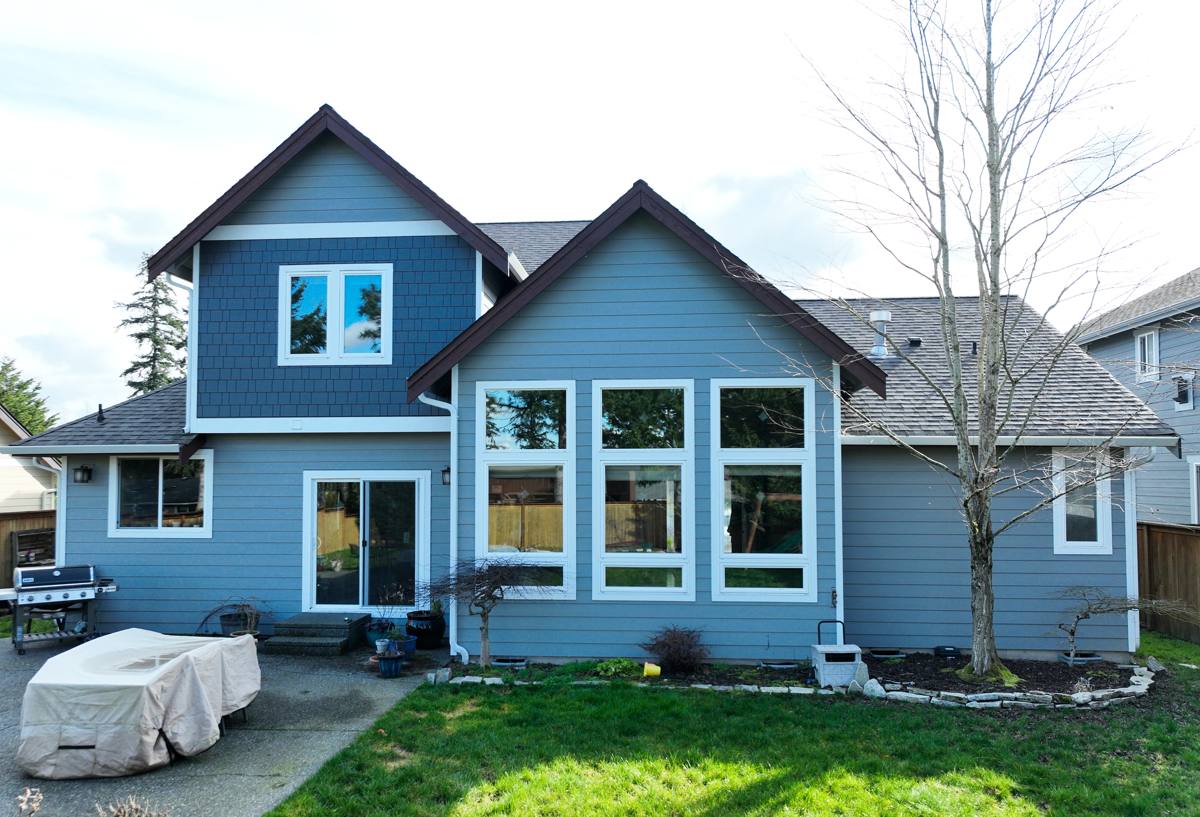
What a Correct Siding Installation Requires in This Climate
"Correct" installation in Mount Vernon means more than nailing panels to the wall in the right pattern. It means building a wall assembly that manages water and moisture the way this specific climate demands.
- A continuous, properly lapped weather-resistive barrier behind the siding, with all seams and penetrations sealed
- A rainscreen gap or drainage plane that lets any moisture that does get behind the siding drain and dry instead of sitting against the sheathing
- Corrosion-resistant fasteners driven to the manufacturer's specified depth and pattern — not just "close enough"
- Properly flashed windows, doors, and roof-to-wall transitions, since these are the points where wind-driven rain most often finds a way in
- Correct nail and panel gapping to allow for expansion and contraction without cracking caulk lines
Skip any one of these and the siding may look fine for a season or two before problems show up as staining, soft trim, or hidden rot in the sheathing behind it.
Why We Install Only James Hardie Fiber Cement Siding
We install James Hardie fiber cement siding exclusively. We don't install vinyl, LP SmartSide, Cemplank, Allura, primed spruce, or cedar, and that's a deliberate standard, not a limitation in what we're able to do.
Vinyl siding is affordable and low-maintenance in mild climates, but it can warp or become brittle with temperature swings, and it isn't the most rigid material to hold a tight seal against wind-driven rain over time. Cedar and primed spruce are attractive traditional choices, but real wood in a climate this wet requires an ongoing maintenance commitment — repainting, caulking, and moisture monitoring — that most homeowners underestimate until the first signs of rot appear. Engineered wood products like LP SmartSide perform reasonably when installed and maintained exactly to spec, but their long-term moisture resistance depends heavily on keeping every cut edge sealed and every maintenance interval on schedule, which is a lot to ask of a busy household in a valley this wet.
James Hardie fiber cement is non-combustible, dimensionally stable in wet-dry cycling, and available in HZ product lines engineered for specific climate zones, including the wetter Pacific Northwest exposure Mount Vernon sits in. The ColorPlus factory finish is baked on under controlled conditions rather than field-applied, which gives it more consistent coverage and a longer service life before repainting is needed. Backed by a strong transferable warranty, it's the product we're willing to put our name behind on homes in this climate.
Our Installation Process for Mount Vernon Homes
- On-site assessment. We look at the home's exposure — how much wind, rain, and shade it gets, proximity to trees or moisture sources, and the condition of the existing siding and sheathing.
- Tear-off and sheathing inspection. Removing the old siding lets us check the sheathing underneath for hidden moisture damage before it gets covered up again. This step catches problems that would otherwise stay hidden for years.
- Weather-resistive barrier and drainage plane. We install a continuous barrier and rainscreen gap so the wall assembly can shed and dry moisture the way this climate requires.
- Flashing at every penetration. Windows, doors, vents, and roof-to-wall intersections all get properly integrated flashing, since these are the most common failure points in wind-driven rain.
- Hardie panel installation. Panels and trim go up following James Hardie's fastening, gapping, and clearance specifications, along with local code requirements.
- Caulking and final detailing. Joints are sealed with the correct sealant, and trim details are finished for both appearance and water-tightness.
- Final walkthrough. We review the completed installation with the homeowner before considering the job done.
Common Siding Problems We See on Mount Vernon Homes
Certain issues show up repeatedly on homes throughout the Skagit Valley, and most trace back to the same root causes: moisture management and installation shortcuts.
- Moss and algae staining concentrated on north-facing or shaded walls where siding stays damp longest
- Cracked or failed caulk at trim joints, often from cheaper sealant or panels installed without proper expansion gaps
- Soft or delaminating wood siding where paint has failed and moisture has worked into the material
- Buckled or warped vinyl panels after temperature swings or improper fastening
- Hidden rot in sheathing behind siding that was installed without a working drainage plane
Choosing the Right Hardie Product for Your Home
James Hardie's product lines are built for different looks and different parts of a home. Matching the right product to the application is part of doing the job correctly.
| Product | Best Use | Why It Fits This Climate |
|---|---|---|
| HardiePlank Lap Siding | Primary wall cladding on most home styles | Traditional lapped profile sheds wind-driven rain effectively when installed with proper overlap |
| HardiePanel Vertical Siding | Modern facades, accent walls, gable ends | Fewer horizontal joints reduce potential water entry points |
| HardieShingle Siding | Accent areas, gables, craftsman-style detailing | Adds texture and character while retaining fiber cement's moisture resistance |
| HardieTrim Boards | Window, door, and corner trim | Matches the wall material's expansion behavior, reducing caulk joint failure over time |
Cost Factors for a Mount Vernon Siding Project
Every home is different, but the same factors tend to drive cost up or down on siding projects in this area.
| Factor | Impact on Project |
|---|---|
| Home size and wall complexity | More square footage and more corners, gables, and dormers mean more material and labor |
| Existing siding removal | Tear-off of old vinyl, wood, or other materials adds labor time compared to installing over bare sheathing |
| Hidden moisture damage | Rotted sheathing or framing found during tear-off requires repair before new siding goes on |
| Trim and architectural detail | Custom trim work, shingle accents, and decorative elements add both material and installation time |
| Access and story height | Multi-story homes or difficult site access require more staging and time to work safely |
We walk through these factors on-site so homeowners understand what's driving their specific estimate rather than getting a generic number that doesn't reflect their actual home.
Why a Crew That Already Works Mount Vernon Matters
Siding installation isn't a one-size-fits-all trade. A crew that regularly works in Mount Vernon and the surrounding Skagit Valley already understands how local exposure — wind direction, rainfall patterns, and the marine air moving in from Puget Sound — affects installation decisions on a given lot. That familiarity shows up in details like where extra flashing attention matters most, which sides of a home tend to hold moisture longest, and how local permitting and inspection processes work. A crew based near Burlington that already handles projects throughout Skagit County isn't learning the local climate on your home — they've already accounted for it.
Maintaining Your New Siding
Correctly installed James Hardie siding is low-maintenance, but "low-maintenance" isn't "no-maintenance." A little upkeep keeps it looking and performing its best for the long run.
- Rinse siding annually to remove built-up dirt, pollen, and early moss or algae growth
- Keep landscaping and tree branches trimmed back to allow airflow and sunlight to reach the walls
- Inspect caulking at trim joints and penetrations yearly, resealing any cracked or gapped areas
- Keep gutters and downspouts clear so water discharges away from siding instead of running down the wall
- Watch for any soft spots, staining, or discoloration and address them early rather than waiting
If you're planning a siding project for a home in Mount Vernon, we'd be glad to take a look and talk through what your home actually needs. Fill out the form below for a free, no-pressure estimate.