 Burlington
 Why Oak Harbor Roofs Wear Differently Than Roofs Inland
Homes in and around Oak Harbor deal with a combination of weather that inland Skagit County houses simply don't face. Salt-laden air off the water accelerates corrosion on anything with exposed metal fasteners or thin coatings. Driving rain, pushed sideways by wind off the Sound, finds its way into laps and seams that would stay dry on a calmer site. And the long, wet moss season here isn't a cosmetic issue — moss holds moisture against roofing material for months at a stretch, which is exactly the kind of sustained dampness that shortens the life of anything not built to shed water fast and dry out completely between storms.
None of this means a roof here is doomed to fail early. It means the roofing choice and the installation details have to account for salt exposure, wind-driven rain, and moss pressure specifically, rather than following a generic install method that works fine sixty miles inland.
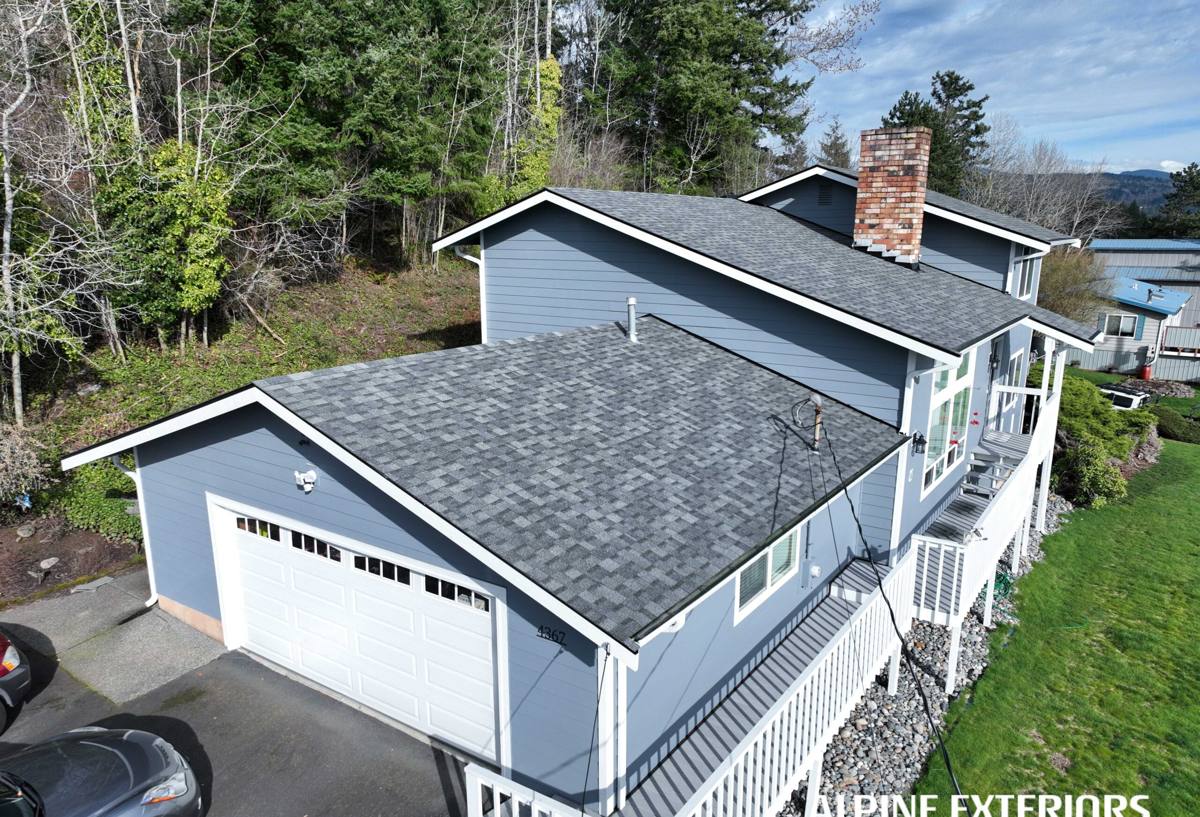
What Salt Air and Moss Actually Do to a Roof
Salt Air and Corrosion
Salt air is conductive and corrosive. Exposed steel fasteners, cut edges without proper coating, and dissimilar metals in contact with each other are the first things to show rust or galvanic corrosion in a coastal environment. This shows up years before the roofing material itself fails — a fastener head bleeding rust, a cut panel edge going soft — and it's almost always the result of using standard hardware or details instead of coastal-rated ones.
Moss and Sustained Moisture
Moss doesn't just sit on a roof looking bad. It holds water against the surface, blocks proper drainage in valleys and at eave lines, and on organic roofing materials it can work into the surface itself. On any roof, moss buildup at overlaps and fastener penetrations is where sustained moisture eventually finds a way through. A roof surface that dries out quickly between rain events resists moss far better than one that stays damp.
Driving Rain and Wind
Wind off the water doesn't just add rain volume — it drives water sideways and upward under laps that would shed water fine in a straight-down rain. That means underlayment coverage, fastening patterns, and flashing details at penetrations and edges all matter more here than they would on a sheltered inland lot.
Why Metal Roofing Fits This Climate
Metal roofing has real advantages for a site with salt air, moss pressure, and wind-driven rain — when it's specified and installed correctly. It doesn't matter to homeowners how a manufacturer markets a product; what matters is what actually holds up on this coast.
- Fast drying surface: Metal doesn't hold water the way granulated or organic surfaces can, which reduces the window moss has to establish itself.
- Steep water shed: A properly profiled metal roof moves water off quickly, which matters when rain is coming in sideways as much as down.
- Long service life when coatings are right: Coastal-rated finishes and proper fastener selection are what actually determine how metal roofing performs near salt air — not just the base material.
- Low maintenance profile: Fewer surface irregularities for moss and debris to catch on compared to some other roofing types.
That said, metal roofing is not automatically the right fit for every home or budget, and it's not maintenance-free. The trade-off is a higher upfront cost in exchange for lower long-term maintenance and a longer service life in a climate that's hard on roofing in general. We'll walk through that honestly during an estimate rather than assume it's the right call for every project.
Panel Types and Finishes: What the Choice Actually Affects
| Option | Best Suited For | Coastal Consideration |
|---|---|---|
| Standing seam (concealed fastener) | Homes wanting the cleanest look and fewest exposed penetrations | Fewest fastener penetrations means fewer future corrosion points near salt air |
| Exposed fastener panel | Budget-conscious projects, outbuildings, some roof pitches | Fastener quality and gasket condition matter more here and need periodic checking |
| Steel with premium coastal-rated coating | Homes closest to open water or with direct salt exposure | Coating quality is the single biggest factor in corrosion resistance |
| Aluminum | Sites with the heaviest salt exposure | Naturally corrosion-resistant, doesn't rust the way bare steel can if a coating is compromised |
The right choice depends on how directly exposed the home is to salt air, the roof's pitch and complexity, and budget. We'll talk through the actual trade-offs for your specific site rather than push one option across the board.
What a Correct Metal Roof Installation Involves
The panel is only part of the system. On a site with this much wind-driven rain and moss pressure, the details underneath and around the panels are what actually determine whether the roof performs for its full expected life.
Underlayment and Deck Prep
A synthetic underlayment rated for the exposure, with full ice-and-water membrane protection at eaves, valleys, and any low-slope transitions, gives the roof a backup layer if wind ever drives water past the panel laps. Deck condition gets checked and addressed before anything goes down — panels installed over a compromised deck don't stay watertight regardless of the metal above them.
Fastening and Fastener Selection
Fasteners rated for coastal exposure, correctly spaced and torqued, are non-negotiable this close to salt air. Over- or under-driven fasteners are one of the most common causes of early leaks and corrosion points on metal roofs in this kind of environment.
Flashing and Penetrations
Every pipe boot, chimney, skylight curb, and wall transition is a place water can get in if the flashing detail is wrong. These get built up in layers — not caulked over as an afterthought — so the roof sheds water at every penetration the same way it does across the open field of panels.
Edge and Valley Detail
Eaves and valleys carry the most concentrated water flow on any roof, and even more so in driving rain. Proper drip edge, valley metal, and overlap direction keep water moving off the roof instead of finding a way under the panels.
Our Process From Estimate to Cleanup
- On-site assessment: We look at your existing roof, deck condition, pitch, exposure, and any current problem areas — moss buildup, soft spots, prior leak history.
- Honest options: We walk through panel and coating options that fit your exposure and budget, including the real trade-offs, not just the upsell.
- Written estimate: Scope, materials, and timeline in writing before any work starts.
- Tear-off and deck check: Old roofing removed, deck inspected and repaired as needed before anything new goes down.
- Underlayment and metal installation: Full underlayment coverage, then panels installed with correct fastening and flashing details throughout.
- Final walkthrough and cleanup: We walk the finished roof with you, and the site gets cleared of debris and old material.
Maintaining a Metal Roof in a Moss-Heavy, Salty Climate
Metal roofing needs less upkeep than most alternatives here, but "low maintenance" isn't "no maintenance" in this climate. A short annual routine keeps a metal roof performing the way it's supposed to for decades.
- Clear debris from valleys and gutters before the wet season builds up, especially under overhanging trees
- Do a visual check for any moss establishing at overlaps or in shaded, slow-drying areas
- Look for any fastener heads showing early rust or backing out
- Check flashing around penetrations and at wall transitions for gaps or lifted edges
- Confirm gutters and downspouts are directing water fully away from the foundation, not just off the roof edge
Most of this is a fifteen-minute walk around the property a couple times a year. Catching a small issue — a lifted flashing edge, an early moss patch — before it sits through a wet season is what keeps a well-installed metal roof trouble-free.
Why It Matters That We Already Work This Coast
A crew that mainly works drier, inland jobs can install a technically sound roof and still get the coastal details wrong — not from lack of skill, but because those details simply don't come up as often on their typical job site. Fastener selection, flashing sequencing, and underlayment coverage decisions all shift when a roof sits closer to salt air and takes rain from the wind as much as from above.
We work Burlington and the surrounding Skagit County coastline regularly, which means the coastal-specific decisions on an Oak Harbor roof aren't guesswork — they're the same calls we make on jobs throughout the area. That familiarity shows up in fewer callbacks and a roof that's actually built for the conditions it has to survive, not just the conditions on a spec sheet.
Getting a Straight Answer on Your Roof
If you're dealing with moss buildup, early rust on fasteners, or you're just planning ahead for a roof that can handle Oak Harbor's salt air and rain, we're happy to take a look and give you an honest read on where things stand. There's a form below to request a free, no-pressure estimate — we'll come out, assess the actual condition of your roof, and give you straight options with no obligation.