 Burlington
 Why La Conner Roofs Wear Faster Than Roofs Inland
La Conner sits right on the water, and that changes what a roof has to deal with day in and day out. Salt-laden air off the Swinomish Channel and Skagit Bay works on exposed metal — flashing, fasteners, vent caps, gutter hardware — in a way that homes twenty minutes inland simply don't experience. Add in driving rain that comes sideways off the water during winter storms, and you've got a roof that's being tested from multiple directions at once, not just from above.
Then there's moss. Skagit County's damp, mild winters and shaded lots near the water keep roof surfaces wet for long stretches, and moss doesn't need much time to get established once conditions are right. Left alone, it holds moisture against the roofing material, lifts shingle edges, and works its way under the surface layer. On a lot of La Conner homes we've looked at, moss and the moisture it traps are doing more long-term damage than any single storm.
None of this means La Conner roofs are doomed to fail early. It means the materials, fasteners, and installation details have to be chosen with this specific combination of salt exposure, wind-driven rain, and moss pressure in mind — not just whatever's standard for a dry inland roof.
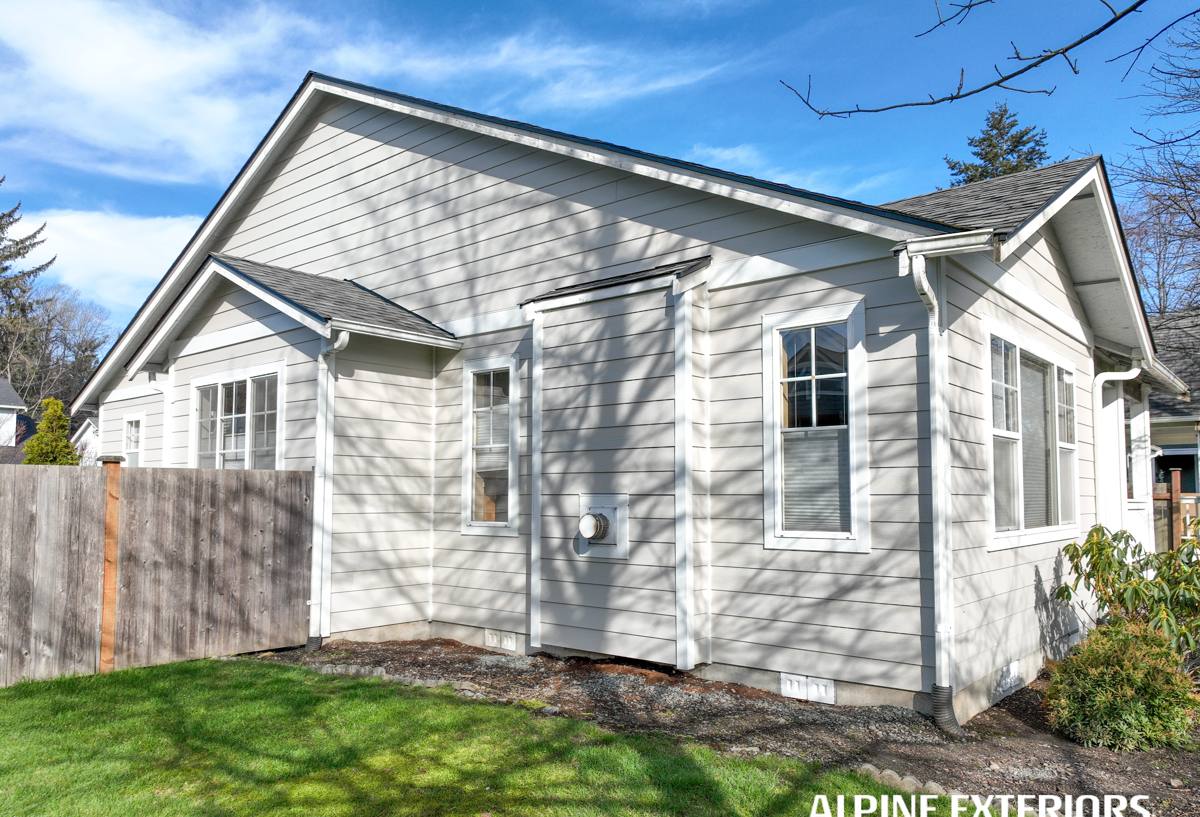
Signs a La Conner Roof Needs Replacement, Not Another Repair
Repair makes sense when a roof has isolated damage and years of usable life left. Replacement makes sense when the roofing system as a whole is past the point where patching buys you much time. Here's what we look for when we're deciding which side of that line a roof is on.
- Granule loss heavy enough that you're finding grit in the gutters every time it rains
- Shingles that are cupping, curling, or cracking across large sections rather than a few spots
- Moss coverage thick enough that it's lifting shingle tabs, not just staining the surface
- Soft or spongy decking felt underfoot, or daylight visible through the attic roof boards
- Repeated leaks around the same penetrations even after prior repairs
- A roof that's already had two or more repair rounds in the last several years
- Visible rust or corrosion on flashing, vent boots, or metal trim near the roofline
Any one of these on its own might still be a repair. Several at once, especially on a roof that's already at or past its expected lifespan, usually means the underlying materials are failing together and a patch will just move the problem to a different spot next winter.
What a Correct Roof Replacement Actually Involves
A roof replacement is more than swapping old shingles for new ones. The parts you don't see — the deck, the underlayment, the ventilation — are what determine whether the new roof actually outperforms the one it's replacing.
Tear-Off and Deck Inspection
We remove the old roofing down to the deck rather than layering over it. That's the only way to actually see what's underneath — soft spots, rot around old penetrations, or decking that's been quietly absorbing moisture for years. Any damaged sheathing gets replaced before anything new goes down. Roofing over a compromised deck just hides the problem under a new layer of shingles.
Underlayment Built for Wind-Driven Rain
Standard felt underlayment is fine in a lot of the country. On a home exposed to the kind of sideways rain that comes off the water near La Conner, we lean toward synthetic underlayment with better water resistance, and we pay close attention to ice-and-water shield at the eaves, valleys, and any low-slope transitions — the spots where wind-blown rain is most likely to find a way in.
Ventilation That Actually Moves Air
A roof that traps heat and moisture in the attic ages faster from the inside out, and it feeds the moss problem by keeping the roof deck cooler and damper than it should be. Balanced intake and exhaust ventilation — not just a ridge vent with no real intake to match it — is part of getting the assembly right, not an upsell.
Flashing and Fasteners That Handle Salt Exposure
This is where a lot of roofs near the water fail early. Standard steel fasteners and thin flashing corrode faster in salt air. We use corrosion-resistant flashing and fastener specifications suited to a marine-influenced environment, particularly at chimneys, skylights, and any place metal meets metal.
Choosing the Right Material for a Marine Climate
There's no single "best" roofing material for every home — it depends on the roof's exposure, the home's style, and what the homeowner wants to maintain long-term. Here's how the common options stack up specifically against La Conner's salt air, rain, and moss conditions.
| Material | How It Handles Salt Air & Rain | Moss Resistance | Typical Lifespan |
|---|---|---|---|
| Architectural asphalt shingle | Good, especially with corrosion-resistant flashing and fasteners | Moderate — benefits from algae/moss-resistant granules | 25-30 years |
| Standard 3-tab asphalt shingle | Adequate but thinner profile wears faster under repeated wetting | Lower — less surface texture to shed debris | 15-20 years |
| Metal (standing seam or panel) | Excellent when properly coated fasteners and finishes are used | High — smooth surface sheds moisture and debris well | 40-50+ years |
| Composite/synthetic shingle | Good moisture resistance, holds up well to repeated wet cycles | Moderate to high depending on product | 30-50 years |
For most La Conner homes, a quality architectural asphalt shingle with algae-resistant granules and properly detailed flashing is a solid, cost-effective choice. For homes with heavier moss history or owners who want to minimize long-term maintenance, metal or a composite product is worth a real look — not because asphalt is a bad product, but because the trade-offs shift when a roof sits this close to the water.
Our Roof Replacement Process
- On-site inspection. We walk the roof, check the attic, and look at drainage, ventilation, and moss patterns before recommending anything.
- Written estimate. A clear scope of work and pricing — what's included, what materials we're proposing, and why.
- Material selection. We go over the options that fit the home and the budget, with honest trade-offs explained rather than a hard sell toward the most expensive option.
- Tear-off and deck inspection. Old roofing comes off, the deck gets inspected, and any needed repairs are addressed before new materials go down.
- Underlayment, flashing, and ventilation installed. This is the part of the job that determines how the roof performs in a storm five years from now, not just how it looks on day one.
- Final roofing material installed to manufacturer specifications, with attention to nailing patterns and exposure — details that affect both wind resistance and warranty coverage.
- Cleanup and final walkthrough. Site cleared of debris and fasteners, and we walk the finished roof with the homeowner.
Why a Crew That Already Works in La Conner Matters
A roofing crew that mostly works dry, inland roofs isn't necessarily doing anything wrong — they're just solving a different problem. A crew that regularly works homes in La Conner and along the Skagit County waterfront has already seen how salt air chews through cheap flashing, how moss builds up on north-facing slopes shaded by mature trees, and how wind-driven rain finds the weak points in a valley or a skylight curb. That experience shows up in the details: which fastener spec to use, where to add extra ice-and-water protection, and which ventilation setup actually keeps an attic dry through a wet Skagit County winter.
It also matters for permitting and coordination — knowing the local building department's expectations for reroofing and working efficiently around the area's weather windows, since a roof torn off ahead of an unexpected storm is a problem nobody wants.
What Roof Replacement Typically Costs
Every roof is different, and the only accurate number comes from an actual inspection — but the factors that move the price are consistent. This gives you a sense of what to expect before we ever get on the roof.
| Factor | How It Affects Cost |
|---|---|
| Roof size and number of layers being removed | More square footage and tear-off layers mean more labor and disposal |
| Roof pitch and complexity | Steep or cut-up roofs with many valleys and penetrations take longer and cost more |
| Decking condition | Rotted or soft sheathing found during tear-off adds material and labor |
| Material choice | Asphalt is typically the most affordable; metal and composite cost more upfront but often last longer |
| Ventilation and flashing upgrades | Bringing an older roof's ventilation or flashing up to current standards adds cost but pays off in longevity |
| Access and site conditions | Tight lots, tall trees, or difficult staging can add time to the job |
Rather than quoting a broad range that doesn't mean much without seeing the roof, we'd rather walk the property, look at the deck once it's exposed, and give you real numbers tied to your specific home.
A Practical Checklist Before You Replace Your Roof
- Get a full inspection, not just a look from the ground — moss and granule loss can hide the extent of the damage
- Ask what's included in the underlayment and flashing spec, not just the shingle brand
- Confirm the crew plans a full tear-off with deck inspection, not an overlay
- Ask how ventilation will be handled, especially if the current attic runs hot or damp
- Get the scope of work and material specs in writing before signing anything
- Ask how the crew handles unexpected weather mid-project — a torn-off roof needs a plan if rain moves in early
- Confirm what warranty coverage applies to both materials and workmanship, and what voids it
If your roof is showing its age or you just want an honest read on how much life it has left, we're happy to take a look. Fill out the form below for a free, no-pressure estimate — we'll walk the roof, tell you what we actually see, and give you real numbers before any work begins.