 Burlington
 Building Decks for La Conner's Waterfront Climate
La Conner sits right on the Swinomish Channel, and that waterfront location shapes everything about how a deck should be built here. Salt-laden air moves off the water and settles on fasteners, ledger boards, and railing hardware year-round. Add Skagit County's long wet season and the moss that comes with it, and a deck built to a generic spec sheet will show its age fast — corroding hardware, slick surfaces, and rot at the joints where water collects. A deck built for La Conner has to be built for La Conner's conditions, not just built to code.
We've worked on homes throughout this part of Skagit County long enough to know which details matter here and which ones are just extra cost. This page covers what that actually looks like: material choices, structural details, and the parts of the build that separate a deck that lasts fifteen years from one that lasts thirty.
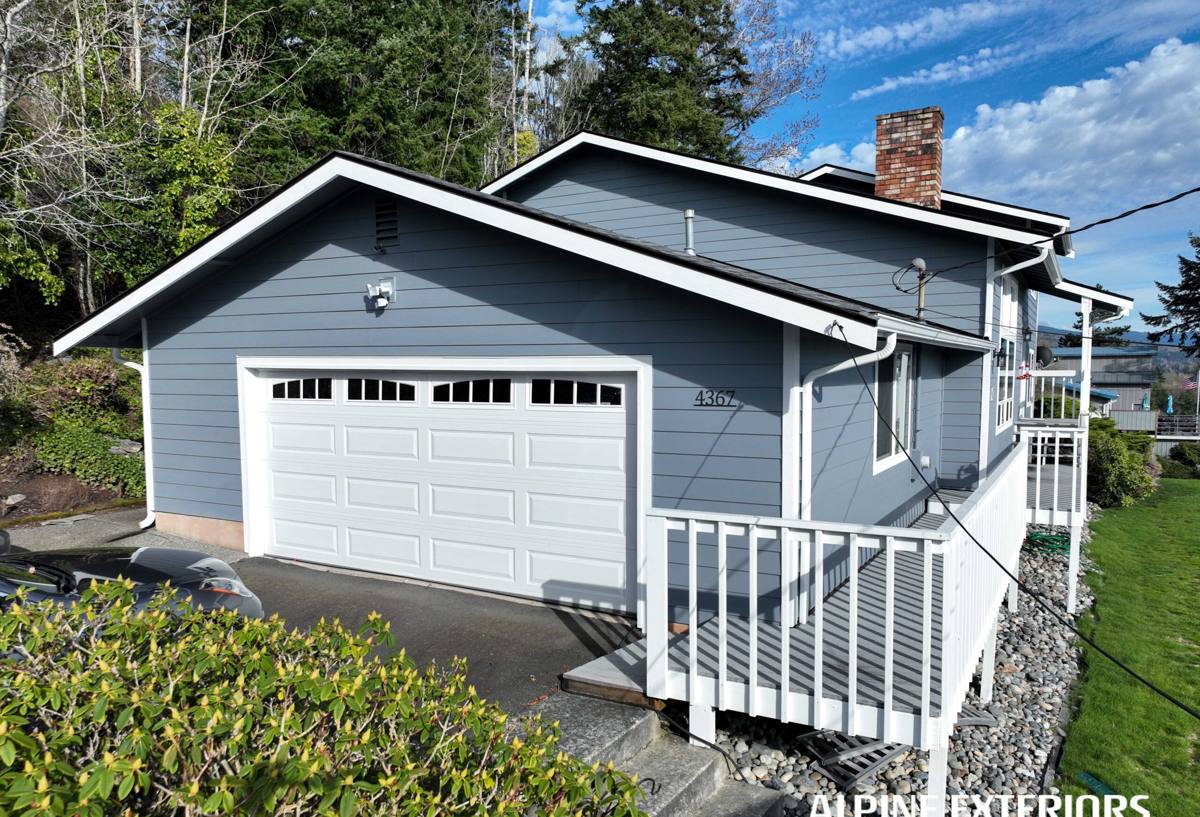
What Salt Air and Moisture Do to a Deck Over Time
Three things drive deck failure in this area, and they compound each other:
- Corrosion: Salt air accelerates rust on any fastener, bracket, or connector that isn't rated for coastal exposure. Once a joist hanger starts corroding, it loses holding strength long before it looks obviously bad.
- Trapped moisture: Driving rain off the water gets pushed sideways under railings and into ledger connections. Wood that stays damp for extended periods is where rot starts, especially at end grain and fastener penetrations.
- Moss and algae growth: Skagit County's long wet season gives moss months to establish on any deck surface that doesn't drain and dry quickly. Beyond the appearance issue, moss holds moisture against the decking material and makes surfaces genuinely slippery underfoot.
None of these are reasons to avoid building a deck in La Conner — they're just the reasons the details matter more here than they would somewhere drier and further inland.
Hardware and Fasteners: The Part Nobody Sees
The single biggest difference between a deck that holds up near the water and one that doesn't is usually invisible once the project is finished: the hardware. We use fasteners, joist hangers, and structural connectors rated for coastal or wet-environment exposure — not standard galvanized hardware that's fine inland but corrodes faster in salt air. This includes:
- Stainless steel or high-corrosion-resistant coated structural screws
- Joist hangers and post bases rated for the fastener and lumber combination being used
- Ledger board flashing and connections detailed to shed water away from the house, not into it
It costs more upfront than standard-grade hardware. It's also the difference between a deck that needs hardware replaced or reinforced in eight years and one that doesn't.
Ledger Board Connections Deserve Extra Attention
Where a deck attaches to the house is the single most common source of long-term water damage — and it's often invisible until the damage has already spread into the house framing. Correct ledger flashing, proper standoff or spacing where required, and sealed fastener penetrations aren't optional details near the water; they're the difference between a deck that protects your home and one that slowly damages it.
Choosing Decking Material for This Climate
There's no single "best" decking material — there's a best material for your budget, your maintenance appetite, and how much sun and moss exposure the deck's location gets. Here's how the common options actually compare in a Skagit County coastal environment:
| Material | Moisture/Moss Resistance | Maintenance | Typical Lifespan |
|---|---|---|---|
| Pressure-treated wood | Good if sealed regularly; absorbs moisture if neglected | Annual cleaning and re-sealing recommended | 10–15 years with upkeep |
| Cedar | Naturally moisture-resistant; still needs sealing near salt air | Periodic staining/sealing | 15–20 years with upkeep |
| Composite decking | Excellent — doesn't absorb water or rot | Periodic washing to remove surface moss/algae | 25–30+ years |
| PVC/vinyl decking | Excellent — fully moisture-sealed material | Low; occasional washing | 25–30+ years |
We're upfront with homeowners: composite and PVC decking cost more per square foot up front, but in a moss-prone, salt-air environment, they cut the maintenance burden dramatically and hold up better over the life of the deck. Wood decking isn't a bad choice — it's a different trade-off, lower upfront cost in exchange for a real annual maintenance commitment. We'll walk through both honestly based on how you actually plan to use and maintain the space.
Framing and Structure: What's Underneath Matters More Than What's on Top
A beautiful decking surface on a poorly framed structure is a short-term fix. We build the substructure to handle both the load requirements and the moisture exposure specific to this area:
- Proper joist spacing and sizing for the span and expected load
- Post footings set below frost depth and sized for the local soil conditions
- Joist tape or flashing on top of framing members to keep decking fasteners from creating water entry points
- Adequate airflow underneath the deck so the structure can dry out between rain events, which matters more here given how frequently that happens
Skagit County soil varies block to block, especially closer to the water table near the channel — footings that work fine a mile inland aren't automatically right for a lot closer to the shoreline. We check ground conditions on-site rather than assuming.
Railings and Slip Resistance
Moss doesn't just grow on decking boards — it establishes on railings, stair treads, and any horizontal surface that stays damp. Two things matter here:
Material Choice for Railings
Metal railing components need the same corrosion-resistant hardware standard as the deck structure itself. Wood railings need the same sealing commitment as wood decking. Composite and aluminum railing systems trade a higher material cost for essentially eliminating that maintenance cycle.
Surface Texture on Stairs and High-Traffic Areas
Grooved or textured decking boards, especially on stair treads, make a real difference in slip resistance during the wet months. It's a small spec detail that matters more in La Conner than it would somewhere with a shorter rainy season.
Our Deck Building Process
Every deck project follows the same basic sequence, though the specifics change based on your home, your site, and what you're trying to get out of the space:
- On-site assessment: We look at the site, existing structure (if replacing a deck), soil conditions, and how the space will be used before recommending a design or material.
- Design and material selection: We walk through decking, railing, and structural material options with honest trade-offs — cost, appearance, and maintenance — so you're choosing based on real information.
- Permitting: Deck projects in Skagit County typically require permits depending on size and height. We handle that process as part of the project.
- Demolition (if applicable): Removal of an existing deck, including checking the ledger connection and house framing underneath for any hidden moisture damage before building new.
- Framing and structure: Footings, posts, beams, and joists built to span and load requirements, with coastal-grade hardware throughout.
- Decking, railing, and finish work: Installation of your chosen decking material, railing system, and any stairs or built-in features.
- Final walkthrough: We go over the finished deck with you, including maintenance expectations for whatever material you chose.
Why Hire a Crew That Already Works in La Conner
Deck building isn't unique to this town, but the conditions that matter to a durable deck here are specific to this part of Skagit County — the salt air, the water table near the channel, and how long moss has to establish during the wet season. A crew that builds decks all over the region without adjusting for waterfront exposure will use the same hardware and detailing they'd use on an inland deck, and it shows up as premature corrosion and rot years earlier than it should. We build differently for La Conner because the environment demands it, not because it's a sales pitch.
A Practical Checklist Before You Start
If you're planning a deck project in La Conner, these are the questions worth having answered before work begins:
- Is the hardware and fastener spec rated for coastal/wet exposure, not just standard galvanized?
- Is the ledger board connection flashed and detailed to keep water out of the house structure?
- Does the decking material choice match how much maintenance you're actually willing to do?
- Are footings sized and set based on an actual soil check, not a generic assumption?
- Is there enough airflow underneath the deck for the structure to dry between rain events?
- Does the permit cover the deck's size, height, and any attached structures like stairs or railings?
If you're planning a new deck or replacing one that's showing its age, we're happy to walk the site with you and put together a straightforward estimate — no pressure, no upsell, just an honest look at what your project needs. Use the form below to get started.