 Burlington
 Window Installation in Edison: Built for the Skagit County Climate
Edison sits close enough to the bay that salt air is a daily fact of life, not an occasional nuisance. Combine that with the long, wet stretches of Pacific Northwest weather and the shaded, moisture-heavy conditions that let moss and mildew take hold on siding and trim, and you've got a climate that is genuinely hard on window assemblies. Frames, sills, and the flashing behind them take the brunt of it. A window that was installed correctly ten years ago in a drier inland town might be failing here already — not because the window itself was bad, but because the installation didn't account for how much water this area actually sees.
We install windows throughout the Burlington area, and Edison is part of our regular route. That matters more than it sounds like: a crew that's used to working in this specific pocket of Skagit County already knows how the wind-driven rain moves against a wall, how much moss pressure to expect on north-facing elevations, and how salt-laden air accelerates corrosion on hardware and fasteners that aren't rated for it.
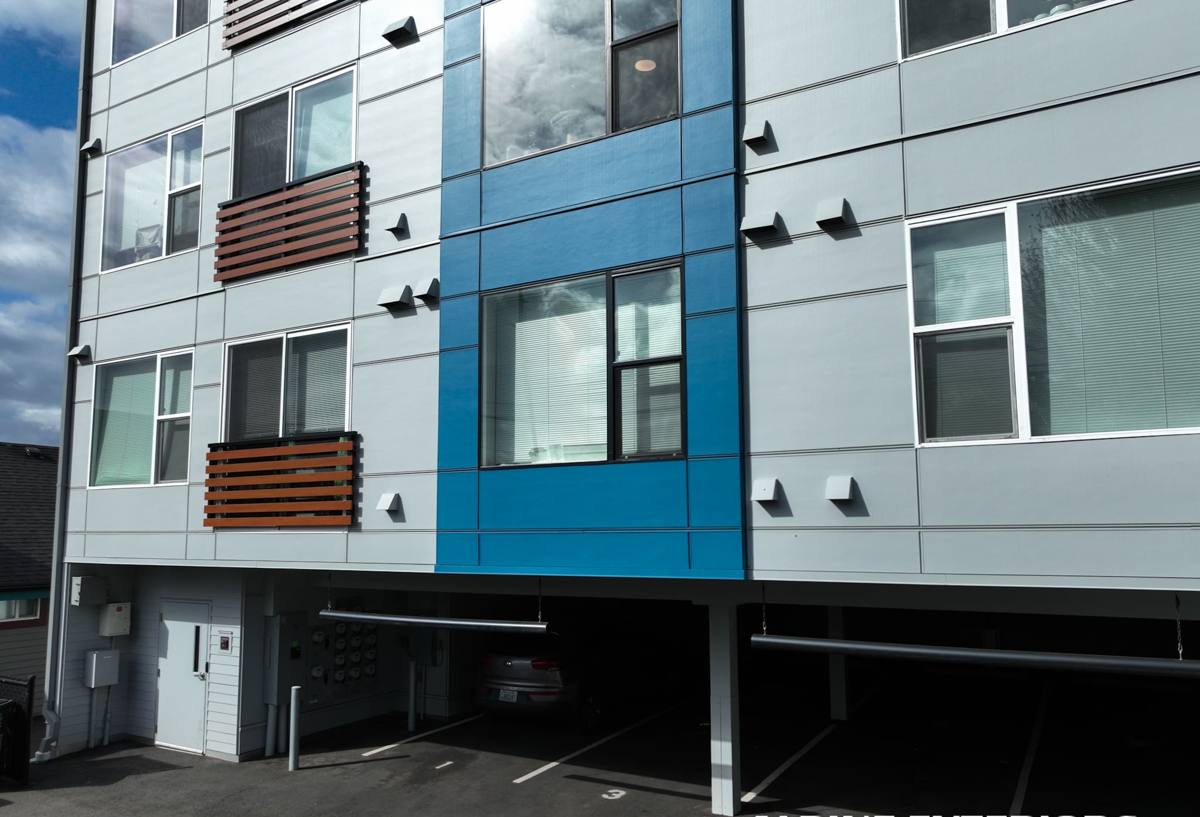
How to Tell an Edison Home Actually Needs New Windows
Not every drafty window needs full replacement, and not every foggy pane means the whole unit has to go. Here's how we sort it out before recommending anything.
- Fogging or a visible haze between panes — this means the seal on a double-pane unit has failed and the gas fill is gone. It's not repairable; the insulated glass unit or the window has to be replaced.
- Soft or discolored wood at the sill or lower corners of the frame — usually a sign that water has been getting behind the trim or through a failed seal for a while.
- Persistent moss or black staining on the frame or the siding directly below the window — often a symptom of water shedding poorly off the window, not just general regional moss growth.
- Windows that are hard to open, don't latch fully, or let in a draft you can feel with your hand along the frame — this points to warping, settling, or corroded hardware.
- Visible gaps or cracked caulk around the exterior trim — a sign the original flashing or sealant has aged out, which is common on original windows in coastal-influenced areas after a couple decades.
If a window shows one or two of these signs, sometimes re-flashing and re-sealing buys you real time. If several show up at once, or the frame itself has soft spots, replacement is the honest recommendation — patching a rotted frame doesn't hold up here.
What a Correct Window Installation Actually Involves
The window unit itself is only part of the job. In a climate like this, the installation details around the window are what determine whether it lasts 20 years or 5.
Removal and Opening Prep
We remove the old window and inspect the rough opening before anything new goes in. If there's rot in the sheathing or framing, that gets addressed first — installing a new window over a compromised opening just hides a problem that will keep spreading.
Sill Pan and Flashing
A sloped sill pan at the bottom of the opening gives any water that gets past the window a path back out, instead of pooling against the framing. Flashing at the head, jambs, and sill needs to be layered correctly — each piece overlapping the one below it — so water sheds down and out rather than working its way inward. This is the single most common place we find shortcuts on older installations, and it's the reason otherwise-good windows fail early in this area.
Weather-Resistive Barrier Integration
The window flashing has to tie into the house wrap or building paper correctly, not just get taped over it. Done wrong, it creates a spot where wind-driven rain collects instead of draining.
Sealing and Insulation
Low-expansion foam or backer rod and sealant around the perimeter closes air gaps without bowing the frame. Exterior caulking at the trim joints is the last line of defense against wind-driven rain, and it needs a caulk rated for exterior, UV, and moisture exposure — not a general-purpose product.
Final Adjustment and Testing
Every window gets checked for square, level, and smooth operation before we consider the job done. A window that's slightly out of square will bind, won't seal fully, and will wear out its hardware faster.
Choosing Window Materials for a Salt-Air, High-Moisture Climate
Material choice matters more here than in a lot of other places. We steer clients toward products that hold up specifically to salt exposure and constant moisture, not just general Pacific Northwest weather.
| Material | How It Handles This Climate | Trade-Offs |
|---|---|---|
| Vinyl | Won't rot or corrode from salt air; good moisture resistance; low maintenance | Can expand/contract with temperature swings; frame color options more limited |
| Fiberglass | Very stable in wet, coastal-influenced conditions; resists warping and doesn't corrode | Higher upfront cost than vinyl |
| Wood-clad | Warm interior look; clad exterior shields the wood from direct weather | Any breach in the cladding lets moisture reach the wood core — needs vigilant sealing and inspection near the coast |
| Aluminum | Strong and slim-profile | Prone to corrosion in salt air unless properly coated; conducts cold, which shows up as condensation in this humidity |
For Edison specifically, given the salt air off the bay, we most often recommend vinyl or fiberglass for exterior durability, with wood-clad reserved for homeowners who want that interior look and are committed to keeping the exterior cladding and seals well maintained. Aluminum-frame condensation is worth flagging on its own — in a marine climate this humid, cold-conducting frames tend to sweat on the inside during cold snaps, which is more of a nuisance than a defect but worth knowing before you choose it.
Our Process, Start to Finish
- On-site assessment — we look at each window individually, not just the house as a whole. Sun exposure, wind direction, and moisture history vary window to window.
- Honest recommendation — repair where it makes sense, replace where it doesn't. We'll tell you which is which and why.
- Material and product selection — matched to the specific exposure of your home, not a one-size-fits-all default.
- Installation — removal, opening inspection and repair as needed, sill pan and flashing, weather barrier integration, sealing, and final adjustment as described above.
- Cleanup and walkthrough — we walk every window with you before we call the job done.
What Affects the Cost of a Window Installation
Every home is different, so we won't quote a number without seeing the job, but these are the main factors that move the price up or down.
| Factor | Why It Matters |
|---|---|
| Number of windows | Per-unit cost typically drops as the total count goes up on a single job |
| Frame material | Vinyl is generally the most budget-friendly; fiberglass and wood-clad cost more upfront |
| Opening condition | Rot or framing damage discovered during removal adds repair time before the new window goes in |
| Window size and style | Larger units, custom shapes, or specialty operating styles (casement, awning, sliders) vary in labor and material cost |
| Access and story height | Second-story or hard-to-reach windows take more setup time |
| Existing flashing/siding condition | If siding needs to be pulled back and re-flashed properly, that adds labor beyond the window swap itself |
We give a written estimate after the on-site visit so you know exactly what you're paying for and why — no vague allowances that turn into surprise add-ons later.
Why It Matters That We Already Work in Edison
A crew that only occasionally works this stretch of Skagit County has to relearn the local conditions every time. We don't. We know what wind-driven rain does to a west- or south-facing wall out here, how aggressively moss and mildew take hold in the shaded, damp corners common to this area, and how much extra corrosion resistance salt-air exposure demands from hardware and fasteners. That translates directly into fewer callbacks and windows that actually perform the way they're supposed to for their full warranty life, not just on a dry install day.
Keeping New Windows Performing Long-Term
A good installation is most of the battle, but a little homeowner upkeep extends the life of the work significantly.
- Rinse frames and sills periodically to clear salt residue, especially after windy weather off the bay.
- Check exterior caulk lines once a year for cracking or gaps, particularly after the wettest months.
- Keep gutters and downspouts clear so water isn't sheeting down across window heads.
- Wipe down interior sills during cold snaps if you notice condensation, and make sure interior humidity isn't excessive.
- Trim back vegetation that shades window areas and keeps them from drying out between rains — that's often where moss gets its foothold.
If your Edison-area windows are fogging, drafting, sticking, or just showing their age, we're happy to take a look and give you a straightforward, no-pressure estimate — use the form below to get started.