 Burlington
 Roof Repair in Conway: Built for the Skagit Delta Climate
Conway sits low in the Skagit River delta, close enough to Skagit Bay that the air itself works against a roof year-round. Homes here deal with a specific combination of conditions that inland Burlington neighborhoods see in a milder form: salt-laden air off the estuary, wind-driven rain that comes in sideways off the water, and a moss season that runs longer than most homeowners realize. A roof repair that works in a dry inland climate can fail fast out here if it isn't matched to what this stretch of Skagit County actually throws at a house.
This page is about one job, done right, in one area: roof repair for Conway homes. Not a full re-roof pitch, not a generic list of services — just what a correct repair looks like when the roof in question is exposed to river-delta weather, and why a crew that already works this area brings something a drive-in outfit can't.
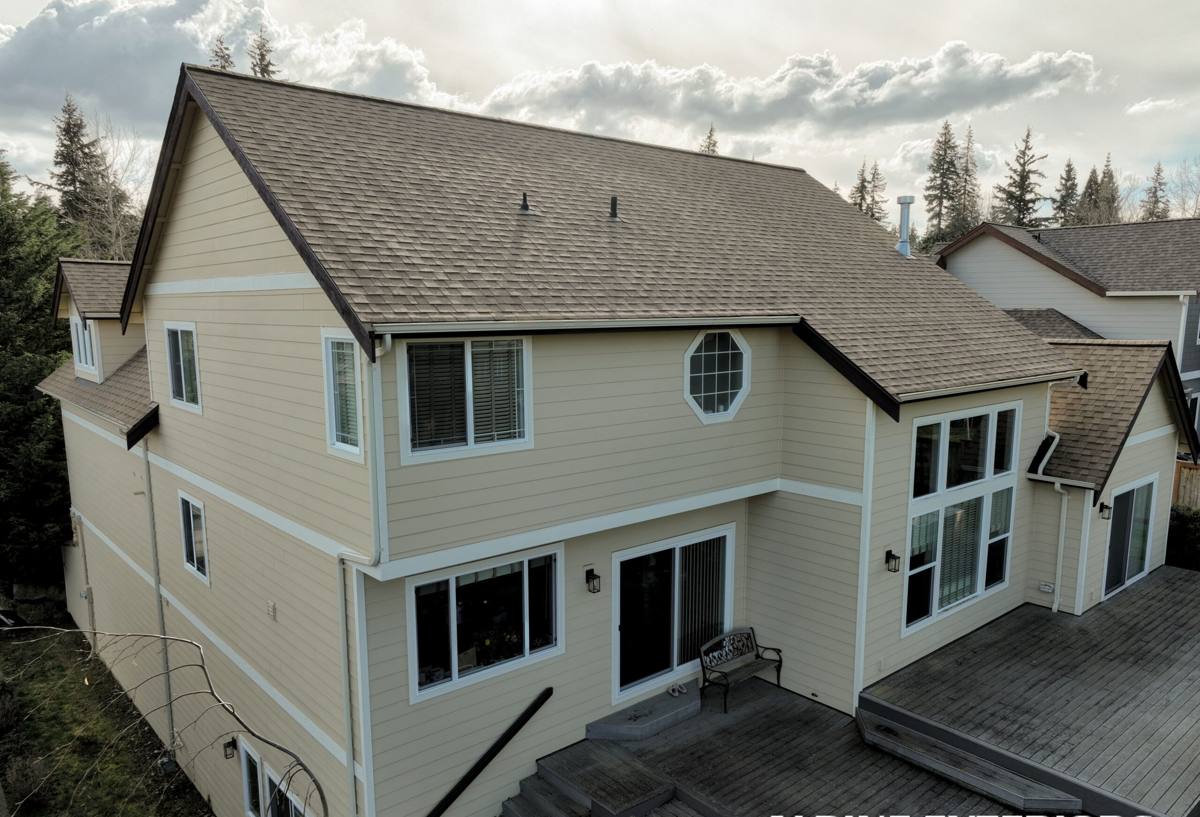
Why Conway Roofs Take a Different Kind of Beating
Salt Air and Metal Fasteners
Proximity to Skagit Bay means a fine layer of salt settles on roofing surfaces more than it does further inland. Over years, that accelerates corrosion on exposed metal — nail heads, flashing edges, gutter fasteners, and any exposed screws on metal roofing or accessories. A repair that uses standard-grade fasteners in a salt-air zone is a repair that starts corroding on day one. We spec corrosion-resistant fasteners and flashing on Conway jobs as a matter of course, not as an upsell.
Driving Rain and Wind-Driven Leaks
Flat, open delta land means less wind-breaking than you get in a forested or hillier part of Skagit County. When a storm rolls through, rain doesn't just fall on a Conway roof — it drives into it at an angle, working its way under shingle edges, around chimney flashing, and into any gap that a straight-down rain would never find. This is why so many "small" roof leaks in this area trace back to flashing and edge details rather than the field of the roof itself.
Moss, Shade, and Slow Roof Death
Skagit County's wet season runs long, and Conway's low, moist ground keeps humidity high even after a storm has passed. On roof slopes that stay shaded or north-facing, moss and moisture-loving growth can take hold and never fully dry out between rains. Moss doesn't just look bad — it lifts shingle edges, holds water against the roof deck, and turns small granule loss into a real leak path over a season or two.
Common Roof Repair Needs We See Around Conway
| Issue | Typical Cause Locally | What the Fix Usually Involves |
|---|---|---|
| Leak at chimney or skylight | Flashing fatigue from wind-driven rain and temperature swings | Remove and rebuild flashing, not just caulk over it |
| Granule loss / bald patches | Sustained moisture and moss root activity | Moss removal, treatment, spot shingle replacement |
| Corroded fasteners or flashing | Salt air exposure over years | Replace with corrosion-resistant materials, not like-for-like |
| Soft or sagging decking | Prolonged trapped moisture under moss or debris | Deck repair or replacement before re-covering |
| Gutter overflow staining | Debris buildup plus heavy delta rain volume | Clear, reseal, and check pitch, not just patch fascia |
What a Correct Roof Repair Actually Involves
A repair that only addresses the spot where water is showing up inside the house is often treating a symptom, not the cause. Water travels — it can enter several feet from where a stain appears on a ceiling. A correct repair starts with tracing the actual entry point, not the visible damage.
- Inspect the full roof plane involved, not just the leak location, since wind-driven rain problems are rarely isolated to one square foot
- Check the roof deck underneath for soft spots or rot before doing any surface work — covering a compromised deck just hides the problem
- Rebuild flashing details (chimneys, valleys, skylights, wall intersections) rather than resealing old flashing with caulk, which fails again within a season or two
- Match materials and fastener grade to the exposure — a salt-air, high-wind location needs different hardware than a sheltered inland roof
- Address the underlying moisture source, whether that's moss, poor ventilation, or a gutter that's no longer draining correctly
Skipping any of these steps is how a homeowner ends up paying for the same repair twice within a few years.
Our Roof Repair Process
- On-site inspection. We look at the roof from the ground and, where safe and necessary, up close — including the attic side if there's an active leak, since that's often where the real story is.
- Honest diagnosis. We tell you what's actually failing and why, in plain terms — not a scare pitch for a full replacement when a targeted repair will genuinely hold up.
- Written scope and estimate. You know what's being repaired, with what materials, and roughly what it will cost before any work starts.
- The repair itself. Deck check, flashing rebuild where needed, matching shingle or metal work, and fastener/flashing upgraded to suit Conway's salt-air and wind exposure.
- Cleanup and walk-through. Debris and old material hauled off, and we walk the work with you before we call it done.
Repair or Replace? Cost Factors to Weigh
Not every roof issue in Conway needs a full replacement, and not every leak is fixable with a patch. The honest answer usually depends on the roof's age, how widespread the damage is, and whether the deck underneath is still sound.
| Factor | Leans Toward Repair | Leans Toward Replacement |
|---|---|---|
| Roof age | Under roughly two-thirds of expected material lifespan | Near or past expected lifespan for the material |
| Extent of damage | Isolated to one area or detail (flashing, one slope) | Multiple leak points or widespread granule loss |
| Deck condition | Solid, dry decking under the affected area | Soft, rotted, or repeatedly wet decking |
| Moss/moisture history | First occurrence, addressed early | Long-term, repeated moss damage across the roof |
| Matching materials | Discontinued shingle still reasonably matchable | Material no longer available in a close match |
We'll always tell you honestly which side of that line your roof falls on. A repair that's likely to fail again within a year isn't a good use of your money, and we won't sell it to you as one.
Materials and Our Standards on Repairs
For asphalt composition roofing, the most common material in this part of Skagit County, repairs need to match not just color but weight and profile, or the patch will stand out and can create a slightly different water path than the surrounding shingles. For metal roofing, repairs are less about patching and more about correcting the fastener and flashing details that caused the failure in the first place, since metal roofing itself rarely fails in the field — it's almost always a seam, penetration, or fastener issue.
On flashing, we use metal and sealant systems built for coastal and marine-influenced air rather than standard-grade hardware, because in a salt-exposed location like Conway, the cheaper fastener is the one that causes a callback. That's a standard we hold on every repair here, not a premium option we upsell.
Why a Crew That Already Works Conway Matters
A roofer who mostly works drier, more sheltered parts of Skagit County can still do competent work, but they're guessing at how a repair will hold up against delta wind and salt exposure. A crew that already works Conway has seen which flashing details fail here, which roof slopes hold moss longest, and which fastener choices last versus which ones need replacing again in three years. That's not a marketing line — it's the difference between a repair that's built for the conditions you actually have and one that's built for conditions somewhere else.
It also means shorter response times when a storm causes an active leak. Local crews aren't driving in from another county when a Conway homeowner needs someone out quickly after a windstorm.
A Homeowner's Roof Repair Checklist
- Check attic or crawlspace above ceilings for staining after any major windstorm, even if there's no visible drip yet
- Look at north-facing and shaded roof slopes each fall for moss growth before it spreads
- Keep gutters clear going into the wet season — overflow is one of the most common causes of fascia and edge rot locally
- Have flashing around chimneys, skylights, and vent pipes inspected every few years, since these fail well before the shingle field does
- Don't ignore a small, intermittent leak — wind-driven rain leaks often only show up during specific storm directions and get dismissed until they've done real damage
- Get a second opinion before agreeing to a full roof replacement for what may be a fixable, isolated issue
Ready When You Are
If you're dealing with a leak, moss buildup, or storm damage on a Conway roof, we're happy to take a look and give you a straight answer about what it actually needs. Reach out for a free, no-pressure estimate using the form below.