 Burlington
 Why Bow's Roofs Take More Punishment Than the Average Shingle Job
Bow sits in a stretch of Skagit County where a roof earns its keep. Homes here are often tucked under fir and cedar cover, close enough to Samish Bay and the surrounding lowlands that salt-laden air is a regular visitor, and squarely in the path of the driving rain that rolls off the water most of the year. Add a moss season that can run eight months or longer under shaded, damp conditions, and you have a roofing environment that's noticeably harder on materials than a roof in a dry, open, inland neighborhood. An asphalt shingle roof installed the same way everywhere else in the country will wear out faster here — not because asphalt shingles are the wrong choice, but because the details of the installation matter more when the climate is working against you every single day.
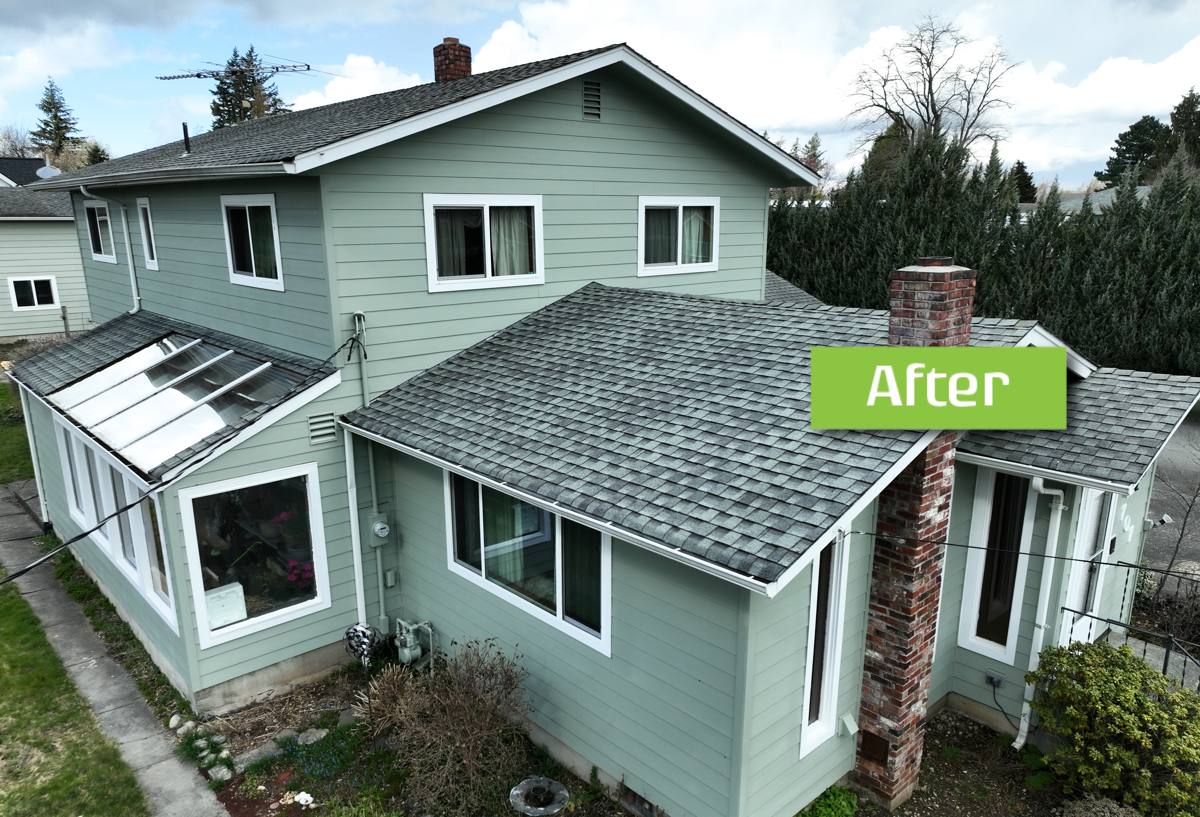
We work on roofs in Bow and around Burlington regularly, and the patterns repeat: moss creeping up from the north-facing slopes, granule loss where wind-driven rain hits a roof edge over and over, and fastener corrosion on roofs where the wrong hardware went in. None of that is unusual for this stretch of Skagit County — it's just what the climate does. A correct install plans for it up front instead of leaving it as a problem for year five.
What Salt Air, Rain, and Moss Actually Do to a Shingle Roof
Salt Air and Metal Corrosion
Asphalt shingles themselves tolerate salt air reasonably well, but the metal components around them don't always fare as well. Nails, flashing, and vent housings made from lower-grade or uncoated metal can start corroding years before the shingles themselves show wear. Once a fastener corrodes, its grip weakens, and that's how shingles start lifting in wind long before the material is actually worn out.
Driving Rain and Wind-Driven Water
Rain that falls straight down is easy for any roof to shed. Rain that's being pushed sideways by wind off the bay is a different problem — it finds every gap in flashing, every under-lapped shingle course, and every spot where underlayment wasn't run high enough up a valley or around a penetration. This is where a roof either holds or leaks, and it usually comes down to installation details that aren't visible once the job is finished.
Moss, Shade, and Organic Growth
Tree cover keeps a lot of Bow's lots cooler and more private, but it also keeps roof surfaces damp long after a storm has passed. Moss and algae take hold on shaded, north-facing slopes and roof valleys where debris collects and moisture lingers. Left alone, moss doesn't just look bad — it lifts shingle edges as it grows, holds water against the roof deck, and shortens the life of the roofing system underneath it.
What a Correct Asphalt Shingle Install Involves Here
A shingle roof is a system, not just a layer of shingles nailed to a deck. In a climate like Bow's, every layer of that system needs to be right, because the margin for error is smaller than it is in a milder climate.
- Deck inspection and repair — soft, water-stained, or delaminated sheathing gets replaced before anything new goes down, not covered up.
- Ice-and-water or synthetic underlayment — run at eaves, valleys, and around every penetration, since these are the spots wind-driven rain targets first.
- Corrosion-resistant flashing and fasteners — matched to the salt-air exposure so they hold their grip for the life of the roof, not just the first few years.
- Proper nailing pattern and shingle exposure — set to the manufacturer's wind rating, not just "close enough," since under-driven or misplaced nails are a leading cause of early shingle failure in windy areas.
- Balanced attic ventilation — intake and exhaust sized to the attic, so moisture doesn't condense under the deck and accelerate rot from the inside.
- Valley and penetration detailing — the parts of a roof most exposed to standing water and debris get extra attention, not the standard treatment.
Choosing a Shingle That Fits This Climate
Not every shingle product is built with the same priorities, and in a moss-prone, rain-heavy, salt-air environment those differences matter more than they would somewhere drier.
| Shingle Type | Best Fit For | Trade-Off to Know |
|---|---|---|
| Standard 3-tab | Budget-conscious projects, simple roof lines | Lower wind rating and shorter expected service life than architectural shingles |
| Architectural (laminated) | Most Bow homes — better wind performance and a heavier, more durable mat | Higher upfront cost than 3-tab, though the gap has narrowed over the years |
| Algae-resistant (copper/zinc granule) | Shaded, tree-covered, or north-facing roofs prone to moss and algae | Slows organic growth but doesn't eliminate the need for periodic roof cleaning |
| Impact-rated | Roofs under heavy fir or cedar cover with regular limb drop | Added material cost, but can reduce storm-damage repairs over time |
For most homes in and around Bow, we lean toward architectural shingles with algae-resistant granules as the practical default — they handle wind better than 3-tab and are formulated specifically to slow the moss and algae growth this area is known for. That said, roof pitch, sun exposure, and budget all factor into the right call for a specific house, which is why we walk the roof before recommending anything.
Our Process for a Bow Roofing Job
- On-site inspection. We get on the roof, check the deck, flashing, ventilation, and current shingle condition, and look at how the specific lot's tree cover and exposure affect the roof.
- Straightforward written estimate. Scope, materials, and price laid out clearly, with the reasoning behind any upgrades we recommend — no pressure to add things the roof doesn't need.
- Tear-off and deck prep. Old material comes off, the deck gets inspected board by board, and any repairs happen before new roofing goes down.
- Underlayment, flashing, and shingle installation. Installed to manufacturer spec and matched to this area's wind and moisture exposure.
- Ventilation check. We confirm intake and exhaust airflow is balanced for the attic, not just patched in wherever's convenient.
- Site cleanup and walkthrough. Debris and old material hauled off, and we walk the finished roof with you before calling the job done.
Keeping a Bow Roof Healthy Between Installs
Even a correctly installed shingle roof needs some upkeep in this climate. The goal isn't constant maintenance — it's a few checks at the right times of year so small issues don't turn into deck damage.
- Clear gutters and valleys of needles and leaf debris at least once or twice a year, more often under heavy tree cover.
- Have moss growth removed with proper roof-safe methods before it spreads across a slope — scraping it off without treating the cause just invites it back.
- Check flashing around chimneys, vents, and skylights periodically for lifted edges or corrosion, since these are common leak points.
- Watch for granule buildup in gutters, which signals accelerated shingle wear and is worth having looked at.
- After any significant windstorm, do a visual check (or have one done) for lifted or missing shingles rather than waiting until a leak shows up inside.
Repair or Replace? What Actually Drives That Decision
Homeowners in Bow often ask whether a roof needs full replacement or can be patched another year or two. The honest answer depends on a few factors more than on age alone.
| Factor | Leans Toward Repair | Leans Toward Replacement |
|---|---|---|
| Extent of damage | Isolated area — one slope, one flashing point | Widespread granule loss, curling, or multiple leak points |
| Roof age | Well within expected service life | At or past the shingle's typical service life |
| Deck condition | Solid, dry sheathing underneath | Soft spots, staining, or rot found during inspection |
| Moss/algae history | Minor, surface-level growth | Recurring growth that's already lifted shingle edges |
We'll tell you honestly which side of that line your roof falls on. There's no benefit to us talking someone into a full replacement when a repair will genuinely hold, and no benefit to patching a roof that's going to keep leaking regardless.
Why a Crew That Already Works Bow Makes a Difference
Roofing crews who mostly work drier, more sheltered parts of the state don't always account for how much salt air, driving rain, and shade-driven moss growth change the calculus on a shingle roof. A crew that regularly works Bow and the greater Burlington area already knows which details — flashing grade, underlayment placement, granule type — actually matter here, instead of applying a generic install and hoping it holds up. That familiarity shows up less in the sales pitch and more in how the roof performs during its second and third winters, when the shortcuts (if there were any) tend to reveal themselves.
Get a Straightforward Estimate
If you're dealing with moss buildup, a roof that's due for replacement, or you just want an honest read on where things stand, we're happy to take a look. The estimate is free, there's no pressure attached, and you'll get a clear answer about what your roof actually needs — use the form below to get started.