 Burlington
 Why Stanwood Roofs Wear Differently
Stanwood sits close enough to Port Susan and the Skagit Valley waterways that homes here deal with a specific combination of punishment: salt-laden air drifting off the water, wind-driven rain that gets pushed sideways into laps and flashing, and a moss season that can run eight months or longer in a wet year. None of these problems is dramatic on its own. Together, over a decade or two, they're what separates a roof that makes it to 25 years from one that starts leaking at 12.
We install and repair asphalt shingle roofs throughout the Burlington and Skagit County area, and Stanwood homes show up in our schedule regularly enough that we've stopped treating it as a generic install. The moisture pattern, the moss growth, and the salt exposure change what "correct" looks like on a shingle roof out here compared to a drier inland town.
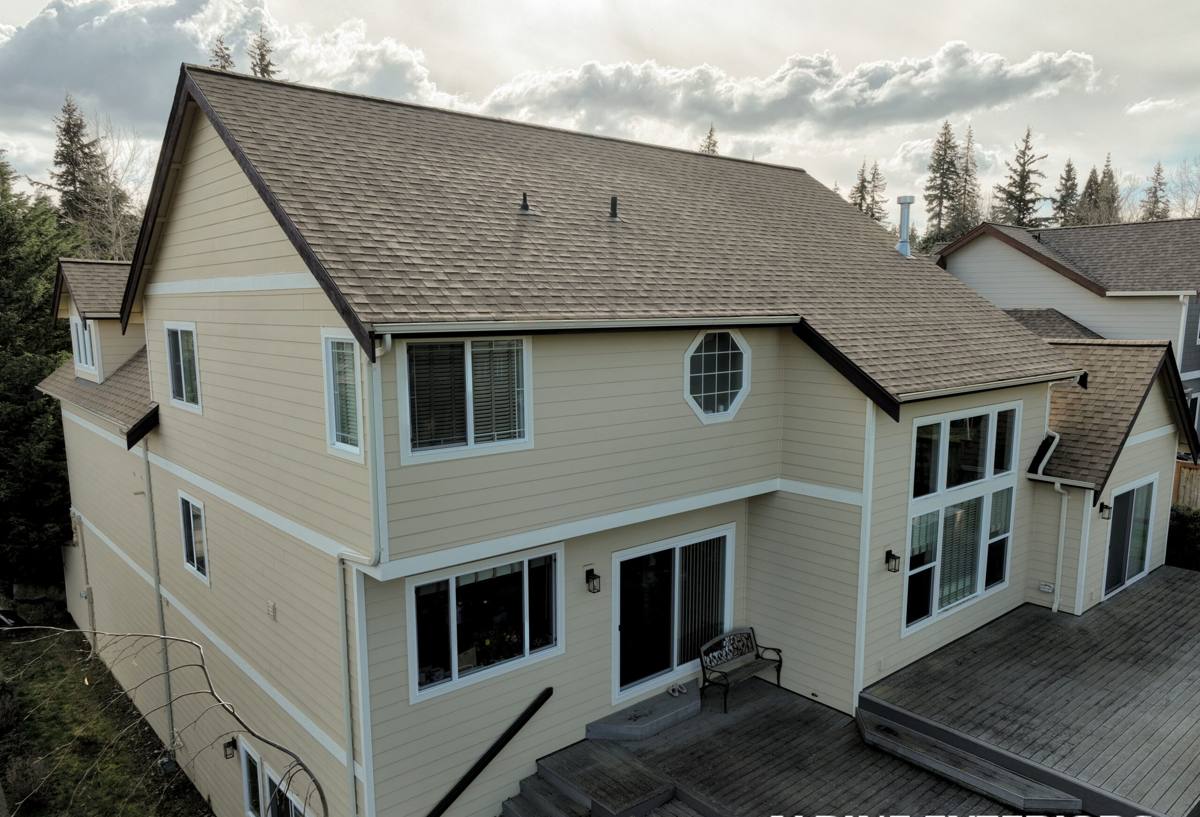
What the Local Climate Actually Does to a Shingle Roof
Salt Air and Metal Components
Asphalt shingles themselves tolerate salt air reasonably well, but the metal parts of the roof system don't. Nails, flashing, drip edge, and vent housings corrode faster near the water. A roof built with standard-grade fasteners and flashing will show rust streaks and early failure at penetrations well before the shingles themselves are due for replacement. This is one of the most common corner-cutting mistakes we find on older Stanwood roofs.
Driving Rain
Wind off Puget Sound doesn't just fall on a roof, it drives into it sideways, especially during fall and winter storm systems. Rain gets forced up under shingle laps and into valleys, roof-to-wall transitions, and any spot where flashing was undersized or underlayment was skipped. A roof that's fine in a light, straight-down rain can still leak in a Stanwood windstorm if the underlayment layer wasn't done right.
Moss and Sustained Dampness
Shade, moisture, and mild temperatures are exactly what moss wants, and Stanwood's tree cover and long damp stretches give it plenty of both. Moss holds water against the shingle surface far longer than open sun and wind would allow it to dry, which accelerates granule loss and, over years, lifts shingle edges enough to let water underneath.
What a Correct Asphalt Shingle Job Looks Like Here
A shingle roof is a system, not a single product. In this climate, every layer of that system needs to be right, not just the shingle itself.
- Underlayment: Synthetic underlayment across the full roof deck, with self-adhering ice-and-water shield at eaves, valleys, and any low-slope transitions where wind-driven rain is most likely to get pushed uphill under the shingle laps.
- Flashing: Properly stepped flashing at every wall intersection, corrosion-resistant metal at chimneys and skylights, and new flashing installed with the new roof rather than reusing old, pitted pieces to save a few dollars.
- Fastening: Correct nail placement and count per shingle, with fasteners rated to hold up in salt-influenced air rather than the cheapest option available.
- Ventilation: Balanced intake and exhaust airflow through the attic, so moisture from inside the home doesn't condense against the underside of the roof deck during our long damp stretches.
- Shingle selection: Algae-resistant (AR-rated) shingles with copper or zinc granules, which slow moss and algae growth far more effectively than standard shingles in a climate like ours.
Why Ventilation Matters More Than People Expect
A shingle roof can be installed perfectly on the outside and still fail early if the attic underneath is trapping moisture. In the Pacific Northwest's damp climate, poor ventilation shows up as sheathing rot, mold, and premature granule loss from the underside out, not just the surface in. We check attic ventilation on every re-roof, because fixing it after the fact means pulling shingles back off.
Comparing Shingle Options for a Stanwood Home
Homeowners usually narrow their decision down to shingle grade and a few key features. Here's how the common tiers stack up for a coastal Skagit County home specifically.
| Shingle Type | Typical Lifespan | Moss/Algae Resistance | Best Fit |
|---|---|---|---|
| 3-tab, standard grade | 15-20 years | Low unless AR-rated | Budget-focused rentals or short-hold properties |
| Architectural (laminate), standard | 25-30 years | Moderate, better with AR granules | Most Stanwood homes; good balance of cost and durability |
| Architectural, algae-resistant (AR) | 25-30 years | High | Shaded lots, north-facing slopes, homes near trees or water |
| Premium/designer architectural | 30-50 years | High | Homeowners prioritizing longevity and curb appeal over upfront cost |
For most homes in the Stanwood area, we steer people toward architectural shingles with algae-resistant granules as the baseline, not an upgrade. Given the moss pressure here, it's cheaper in the long run than dealing with early granule loss and re-treating a standard shingle roof for moss every couple of years.
Cost Factors Worth Understanding Before You Get Quotes
Every roof is different, so we won't quote a number without seeing yours, but the honest cost drivers are consistent:
- Roof size and pitch: Steeper roofs take longer to work safely and use more material per square foot of coverage.
- Tear-off complexity: Removing one existing layer costs less than removing two, and rotted decking discovered underneath adds material and labor to replace it properly.
- Number of penetrations: Chimneys, skylights, plumbing vents, and roof-to-wall transitions each need individual flashing work.
- Shingle tier chosen: Standard architectural shingles cost less than premium designer lines, but the ventilation and flashing work underneath shouldn't change based on shingle grade.
- Access and staging: Steep driveways, limited street parking, or difficult material staging can add time on any job site.
Our Process, Start to Finish
1. Inspection and Honest Assessment
We walk the roof and the attic, not just one or the other. We're looking for current leaks, soft decking, ventilation problems, flashing condition, and moss buildup, then we tell you plainly what's actually needed versus what's optional.
2. Written Scope and Straight Numbers
You get a clear scope of work and pricing before anything starts. If we find rotted decking once tear-off begins, we stop and show you before replacing it, not after it's already on the invoice.
3. Tear-Off and Deck Prep
Full removal of old roofing material, inspection and repair of the deck, and replacement of any damaged sheathing.
4. Underlayment and Flashing
Ice-and-water shield at vulnerable areas, synthetic underlayment across the field, and new flashing at every wall, chimney, and penetration.
5. Shingle Installation
Correct fastening, proper nail placement, and attention to exposure and alignment so the roof performs as designed and looks right from the street.
6. Cleanup and Final Walkthrough
Magnetic sweep for stray nails, full site cleanup, and a walkthrough so you know exactly what was done and what to expect going forward.
A Simple Checklist Before You Hire Anyone
- Do they inspect the attic and ventilation, not just the shingle surface?
- Is ice-and-water shield included at eaves and valleys, or only "if needed"?
- Are they replacing flashing or reusing what's already there?
- Is the shingle algae-resistant, given how much moss pressure this area gets?
- Do they carry proper licensing and insurance, and will they put the scope in writing?
- Do they already work in Stanwood and the surrounding Skagit County area, or is this their first time out this way?
Why Hiring a Crew That Already Works in Stanwood Matters
A roofing crew that regularly works Stanwood and the greater Burlington area already knows which details matter most out here: where wind-driven rain tends to find weak flashing, how much moss pressure a shaded, tree-lined lot is going to see, and why standard fasteners don't hold up the way they should this close to the water. That's not something you can fully account for from a one-time visit. It shows up in habits, in what gets flagged during inspection, and in which upgrades actually make sense for this specific climate versus which ones are just upsells.
Local presence also matters after the job is done. If a storm rolls through and you want a flashing detail checked, or a warranty question comes up years down the road, it's a meaningfully different experience working with a crew that's still around and still working in your area versus chasing down someone who did one job in Stanwood and never came back.
Maintenance That Actually Extends the Roof's Life
Even a well-installed shingle roof benefits from a little upkeep in this climate. Keeping gutters clear so water doesn't back up under the eaves, trimming back overhanging branches to reduce shade and debris buildup, and having moss growth treated before it spreads rather than after are the three things that make the biggest difference. None of it is complicated, but skipping it is how a 30-year shingle ends up needing attention at year 15.
If your Stanwood home is due for a new roof, showing early signs of moss or granule loss, or you just want a second opinion on a quote you already got, we're happy to take a look. We offer free, no-pressure estimates, and you can reach us through the form below to get one scheduled.